A tenant reports a broken fixture. A property manager finds a vendor. An owner approves the expense. Someone pays. Four people have participated in one small repair, and each may be looking at a different version of events. In ZAPTA’s account of a property-management project, that familiar coordination problem becomes the brief: give tenants, vendors, owners, and managers a shared system, with a different view for each.
- ZAPTA designs and builds custom software for businesses, from discovery through ongoing support.
- Its client work connects fragmented operations: rentals, tutoring, healthcare onboarding, and retail.
- The lesson for buyers: settle the workflow and scope before buying the build.
The company says the resulting platform lists more than 20,000 properties across ten US states. Delivery took eight months and sixteen sprints. It calls the engagement MVP development. There is something instructive about that combination. A minimum viable product can still contain an entire small society, complete with permissions, payments, and competing expectations.
The expensive part is the handoff
ZAPTA is a software services business. Customers hire it to investigate an idea, design interfaces, write applications, connect systems, or supply an engineering team. Its current menu groups the work into product engineering, artificial intelligence, automation, innovation advisory, and cloud engineering. The customer buys an engagement shaped around a problem.
That breadth places ZAPTA in the market for custom development partners. A buyer might also consider a specialist design studio, an AI consultancy, an internal hire, or existing software configured to fit. ZAPTA’s proposition is continuity across those decisions: the people discussing the product can also help build and maintain it.
Consider its healthcare-onboarding case. The starting problem was paperwork, email reference requests, and documents scattered across systems. Applicants could not see their progress. Administrators struggled to follow it. ZAPTA describes a role-based application joining applicants, employees, referees, and administrators, with document upload, training, verification, and e-signatures. The company reports a reduction of more than 50% in onboarding cycle time.
Separate tools→Shared
record→Clear roles
Visible progress
Next action
Read across these projects and a pattern emerges. Information already exists. People already work hard. The failure sits between them, where one person’s finished task becomes another person’s missing input. The software’s job is to make that transition visible.
A useful disagreement before the first release
ZAPTA’s discovery workshop turns that diagnosis into something a customer can purchase separately. It offers product, technical, AI, and modernization versions, typically lasting one to two weeks. The deliverables include scope boundaries, wireframes, architecture decisions, risks, and a phased roadmap. These are useful objects because they make disagreement specific.
A founder can argue with a sketch. An engineer can challenge an integration assumption. A finance lead can see which features belong in a later phase. Each conversation is easier while the product remains a plan. The practical thing to copy is the out-of-scope list: write down what the first release will deliberately leave for later.
“They challenged my ideas”
Erkan Mehmat, VirtuVault founder, in a testimonial published by ZAPTA
That short phrase describes a valuable change in a buying relationship. A customer arrives with an answer. A development partner helps test whether it answers the right question. The testimonial suggests room for a better version of the original brief; it does not establish a dramatic company pivot.
The internet goes out. The till stays open.
One of ZAPTA’s more revealing examples is TagDev, a point-of-sale platform built for the Saudi market. The company describes five months of development, bringing sales, inventory, and payments together across web and mobile. Arabic and English support, local payment integrations, printers, and barcode scanners were part of the work.
Then comes the detail that gives the project its shape: offline operation. Existing systems depended on connectivity. The replacement was designed to keep transactions moving and synchronize when the connection returned. For a retailer, that requirement is wonderfully concrete. A checkout becomes useful by surviving the conditions in which people actually use it.
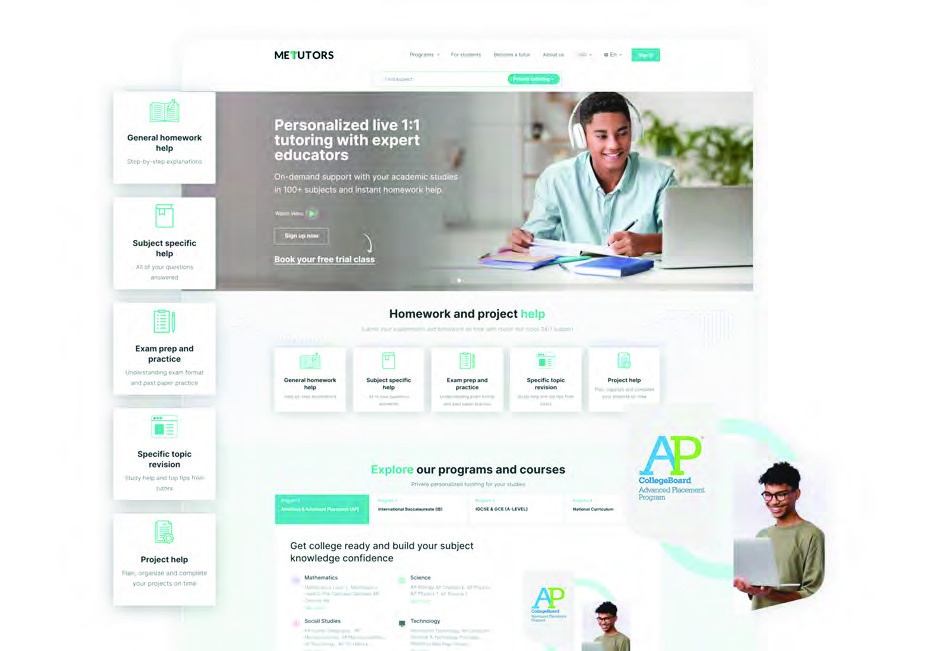
MEtutors reveals a different constraint. ZAPTA describes AI-assisted matching between students and tutors, alongside course booking, tutor vetting, administration, and progress tracking. Its case study reports 1,500 enrolled students and more than 591 tutors. Matching is one feature inside a service whose reliability also depends on who gets admitted to teach and how lessons are organized.
What the buyer pays for
Clutch lists a $10,000-plus project minimum and an indicative hourly rate of $25 to $49. Those figures describe a vendor listing, rather than a promise about a particular build. One published healthcare-dashboard review places a July-to-October 2024 engagement in the $10,000-to-$49,999 band.
Fixed-price projects suit work with boundaries the parties can agree on. Dedicated teams suit an evolving roadmap that needs continuity. ZAPTA offers both, alongside staff augmentation and ongoing support. The commercial choice follows the uncertainty: buying a defined deliverable and reserving a team’s capacity are different commitments.
Custom development makes sense when the workflow is distinctive enough to justify maintaining it. An ordinary requirement that existing software already handles may favor configuration instead. For AI projects, a matching feature or agent also needs usable data, access controls, and a way to judge its output. A polished interface cannot supply those conditions by itself.
The team behind the brief

CEO Nasir Ali leads the founding group, alongside Khalil Ahmad, Ateeq Ur Rehman, and Muhammad Abdul Rehman. The company identifies Lahore as its delivery headquarters, serving international clients through operations that include the US and UK. Its brochure emphasizes communication, kindness, responsibility, and collaboration.
For the customer, those values become meaningful in small, observable ways: a question answered, an assumption challenged, a decision recorded. ZAPTA’s project accounts offer a useful buying question. Before asking how quickly a team can build your platform, ask whether everyone involved can describe the same problem. Start with the broken handoff. Make the next action clear.