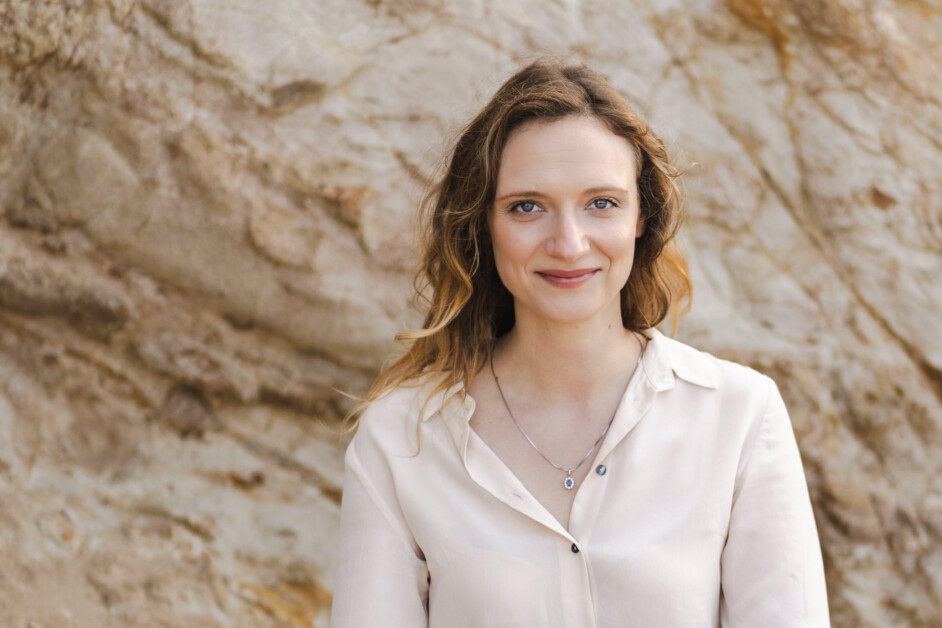
Walking Towards the Future of AI
There's a detail Zuzanna Stamirowska keeps returning to in interviews - the lost art of purposeless walking. "Some of the best ideas I've had have come to me when I've been walking," she told TechInformed. For a founder who is building systems designed to process data faster than humans can think, that's not irony. It's a clue to how she operates.
Stamirowska is the co-founder and CEO of Pathway, a company whose Python framework - powered underneath by a Rust engine based on Differential Dataflow - lets enterprise systems work with data as it arrives, not as it was archived. The pitch sounds technical until you look at the customers: NATO uses it for situational awareness. Formula 1 teams use it for race strategy. La Poste, France's national postal service, cut its total cost of ownership in half with it.
"We need to be in the room where it happens - and it happens in the Bay Area."
- Zuzanna Stamirowska, on relocating Pathway's US operations to Palo AltoShe moved Pathway's US operations from Paris to Palo Alto in 2024, the same year the company closed a $10M seed round led by TQ Ventures. The angel investor list for that round includes Lukasz Kaiser - co-author of the original Transformers paper - who backed a company that is, among other things, building architecture designed to replace what he helped create. If Kaiser sees something coming after transformers, Stamirowska's name is in the draft.
From Ships to Streams
Before there was Pathway, there was a dissertation. Stamirowska completed her PhD at Paris I Panthéon-Sorbonne between 2015 and 2020, focusing on the forecasting of maritime trade through the lens of Economic Geography and Complex Systems. Her models were published by the National Academy of Sciences of the USA. She also spent time as a researcher at the Institute of Complex Systems of Paris, working on emergent phenomena and Game Theory on graphs.
The thread connecting maritime trade forecasting to real-time AI pipelines is tighter than it looks. Both involve systems too large and dynamic to model statically - where the interesting behavior emerges from interactions between components, not from any single variable. The technical vocabulary changed, but the problem class did not.
Her education cut across institutions in a way that reflects the same instinct: Sciences Po, École Polytechnique, and ENSAE for a Master's in Economics and Public Policy; Panthéon-Sorbonne for the PhD. Then out of academia and into founding, with two exceptional scientists alongside her.
A Co-Founding Team Built for Frontier Problems
PhD in Complexity Science, Panthéon-Sorbonne. Former researcher at Institute of Complex Systems of Paris. Author of maritime trade forecasting models published by the NAS.
First person to apply attention mechanisms to speech recognition. Co-authored research with Nobel laureate Geoff Hinton. Worked at MILA and Google Brain. 14,000+ academic citations, h-index 24.
Theoretical computer scientist. Earned his PhD at age 20. Former tenured professor at École Polytechnique and Inria. 100+ publications, h-index 29.
Live Data, or No Data Worth Having
Pathway's core insight is simple to state and hard to execute: most enterprise AI runs on yesterday's data. The ETL pipeline exports a snapshot, the model trains on the snapshot, the snapshot ages. By the time an LLM answers a question, the underlying reality may have shifted. For a postal service managing thousands of routes, or a Formula 1 team making strategy calls mid-race, "mostly current" is not close enough.
The Pathway framework gives engineers a Python API that abstracts over a Rust engine built on Differential Dataflow - a computational model designed for incremental computation. Change arrives, only the affected downstream computations re-run. It supports multithreading, multiprocessing, and distributed compute without requiring the developer to think much about any of it.
Connectors span Kafka, PostgreSQL, Google Drive, SharePoint, S3, and hundreds of other enterprise sources. Indexes synchronize in real-time. The framework handles ETL, stream processing, LLM pipelines, and retrieval-augmented generation (RAG) in a unified environment. The enterprise pitch is pointed: keep your databases closed, minimize external dependencies, deploy on your own infrastructure or in the cloud.
"Enterprises want to keep their databases closed and they want to minimise the number of external bits."
- Zuzanna StamirowskaWho's Running on Pathway
After the Transformer
In October 2025, Pathway launched the Dragon Hatchling (BDH) - a post-transformer frontier model architecture. The research paper behind it is titled "The Missing Link between the Transformer and Models of the Brain." That title is doing real work: BDH uses linear attention, sparse key-query vectors, no context window limit, and a neural architecture inspired by how synapses form in the brain.
What the Transformer Cannot Do
Transformer-based models snapshot the world and hold still. BDH learns continuously as new data arrives - no periodic retraining, no context window ceiling. Pathway had this conviction from founding: graph-like sparsity was the missing stepping stone.
Replaces the quadratic attention of standard transformers with linear complexity that scales with sequence length.
No fixed context window - the model processes arbitrarily long sequences without truncation.
Adapts to new information without full retraining - what Stamirowska calls "thinking and adapting like humans."
Sparse key-query vectors mimic neural synapse architecture, enabling scale-free reasoning over long periods.
"Systems that learn with experience in fact have better chances at being safe than the current, Transformer-based ones."
- Zuzanna StamirowskaBDH is deployed on NVIDIA AI infrastructure and AWS. Pathway has maintained since its founding that sparsity - graph-like structures where connections are selective rather than universal - would be a key step forward for AI. The Dragon Hatchling is that bet coming in.
The Technical Stack
How She Got Here
What She's Built
National Academy of Sciences
State-of-the-art maritime trade forecasting models recognized and published by the NAS of the USA.
$14.5M in Funding
Led Pathway from pre-seed through a $10M seed round backed by TQ Ventures with the co-author of Transformers as an angel.
90x Speed for Formula 1
Pathway's framework delivered 90x faster data processing for dynamic race strategy adaptation in Formula 1.
La Poste - 50% Cost Reduction
Helped France's national postal service achieve a 50% reduction in total cost of ownership and 16% CAPEX reduction.
NATO Deployment
Pathway powers NATO's situational awareness platform with real-time open-source data processing.
Post-Transformer AI
Led the research and launch of Dragon Hatchling (BDH), a brain-inspired continual-learning architecture going beyond transformers.