A technology order arrives at Zones. Before it can leave, someone may have to check as many as seventeen things. Shipping instructions. Billing rules. Customer procedures. The server might be perfectly good. The purchase order might be perfectly valid. Yet the work of making one agree with the other still falls to a person reading instructions. For a company that sells technology, this is an amusing predicament: some of the most consequential machinery sits between the keyboard and the chair.
- Zones buys, configures, deploys, and supports IT across multiple vendors.
- Its advantage depends on coordinating the work between those steps.
- Its own order queue became a test of that promise.
That queue offers a useful way into Zones, LLC. From Auburn, Washington, the company supplies hardware and software, then takes on the surrounding jobs: cloud migration, network modernization, security, service desks, and the eventual retirement of equipment. The customers include businesses, hospitals, schools, and government organizations. What connects them is the inconvenience of getting many separate technologies to behave like one system.
The catalog grew a second job
Zones dates its beginnings to 1986, when it was a direct-response catalog business. There is something wonderfully physical about that origin. A catalog made technology legible: here was the product, here was the price, here was how to order it. The company subsequently went public in 1996 and began shifting toward business customers in 1999. Reselling IT services followed in 2000. It returned to private ownership in 2008.
The progression changed the unit of work. A consumer could buy a computer. A business might need hundreds of computers, each with the right software, permissions, security settings, and destination. Selling the machine created an opening to manage the complications around it. Today, Zones combines resale with professional services, staffing, and ongoing managed support. Revenue comes from both the technology and the work required to put it into service.
For a buyer, that combination changes the cost question. The equipment price is one line; configuration, deployment, support, and disposal are other parts of the job. A useful comparison asks who performs each task and what the proposal includes. A cheaper purchase can leave more work with the customer. A larger services engagement needs enough complexity to justify handing that work over.
“The last mile is the most important.”
Firoz Lalji · CRN interview, 2025
Where the boxes learn their jobs
Consider the company’s Carol Stream operation in Illinois. At its May 2025 Innovation Center opening, visitors toured a site with 208,000 square feet of warehousing and distribution space and 17,500 square feet devoted to integration. The distinction matters. A warehouse can hold a computer. Integration prepares it for the life it will have after delivery.
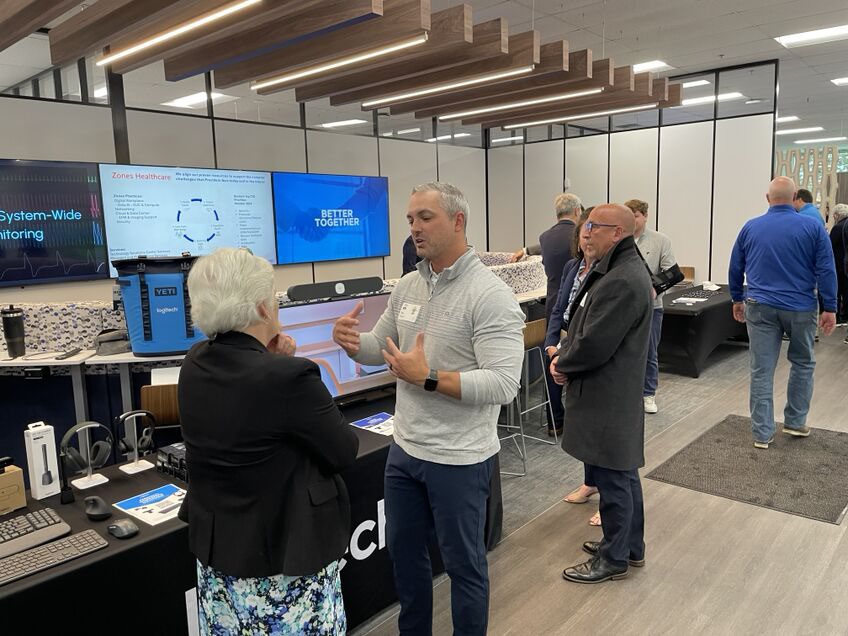
Zones’ configuration services include device provisioning, imaging, asset tagging, and enrollment in management systems. Its Innovation Center adds a place to simulate and test technologies before a larger rollout. Demonstrations at the opening included electronic shelf labels, telehealth, and digital lockers. The attraction is practical: discover how components work together while changing them is still relatively easy.
In one published case study, an unnamed semiconductor manufacturer struggled with short-notice rack orders, server images, and engineering schedules. Zones provided remote access through a jump server, trained delivery engineers, and established a quality-assurance plan and imaging runbook. The useful detail is the runbook. Repeatability came from documenting the work as well as assembling the equipment.
The instructions became the bottleneck
Inside Zones, a similar coordination problem had accumulated around orders. Thoughtworks, its technology partner, describes roughly $2 million a year in manual back-office work. Earlier attempts to hardcode the rules failed because contracts and freight terms kept changing. An instruction that was correct yesterday could become tomorrow’s exception.
The replacement interprets approved customer procedures and proposes order changes for employees to review. Recommendations arrive with supporting evidence; a person approves the change. When confidence is low, the order returns to manual review. This gives automation a defined job inside an existing process, with an explicit route for uncertainty.
- 01Read the approved
customer procedure - 02Compare it with
the incoming order - 03Propose a change
and show the evidence - 04An employee reviews
and approves
Low confidence? Continue with manual review.
Thoughtworks reports a 17-month payback period and says the workflow supports 29 enterprise customers. Its identified automation opportunity is 20,000 annual hours of manual effort; those hours should not be mistaken for savings already banked. Zones separately reports that verification previously taking up to a minute can take approximately 10 to 15 seconds. These are company and partner reports, rather than independent measurements.
In October 2026, Zones announced an expanded Thoughtworks partnership offering customers AI strategy, governance, data preparation, and workflow implementation. Its own order operation gives that pitch a specific example. The lesson a reader can borrow is quite modest: find a recurring procedure, make its instructions usable, connect them to the system where work happens, and keep a clear approval step.
Who owns the handoff?
Zones occupies crowded territory alongside providers such as CDW and Insight. Hardware access alone offers a limited explanation for choosing it. The more interesting proposition joins procurement, engineering, logistics, and support. Its NMSDC minority-owned certification also matters to organizations with supplier-diversity programs. That credential accompanies the delivery proposition; the work still has to arrive and function.
Software helps make the relationship manageable. ZonesConnect governs purchasing through approved catalogs and authorization rules. myZones exposes orders and inventory. ZonesCloud handles cloud and software procurement and management. A buyer can use these tools to see and control parts of a relationship that might otherwise disappear into email.
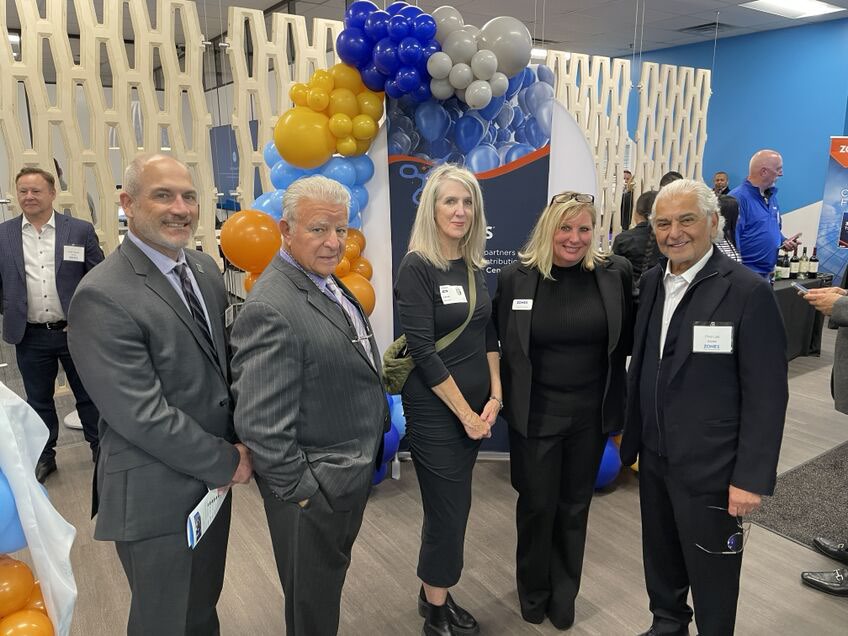
The model has conditions. A simple purchase may need little coordination. A complicated rollout needs clear responsibilities, reliable inventory information, and an agreed measure of success. Similarly, procedure-based AI depends on procedures worth following. Automating an ambiguous instruction can simply distribute the ambiguity faster.
A reader can copy the discipline without copying the whole organization. Pick one deployment. Name the owner of each transition. Write down what must be true before the next team accepts it: correct image, recorded asset, approved destination, tested connection. Then measure the exceptions. That exercise makes the choice of a services partner more precise, because the buyer can describe the work and recognize whether it has been completed.
Yehia Maaty Omar became CEO in September 2025, while co-founder Firoz Lalji remained chairman. The enduring question for their customers is concrete: who owns the handoff when an order becomes an installation, and an installation becomes somebody’s working day? Zones has built its business around taking more of that responsibility. The revealing test is what happens after the box arrives.