At eight in the morning, a parking garage can be an empty shell. By nine, workers have installed cameras and network gear. By ten, according to parking operator Metropolis, the site can be collecting revenue. That sequence sounds like a construction boast, but its most interesting ingredient is invisible: the devices know how to join a private network without waiting for someone to invent a new one at every garage.
The company behind that trick is ZeroTier. It makes software that connects computers, phones, routers and embedded equipment across the public internet as if they belonged to the same private network. A technician can reach a camera three states away; a developer can put a cloud server and a machine in a workshop on one virtual network; a business can connect branches without treating every new address as a bespoke plumbing job.
The short version
- ZeroTier One is the client on the device; Central is the service that admits and manages devices.
- Its customer range runs from home networks to fleets of remote equipment. Metropolis reported more than 5,000 connected devices in 2024.
- The free personal tier covers 10 devices. Business plans charge a monthly base plus authorized devices.
- The practical payoff is less site-specific setup, provided the deployment process changes with the network.
The trouble with where
Traditional network planning starts with places. This office has an address; that branch needs a tunnel; a new cloud account requires another set of rules. The model becomes awkward when the valuable thing is moving or multiplying. Cameras appear in garages the company does not own. A laptop moves between home and office. A server shifts cloud providers. An industrial controller sits behind a connection no one can conveniently reconfigure.
ZeroTier reverses the question. Each device runs an agent and joins a named virtual network. An administrator authorizes it, then sets what it may reach. The agent tries to form direct encrypted connections with its peers, handling the messy business of traversing ordinary internet connections. ZeroTier says its infrastructure does not see the contents of those packets when peers connect directly. That is the architectural wager: make identity and permission more useful than a device’s postal address.
One network, three places
The internet remains the road. ZeroTier supplies the private guest list and the route between members.
This is why ZeroTier resembles a VPN but is pitched as more than one. A conventional VPN often concentrates traffic around a gateway. ZeroTier offers an overlay that can connect many kinds of endpoints across sites and cloud providers, with policy on who can speak to whom. Tailscale, direct WireGuard setups, and managed SD-WAN systems can solve parts of the same problem. The useful distinction is the network model and the amount of control an operator wants over its virtual topology, not a claim that one tool wins every comparison.
A daughter at the keyboard
Founder Adam Ierymenko did not arrive at this idea through a pitch deck. ZeroTier’s account of its beginning says he was irritated by slow, manual networking on a U.S. government project. He coded in spare time for two years and published an open-source version in 2013. His newborn daughter helped tap the enter key that released it. It is an unusually apt origin story: a product meant to take ceremony out of networking began with a very small ceremony indeed.
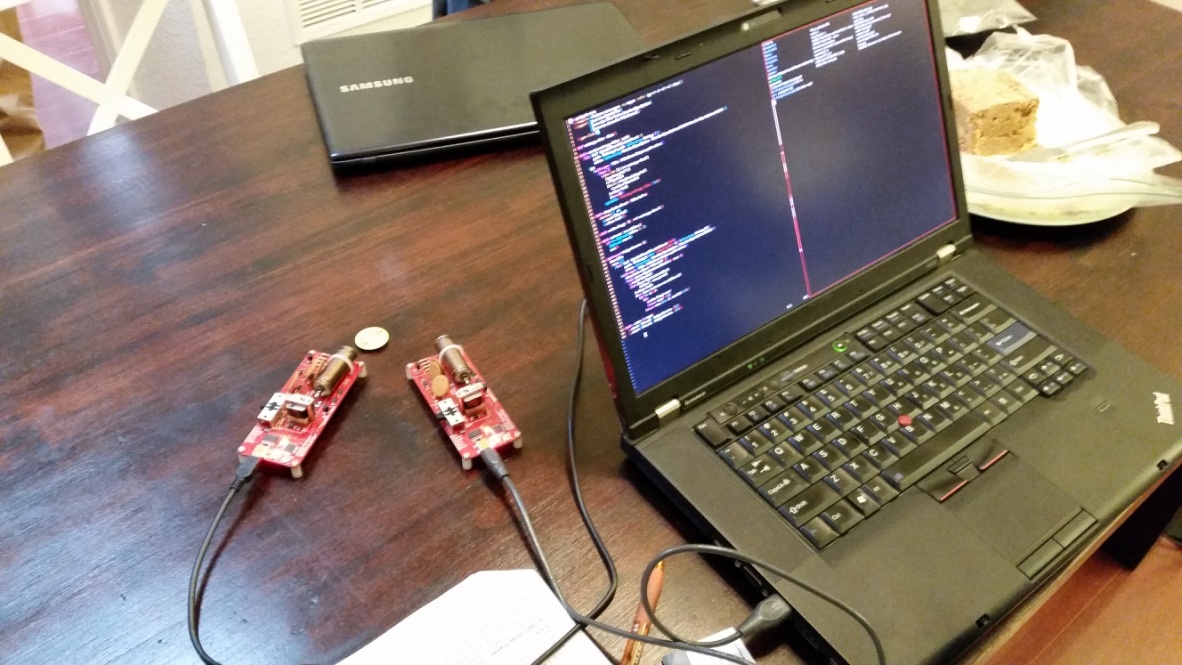
Early traction came from programmers and tinkerers. The company added packaged clients for major operating systems and built Central, the dashboard that makes joining a network manageable without asking every user to run a controller. Paying enterprise customers followed, including applications in Bitcoin hardware and defense, according to ZeroTier’s company history. Anorak Ventures became its first formal investor in 2019. During the pandemic, the firm says usage grew as much as 20% in some months and the team shifted to remote work.

Money came in stages. ZeroTier announced a $2 million round co-led by Anorak and Bonfire Ventures in 2021. A $13.5 million Series A led by Battery Ventures followed in July 2024. Andrew Gault became CEO that year, while Ierymenko moved his attention to the technology as CTO. That shift matters because a clever network protocol and an enterprise business have different daily chores. One needs engineering elegance; the other needs predictable billing, support, distribution and a dashboard people can operate on a Tuesday afternoon.
The garage test
Metropolis offers a sharp test of that promise. Its parking system uses custom hardware spread across facilities it often does not own. Early on, cameras, routers and sensors needed manual attention. If something went wrong, the team might learn of it days later; dispatching a qualified technician could take weeks. Todd Shipway, its head of technical operations, said the alternative network options he assessed were too rigid for the custom setup.
ZeroTier supplied an overlay flexible enough for those devices. But the network alone did not conjure a two-hour launch. Shipway said Metropolis was about two years into the project before it concentrated on automation. In roughly six months of that work, the team reached what it calls a zero-touch provisioning model. The copyable move is almost embarrassingly practical: put remote devices on a consistent, authorized network, then automate the steps that still require a human. A good connection makes a manual process faster; a changed process makes it scale.
“My only regret is that I didn’t go down that path earlier - much earlier.”Todd Shipway, Metropolis
ZeroTier’s public account put the parking operator’s connected fleet above 5,000 devices and described plans to grow much further. The figure is a deployment snapshot, not a count of ZeroTier’s entire customer base.
This case also draws a line around the claim. A virtual network cannot repair a dead camera, replace poor cellular coverage, or decide an organization’s access policy. Someone still has to design authorization, monitoring and a recovery path. If direct peer connections cannot be made, relays and their performance matter. In a tiny, stable network, a simpler VPN may do the job. ZeroTier becomes more persuasive as endpoints, sites and change requests multiply.
The bill follows the device
The business model mirrors the network model. ZeroTier One’s client is available openly; Central, the hosted administration layer, is the paid convenience. Its published August 2026 pricing gives personal users up to 10 devices free. Essential starts at $18 a month with 10 devices and charges $2 for each additional authorized device. Scale starts at $179 with 100 devices and $1.80 per additional device. Large enterprise and Quantum arrangements are quoted individually.
That is a decision a buyer can calculate. The fee should be compared with the hours spent configuring tunnels, maintaining gateway equipment, sending people to remote sites and recovering from mistakes. The free tier also explains how the company reached its broad audience: a home-lab experiment can become a workplace recommendation. The commercial side has grown more formal. A redesigned Central launched in November 2025 with new controllers, integrated billing and the groundwork for more detailed access controls.
A second network is coming
ZeroTier’s newer bet is Quantum, a separate platform aimed at organizations that need post-quantum cryptography and more control over where their network runs. The company announced it in March 2026 and said release candidate 2 was in final validation in June, with general availability planned for later in the year. Its announced design uses a Rust implementation and hybrid cryptography at the transport layer. An August partnership with Carahsoft gives it a route into public-sector procurement. These are meaningful signals of direction, though a release candidate remains a release candidate.
The old idea underneath is unchanged. Put the network where the devices are, instead of making every device answer to the geography of a network diagram. In the company’s origin story, that saved an engineer from tedious setup. In a garage, it can save a technician a trip. The unromantic details - admission, policy, provisioning, price - are what turn the pleasing idea into a useful one.