A packet of data is a modest thing. It has no opinion about whether it crosses a branch office, a cloud, a carrier or a border. It simply asks for a route. Around that small request, the networking industry has built a cathedral of hardware, contracts, feature bundles and acronyms. Ali Shaikh has spent his career walking through that cathedral with a practical question: what did the customer need to happen in the first place?
The question followed him from Viptela, where he was the first solution architect and customer success engineer, to Cisco, where he led systems engineering for the Viptela and Meraki portfolios. It now sits at the center of his job as chief executive of Graphiant, the software networking company he joined at its founding. His résumé is full of systems and protocols. His public language, by contrast, keeps returning to outcomes, simplicity and the peculiar indignities of the invoice.
This makes Shaikh an unusual sort of infrastructure evangelist. He can talk about segment routing, stateless cores and memory-safe code. Then, just as the room begins to smell faintly of a certification exam, he will compare the business to the old mobile-phone era of text bundles, anytime minutes and parental outrage over overages. Technology had made a simple act possible. The commercial model made it ridiculous.
The first education was in the field
Shaikh studied physics at the University of Toronto. It is an apt prelude, though he does not turn it into mythology. Physics trains the mind to look for rules beneath apparent disorder. Enterprise networking offers the same temptation, except the particles are owned by different vendors and some of them require a maintenance renewal.
At Viptela, his education became sharply applied. As the young company's first solution architect and customer success engineer, he worked on early SD-WAN implementations and helped carry the approach into enormous real-world systems. Public biographies credit him with designing and deploying networks as large as 11,000 sites across retail, financial services and service providers. A diagram can promise elegance. Eleven thousand locations will locate every untidy assumption.
There is a small, telling footnote from those years. In the acknowledgments of a Cisco Press book on software-defined networking, an author thanks Shaikh for patiently enduring hundreds of questions and never once giving an incomplete answer. Technical mastery is common enough in networking. The patience to transfer it is scarcer. It also hints at the role Shaikh would keep playing: translator between the system's innards and the person who must trust it.
Cisco bought Viptela in 2017. Shaikh went with it, leading systems engineering for Viptela and Meraki. The acquisition turned an insurgent technology into part of a vast portfolio. It also gave him a close view of what happens when an elegant product meets the gravitational field of a large vendor: more routes to market, more customers, and more layers between an outcome and the machinery sold to achieve it.
“The customer outcome should dictate what your business model is.”Ali Shaikh, on designing Network-as-a-Service
A second trip through startup weather
In 2020, Viptela co-founder Khalid Raza started Graphiant. Shaikh was there from the beginning and held several roles, eventually becoming chief product officer. The problem had changed shape. Companies no longer connected a tidy collection of offices and data centers. Their data wandered among clouds, software providers, partners, edge systems and users. The old answer was to stitch together an assortment of point-to-point connections, then attach tools to watch the tools.
Graphiant's answer was a network delivered as a service, organized around a programmable stateless core. Shaikh presented its data plane publicly when the company emerged from stealth in 2022. The essential pitch was less romantic than “reinvent the internet” and more useful: give customers private-network performance with cloud-like flexibility, let policy travel with the data, and avoid forcing every site into a thicket of tunnels and appliances.
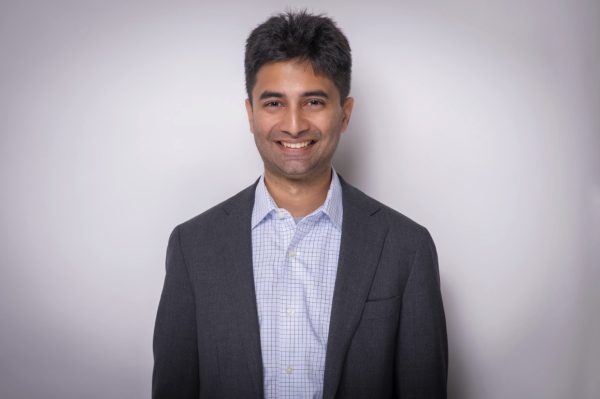
Shaikh's preferred order of operations
Shaikh is especially impatient with pricing that preserves the habits of hardware after the hardware has become software. A branch license arrives with maintenance. Security becomes another license. Performance brings another tier. Soon the customer needs an archaeologist to explain the bill. His complaint is not that the underlying technologies lack value. It is that their packaging makes the customer's desired result subordinate to the vendor's catalog.
AI sharpens the absurdity. A network built for human users may soon serve great swarms of software agents, appearing for a task and disappearing when it is finished. Pricing every agent as though it were a person in a swivel chair is a fine way to make automation economically theatrical. Graphiant charges around network capacity. Asked why he would not restrict a customer that might create a million agents, Shaikh answered with another question: “Why would I artificially restrict that?”
The product chief inherits the whole company
On October 27, 2025, Graphiant named Shaikh chief executive. Raza moved to president and chief strategy officer, retaining a board seat and taking particular responsibility for global and Middle Eastern expansion. Shaikh inherited the rest of the weather. A product leader can concentrate on what should be built. A CEO must also decide whom to sell it to, how to reach them, which partnerships deserve time, and when a promising company has to stop behaving like a private laboratory.
His first hundred days reflected the change in altitude. He pushed the organization toward an “AI first” operating method, asked the company to speak more openly about technology it had treated as secret, and narrowed its attention to the customers most likely to carry Graphiant from early stage into growth. The priorities ahead, he said, were sales, marketing and business partnerships, especially with service providers in the United States and Europe.
First solution architect and customer success engineer, working directly on large SD-WAN deployments.
Led systems engineering for the Viptela and Meraki enterprise networking portfolios.
Joined Graphiant at its founding and moved through product strategy and leadership.
Named CEO after helping launch Data Assurance and AI Networking offerings as CPO.
Turned toward commercial scale, carrier partnerships, embedded security and agent-built networks.
The company he took over had serious financial backing and global intent. Graphiant's disclosed Series B financing reached $102 million after a $19 million extension in 2025, supporting a regional headquarters in Riyadh as well as expansion with Saudi investors and telecom partners. By the time Shaikh became CEO, Graphiant said his product leadership had helped produce double-digit annual growth and deployments across three continents.
These are useful proof points, but they do not remove the classic startup problem: deep technology must find a simple buying reason. Shaikh's answer is to make the service feel more like a utility. He uses another domestic analogy for security. People pay a water company for water and expect it to be safe. They do not expect a separate bill for securing each drop. In April 2026, Graphiant announced that zero-trust access, threat detection, malware protection and data-loss prevention would be embedded in its network fabric without a separate license.
“Security should not be a premium add-on layered onto the network.”Ali Shaikh, April 2026
Visibility becomes a public argument
Shaikh's case extends beyond corporate IT. In April 2025, he appeared before a U.S. House subcommittee considering risks to communications infrastructure. His recommendations were concrete: real-time oversight of network behavior, better profiling of data flows, and enforceable rules about where regulated data may travel. He called for a “Google Maps for data” standard - the ability to know where information is, where it is headed and whether it arrived under the right policy.
That concern now meets AI. Models need data, but the data may be controlled by a company, a government or the rules of a particular jurisdiction. Compute may sit in several clouds. Specialized processors may be rented from another provider. Every useful connection is also a decision about custody, performance and permission. Shaikh argues that the network must become an active participant in those decisions, not a mute pipe beneath them.
In August 2026, Graphiant announced a partnership with Peraton for U.S. government network services. The language emphasized resilience, policy-driven access and compliance. In the same month, Shaikh told Fierce Network that telecom operators were moving toward AI opportunities faster than he had expected. Carriers, long caricatured as deliberate to the point of geology, had found a reason to hurry.
Shaikh remains wary of easy AI theater. His forecast for 2026 was not a collapse but a reset: slower gains from ever-larger models, harder questions from buyers, and a shift toward business outcomes. In that version of events, the network moves from the footnotes to the plot. Experiments become workloads. Workloads need predictable paths. Somebody has to prove that the right data took them.
A future measured in disappearing work
Ask Shaikh what success looks like, and his answer is revealing. He wants to count how many software agents use Graphiant's tools to create dynamic networks for operators. It is a vision of infrastructure becoming temporary and responsive: a topology assembled for a purpose, governed while it exists, then changed when the need changes. The network administrator does not vanish. The repetitive assembly does.
For a person whose career has been built on knowing exactly what sits under the hood, Shaikh spends a great deal of time arguing that customers should not have to care. This is no contradiction. The invisible system must be exceptionally well understood by its maker. Simplicity, his stated leadership principle, is the public surface of private rigor.
The wager at Graphiant is therefore both technical and commercial. Packets should carry context. Networks should respond to policy. Security should arrive with the service. The price should correspond to what a customer consumes, not to every clever component required to provide it. If the wager succeeds, the result may feel almost uneventful: data goes where it should, does not go where it should not, and the invoice can be read without a map.