Louise did not arrive with a business plan. When Zel Crampton adopted her in 2016, he went shopping for the things a dog needs and came away dissatisfied. The toys, crates, and accessories seemed to belong to a different consumer universe from the carefully considered products people bought for their homes. Here was an animal he cared about, surrounded by objects that appeared to have received considerably less care.
Crampton had an engineer’s education and a consultant’s experience of how things get made. His response was to start asking why a dog crate had to be awkward to collapse, unpleasant to look at, and troublesome to move. The object was familiar enough to escape much scrutiny. Familiarity, in this case, had become a rather generous exemption from criticism.
The question became DIGGS. Its Revol crate reached customers in 2018, carrying a proposition that was easy to understand and difficult to manufacture: the dog’s equipment should be as thoughtfully designed as the other objects sharing its home. Crampton’s story begins with affection, but it quickly becomes a story about mechanisms, customers, and the bills that arrive before a sale.
An engineer goes shopping
Before Louise, there were supply chains. Crampton studied mechanical engineering at McGill University and earned an MBA from Columbia Business School, whose alumni records identify him with the class of 2013. His working life included Deloitte and McKinsey. Procurement, sourcing, manufacturing, and operations gave him experience with the less photogenic parts of a consumer product: the work required to make it exist in quantity.
He was Canadian, moved to New York for business school, and had already tried entrepreneurship before DIGGS. The idea of a pet business had interested him after a conversation with a friend who ran one. Louise supplied a personal reason to look more closely. He also looked sideways, at brands such as UPPAbaby, YETI, and Simplehuman. Those businesses showed how much attention consumers would give to an everyday object when somebody improved it.
That comparison mattered. His point of reference extended beyond the pet aisle to the stroller, the cooler, and the household bin. Each involved a familiar task and a person willing to pay for doing it with less annoyance. A crate occupied the same domestic territory. It took up actual floor space, regardless of whether the furniture around it had been chosen with taste.
- McGillMechanical engineering
- Columbia ’13Business school
- Deloitte + McKinseyConsulting & supply chains
- DIGGSFrom idea to manufactured product
A crate with no fan club
In a 2019 conversation with dog trainer Annie Grossman, Crampton found an audience already acquainted with the problem. Her training business used crates constantly. They were necessary, bulky, noisy, and tiresome to put away. Opening and collapsing them repeatedly made their shortcomings hard to ignore. These were working tools whose users had a remarkably short list of compliments.
Crampton’s diagnosis went beyond the hardware. He connected the category’s inertia to the changing place of pets in family life. His customers were bringing different expectations to an object whose basic form they had long accepted. That was his interpretation of the opportunity, and it gave DIGGS a specific design brief: improve the human experience around the dog’s space.
Revol made collapsing and transporting a crate part of the product’s appeal. Later, the company’s range would include beds, training accessories, carriers, and other crate designs. The original problem remained wonderfully concrete. A dog crate must spend much of its existence being a crate, and some of it being something its owner wishes would occupy less room.
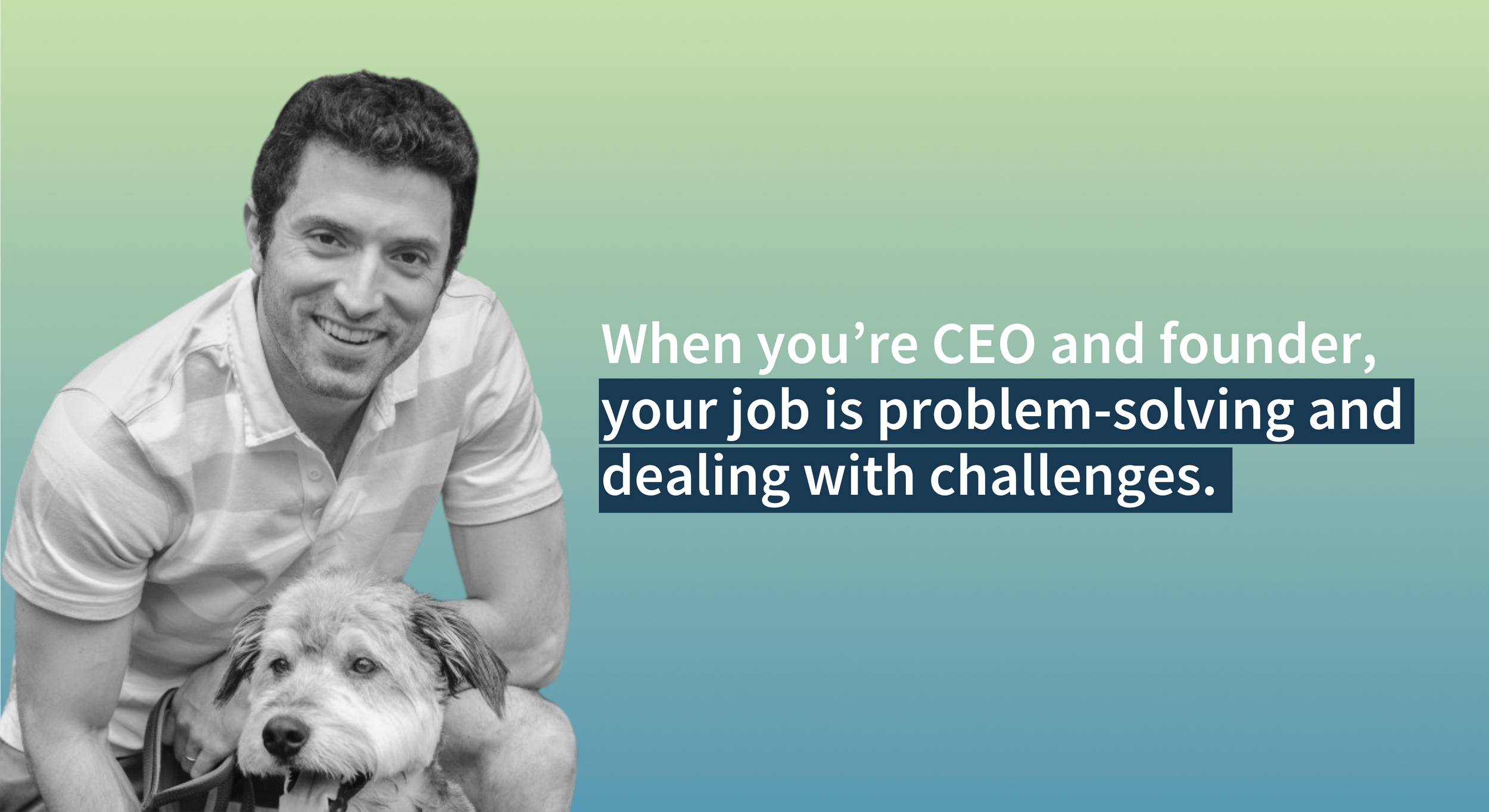
The customers who could not fit
A better object still had to find buyers. At an October 2019 business meetup in Hoboken, Crampton discussed DIGGS’ early marketing difficulties. The company had a small team stretched between research and selling, limited experience managing all those demands at once, and only one crate size. Some potential customers had dogs for whom the answer was simply the wrong dimensions.
The response joined product changes to improvements in selling. DIGGS added a medium crate, created a training guide, revised its website, experimented with digital advertising, and developed an affiliate program. Its account of that period described steady sales growth from late 2018 through the third quarter of 2019. The engineering problem had acquired a commercial companion: help people understand the object, then make sure their dog can actually use it.
There is a useful lack of romance in that episode. A founder can be right about an irritating product and still have work to do on the size chart, the landing page, and the explanation. Crampton had to attend to all three. Good taste could get a customer to look. It could hardly persuade a larger dog to become smaller.
Let the backers argue with the idea
Crowdfunding gave Crampton another way to hear from prospective customers. He discussed designing Revol and incorporating backer feedback in a 2018 crowdfunding interview. Years later, his description of Kickstarter emphasized its usefulness for testing a market. A campaign could expose the idea to early adopters before the business had the recognition of an established brand.
His approach to product research also favored watching and listening. In a later conversation about DIGGS, he discussed qualitative research and ethnography, alongside the place of quantitative evidence. For a household object, the circumstances of use matter: where it sits, how somebody handles it, and which small difficulty recurs often enough to become a complaint.
This helps explain the scale of the attention he gave the crate. The useful question was what happened around it in ordinary life. Customer observation brought the design back to those moments. A crowdfunding page and a conversation with a dog owner offered different kinds of information, but both put another person between the founder and his own enthusiasm.
Thirteen million dollars, and the work it bought
In June 2021, DIGGS announced a $13 million Series A led by Venn Growth Partners, with backing from Strand Equity. The stated uses were practical: new products, more marketing channels, hiring, and a product design and development facility in Long Island City. Capital would buy the capacity to do more of the work that had made the first crate possible.
Crampton had cultivated the investor relationships over years. He described the fundraising process as lengthy and said the business could be difficult to categorize. It combined the demands of product invention, consumer branding, manufacturing, and online retail. Finding investors who understood that combination mattered to him. Venn’s Chris Reynolds, in turn, spoke about his previous experience working with Crampton and the team he had assembled.
The company reported 400 percent growth in 2020. By the 2021 raise, Crampton said the planned large Revol crate had a waiting list exceeding 25,000 people. Those figures made the opportunity visible. They also made supply-chain capacity a pressing matter. An expression of interest from a dog owner still leaves a factory, an order, and a shipment to organize.
June 2021
large Revol waiting list
Funding for new products, hiring, marketing, and a Long Island City development facility. The waiting list records interest, not completed orders.
The less glamorous kind of growth
As DIGGS expanded, Crampton’s work increasingly involved getting products into more places. The business moved beyond its own online store into marketplaces and physical retail. His professional biography describes distribution through Amazon and Walmart, specialty chains including PetSmart, Petco, and Pet Food Express, and general retailers such as Costco. The founder who had objected to the pet aisle now had to understand how to supply it.
By December 2024, DIGGS was described as being on shelves in 815 PetSmart stores, while testing with Costco. Its priorities had shifted toward profitability and sustainable growth. That same year brought a financing problem when its lender, Ampla, encountered difficulties. DIGGS refinanced with Clearco and obtained additional working capital for inventory ahead of the holiday selling period.
Crampton already knew the Clearco name from its earlier identity, Clearbanc, and from watching Canada’s Dragons’ Den. The connection is a small, telling detail: a Canadian viewer’s familiarity with an entrepreneur’s television appearance eventually intersected with the financing of a New York pet business. The important outcome was prosaic. The company needed to keep purchasing inventory and operating through a consequential sales season.
More names on the drawing
The inventions carry a record of collaboration. Crampton appears among the named inventors on DIGGS’ collapsible animal containment patent, granted in March 2024, alongside Jacqueline Prehogan, Isaac Langleben, and members of the design team. Another patent, granted in November 2023, covers an inflatable animal crate using drop-stitch material. That document names ten inventors, including Crampton.
The technical details widen the picture beyond a founder selling an attractive object. Collapsing and inflating are different answers to the problem of transporting and storing a dog’s space. Both require the kind of attention to construction that a photograph cannot explain. The inventor lists also put several other people back into a story that is convenient to tell through one name.
Crampton’s own advice to founders makes room for that fact. In 2021, he urged entrepreneurs to surround themselves with capable people who bring different perspectives. He wanted disagreement and thoughtful debate in consequential decisions. That is a useful position for someone whose first business insight depended on refusing to accept a familiar answer.
“Surround yourself with as many smart and diverse people as possible.”
Zel Crampton · 2021
A different kind of household work
Crampton’s current chapter takes him to another set of everyday household needs. Sundream HVAC lists him as its president, overseeing operations, brand strategy, and the integration of acquired businesses. The company builds HVAC and plumbing service businesses in the southeastern United States. His biography there describes DIGGS as an earlier chapter in his career.
The objects have changed; the operating responsibilities remain recognizable. A customer has a practical problem. A business must organize people and resources to solve it reliably. His new role places that work across a group of service companies, with the added demands of bringing acquired operations together.
Louise’s contribution to this career was to make an ordinary shopping trip worth questioning. Crampton followed the question through drawings, customer feedback, manufacturing, investment, and store shelves. The dog crate earned his attention because its inconveniences were specific. For all the ambition that followed, the beginning was modest enough: somebody loved a dog, looked at the available equipment, and thought the household could do better.
Follow the conversation
More from Crampton, his companies, and the interviews behind this story.