At a competition where Zafer Şen served on the jury, the finalists included teams of computer engineering students from some of Türkiye's leading universities. More than fifteen groups had made the final. The winning team's leader was still in high school. Şen remembered the detail when explaining how he thought about software talent. The person with the strongest answer had arrived ahead of the expected paperwork.
It is a useful place to begin with the co-founder and CEO of OBSS. He works in a business that depends on expertise, yet he has publicly rejected the idea that a university diploma should be an absolute barrier to entry. Professional enthusiasm, sustained learning and demonstrable ability count. A hiring process should be able to discover them.
There is a pleasing inconvenience in this view. Credentials make sorting people easier. Looking at what someone can actually do requires attention. Şen's career has increasingly involved creating places where that attention can be paid: a software company, coding competitions, training programmes, a venture business and a seat on an entrepreneurship organisation's board.
A business built around other people's difficult systems
Şen co-founded OBSS in 2005. Its work was software and consulting, a description that sounds modest until one considers the customers' machinery. Banks, insurers, retailers and defence organisations need applications that fit into complicated existing operations. New software must coexist with old obligations. The exciting demonstration is only the beginning of the job.
An earlier industry company profile listed Şen as co-founder, chairman and CEO, alongside co-founder Oğuz Keskin. OBSS then described a workforce of nearly 400 engineers, with expertise spanning Java, .NET, C/C++, mobile development and software quality assurance. Istanbul housed its headquarters and research operation; Ankara supplied another base. The picture is of an organisation assembled around several engineering disciplines, rather than one consumer app.
That distinction matters to a portrait of its founder. A software services business grows through the work of teams embedded in customers' problems. Its achievements can be difficult to put on a billboard. An application keeps working. A release arrives. A customer returns. The most persuasive evidence may be how long the relationship survives.
OBSS snapshot · June 2024
By June 2024, OBSS was working with seven of Türkiye's ten largest banks, with those relationships averaging more than nine years. Its team numbered over 850 engineers. Those figures give Şen's business a particular texture: scale accumulated through continuing assignments, with institutional customers trusting the company to stay involved.
The present company overview puts its engineering workforce above 1,000 and lists more than 1,000 projects. Şen remains CEO, alongside a leadership team that includes technology chief Yusuf Tok and delivery chief Engin Ezer. The expanding headcount is useful context. The more interesting question is how a company keeps finding people capable of taking on the next difficult assignment.
Give the talent somewhere to show up
OBSS's CodeMaster competition makes that question public. The programme lets university students test themselves against coding problems, producing an outcome that can travel beyond the classroom. Its published footprint spans more than eighty universities and more than five countries. A competition gives a student something concrete to discuss before the work experience section of a CV has become particularly interesting.
In 2023, Şen celebrated CodeMaster's arrival at Oxford and Cambridge. The programme also lists events at Imperial College London, Warsaw University of Technology and the Technical University of Munich across its recent editions. Its latest format adds AI and data challenges. The competition's geography has expanded with the company, carrying its interest in discovering engineers into other countries.
CodeCamp approaches the same problem at a slower pace. Participants receive technical instruction, work on assignments and get support from software architects. The listed pathways include mobile development, Java, .NET, DevOps and deep learning. Some require a project presentation before an OBSS jury. Talent gets a period of practice, followed by an opportunity to explain its decisions.
The mechanics are revealing. A coding contest can make ability visible quickly; a mentored project shows how someone develops over time. Neither removes the need for judgment. Both give that judgment more to work with than a degree title and a confident handshake. Anyone who has hired from an impressive CV can appreciate the distinction.
“Diploma sahibi olmamak bir bariyer değil.”
Zafer Şen, 2022 · “Not having a diploma is not a barrier.” (Translated from Turkish.)
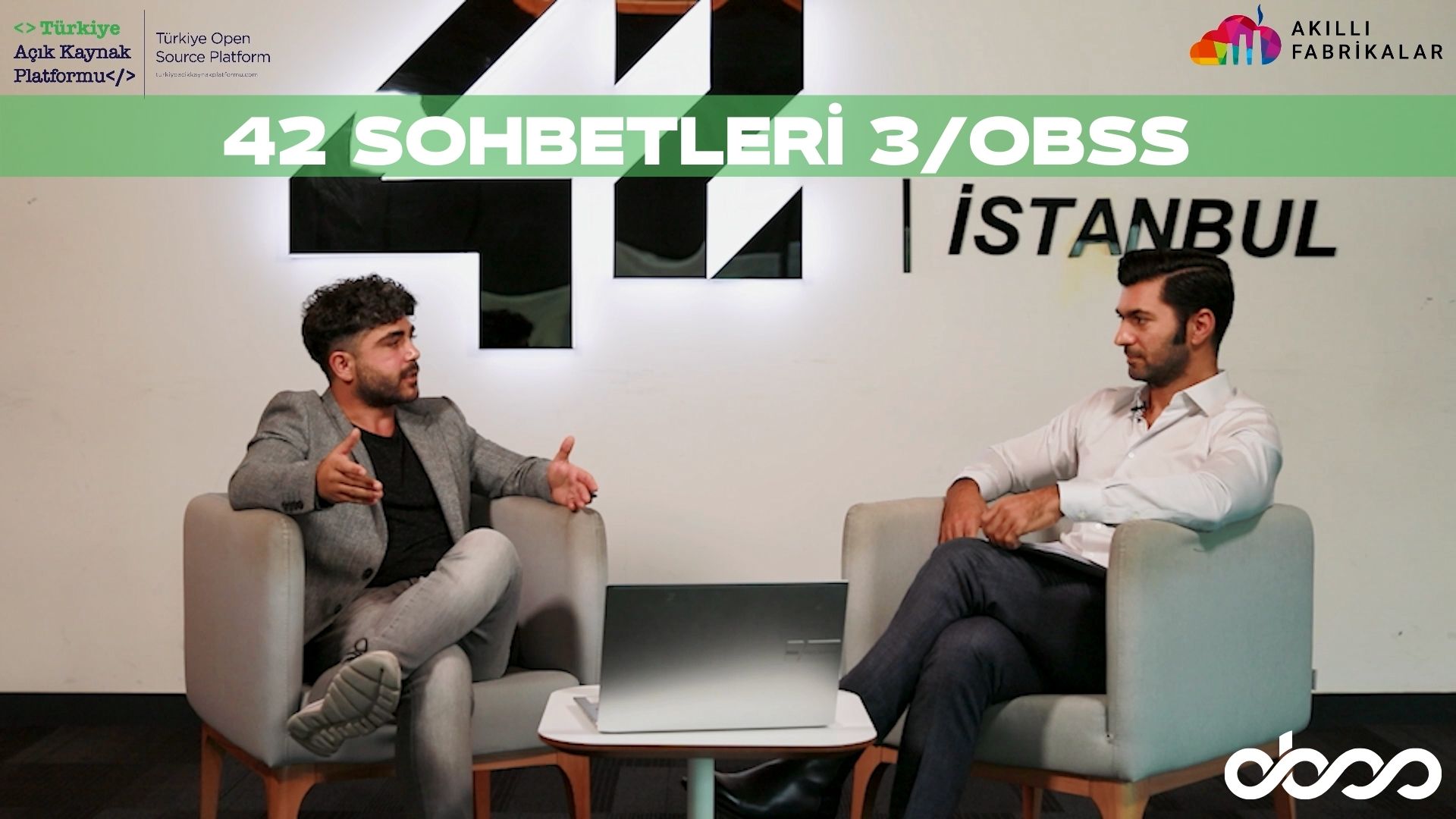
OBSS also supports the coding school 42. Taken together, these activities suggest a founder concerned with the supply of capability beyond his own immediate recruitment needs. There is commercial sense in that concern. A company that sells engineering cannot treat the development of engineers as somebody else's problem.
The engineer moves upstairs
Şen's argument extends beyond who gets hired to write software. In 2023, he set out a view of corporate leadership in which technology expertise becomes more common among CEOs and board members. Finance, law, sales and marketing remain important, but he argued for leaders who combine a business discipline with an understanding of technology.
His concern was practical. A technically capable CEO may still have to persuade a board whose members lack that background. The two sides can end up discussing different measures of success. Boards with stronger technical understanding could set more realistic objectives, evaluate results and support the changes needed to improve the business.
In Şen's formulation, data knowledge belongs in sales, marketing, finance and production. Software decisions have consequences across the organisation. Treating technology as a separate department leaves the people at the top less able to judge those consequences. His prediction gives an engineer's career a longer horizon: technical understanding can become preparation for management.
a problem
a system
direction
That is an ambitious claim for a profession often asked to carry out someone else's plan. It also raises the standard. If engineers want a greater role in decisions, understanding the code is a starting qualification. They must be able to connect it to customers, costs, priorities and the institution's ability to change.
From the selection panel to the board
In February 2015, Şen became an Endeavor Entrepreneur following the organisation's international selection panel in Singapore. The panel assessed candidates for qualities including their potential as role models and the sustainability and scalability of their businesses. OBSS had reached its tenth year. Şen was joining a network designed to help entrepreneurs build further.
Nine years later, the relationship took another form. Endeavor Türkiye announced his appointment to its board in June 2024. He became one of six Endeavor Entrepreneurs serving there. By then, OBSS's offices included Istanbul, Ankara, London, Amsterdam and Baku. A founder who had been selected for support was helping govern the organisation providing it.
OBSS Ventures subsequently announced his re-election after Endeavor Türkiye's June 2025 general assembly. The movement from participant to board member supplies a concrete example of the wider responsibility he advocates. It is a career development measured in whom he can help, as well as the size of the organisation he runs.
What an investor brings after the money
At OBSS Ventures, Şen works with Orhan Bayram as a general partner. The venture operation describes a technology-for-equity model, combining investment with software and product development. Its stated focus runs from early-stage companies to Series B across the UK, Europe and the Middle East. Engineering capacity becomes part of the investment proposition.
Navlungo offers a specific example. In March 2025, Şen and Bayram published their rationale for backing the digital logistics platform. They pointed to freight comparisons, shipment tracking and fulfilment services, alongside the possibility of improving cross-border logistics through technology. The support they described included technical help, operational guidance and introductions to potential customers and investors.
It is an intelligible extension of Şen's existing business. Software companies learn where products become difficult to build and maintain. A founder trying to grow a logistics platform has those problems alongside the ordinary business of winning customers. The venture model proposes that an experienced engineering organisation can share some of that burden.
The proposition still has to earn its results company by company. Its appeal lies in being specific about what happens after an investment announcement. A cheque has a date. Product development has a calendar, a backlog and people who need answers on Tuesday.
The next test is a different market
Expansion has given Şen new places to apply the method. When OBSS opened in Baku, he identified an existing customer, the International Bank of Azerbaijan, as an important reference. He described ambitions to serve Kazakhstan and Uzbekistan over the medium and longer term. The sequence was recognisable: an established working relationship, a local office, then a larger ambition.
London is now another centre of attention. Şen's public professional profile places him in the London area, and he has been a director of OBSS Limited since July 2023. In October 2026, he discussed plans to build UK defence partnerships around OBSS's experience in command-and-control software.
He emphasised understanding operational problems, long relationships and engineering responsibility. His stated ambition was to make OBSS a trusted partner for UK programmes. That remains a goal to be tested through delivery. The measure he is proposing is familiar from the banking work: whether another organisation can depend on the team when the assignment becomes complicated.
There is a line from the high-school competitor to that ambition. Both ask the person doing the judging to look closely at demonstrated capability. For the student, it might mean being allowed into the profession. For Şen, two decades into building OBSS, it means persuading the next customer to hand over meaningful responsibility.