Zach Maurides put his ambition on the record before he had much occasion to be modest about it. In September 2007, the Duke offensive lineman was asked for his dream job. His answer: “I would like to be a CEO of my own software company.” Plenty of students have an answer ready for that question. Maurides already had a business under construction.
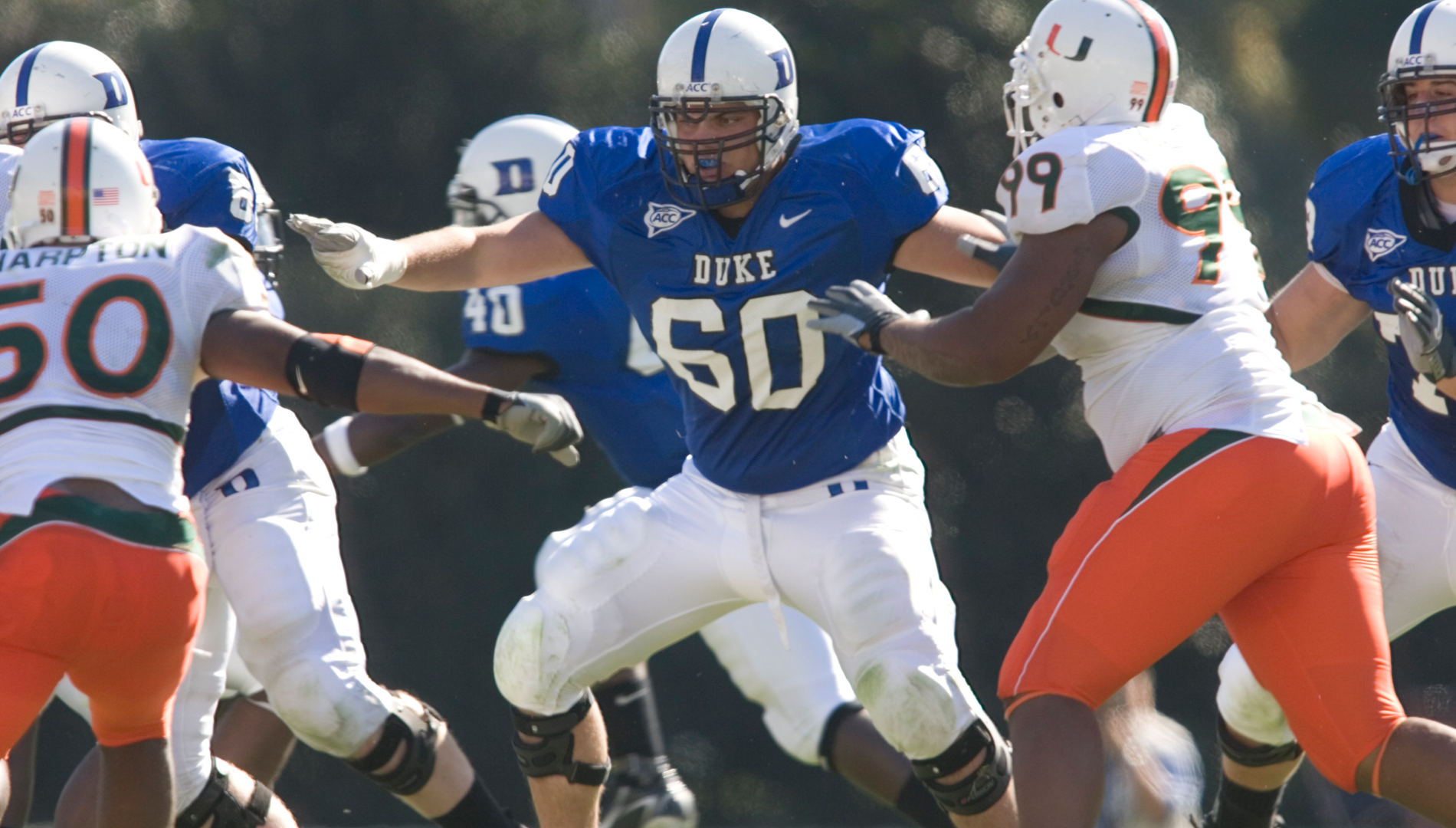
The same interview supplies a pleasingly unpolished picture of its future executive. He liked the Chicago Bears, listened to T.I., and wanted backstage access to the Rolling Stones. His jersey number, 60, owed something to courtesy and something to availability: he had given 77 to someone who wanted it, and 76 was taken. Even his number had required a little coordination.
Today he runs Teamworks from Durham, North Carolina. The company makes software for the workings of sports organizations, from daily communication to recruiting and game preparation. Its ambitions now include connecting data and applying AI across those jobs. The distance from college guard to software executive is considerable. The thread running through it is surprisingly domestic: somebody really ought to get everyone’s appointments into the same place.
A calendar with shoulder pads
Maurides grew up in Glenview, Illinois, and attended Glenbrook South, where he played football and wrestled. He arrived at Duke in 2003 on a football scholarship. Football brought its own timetable; university life supplied another. Classes, practice, film, lifting, tutoring and meetings competed for hours that declined to multiply. Anyone who has tried to arrange lunch with four adults can appreciate the administrative possibilities of a football program.
A computer class gave him a reason to consider a practical answer. He began exploring a web-based system that could bring schedules together. An account published during his senior season describes him asking Duke staff which components they would actually use. It also records the early company name, Logistical Athletic Solutions. The name had the glamour of a filing cabinet; the problem deserved serious attention.
His father, George, helped with the business. Software developer Shaun Powell became part of the product’s development. His father’s observation was straightforward: if Duke had this difficulty, other organizations might have it too, and might pay for a solution. That moved the idea beyond a useful campus convenience. It suggested a customer.
The early product let people around an athlete coordinate their demands rather than leave the athlete to reconcile them. Scheduling and messaging belonged together because an appointment is only useful if the people attending it hear about it. Teamworks grew around this ordinary dependency. The product’s first test was a working football program, full of people with immediate reasons to notice when something failed.
The work between the highlights
Maurides’s playing record offers a reminder that his first occupation demanded patience. He saw no game action in 2003, appeared in one contest in 2004, and played in five in 2005. In 2006, he started all 12 games and played 768 snaps. He earned Academic All-ACC recognition that season. Progress arrived through more work and more responsibility.
Offensive-line play is an interesting preparation for building operational software. Much of its value is visible in what another person can accomplish. A successful assignment gives someone else room to move. That is an analogy, of course, rather than a claim that football secretly teaches database design. Still, there is a recognizable sympathy between protecting a play and improving the conditions under which a team works.
Maurides has described a more direct inheritance. At Duke he played for four offensive coordinators, three position coaches and two head coaches. The turnover exposed him to different ways of leading. He watched, borrowed and decided what suited him. His own verdict was compact: “Football taught me the grind.” He also described himself as big and loud, and said he wanted to lead his employees like a coach.
“Football taught me the grind.”
Zach Maurides, reflecting on his playing years, 2020
There is a useful distinction inside that ambition. A coach has to turn individual capabilities into collective performance. Hiring able people does not finish the job. They still need shared expectations and some way to exchange what they know. Maurides’s product addressed that problem for customers while the growth of his own company kept handing him fresh opportunities to experience it himself.
When demand outran the office
Selling software to sports organizations meant learning how the business worked beyond his own locker room. His university offered access to people who could challenge the idea from different directions. The athlete’s experience gave him a starting point; staff and administrators could explain what buying and using the product would require. Familiarity with the problem had to become a product other people would choose.
By 2016, demand was putting pressure on the company’s capacity. After Maurides presented Teamworks to a group of NHL executives, 19 teams contacted him within weeks. At the time, the Durham business had about 30 employees and more than 800 sports teams using its platform. The announced $6.25 million Series A gave the company resources to respond. A successful sales pitch can create a rather expensive to-do list.
The opportunity also extended beyond a single team. By 2019, Teamworks had become part of the machinery around March Madness, an event whose appeal to spectators is matched by its demands on organizers. Sixty-eight teams and 13 host cities make an excellent basketball tournament and a formidable coordination exercise. That setting made the product’s purpose easy to understand: the games require a great deal of work before anyone tips off.
Financing rounds and valuation are different measures. Figures reflect their announcement dates.
The athlete gets a business, too
As the company expanded, Maurides’s attention moved toward other parts of an athlete’s working life. The 2019 acquisition of INFLCR, founded by Jim Cavale, brought in technology for distributing content athletes could share on social media. Photographs and video were already being created around them. Making that material accessible gave athletes more control over how they presented themselves.
The later opening of name, image and likeness opportunities in college sports gave that work another dimension. Athletes could build commercial activity around an audience or a skill. Maurides’s public argument included athletes outside the most visible competitions: a student with a successful cooking channel, for instance, might have a business worth pursuing alongside sport. That example broadens the picture beyond the star quarterback and the endorsement photograph.
Payments introduced another administrative job. In 2024, Teamworks Wallet began pilots with college programs and NIL collectives, including groups connected to Purdue and Georgia. The offering combined payments with financial and compliance functions. For Maurides, the expanding product range meant following the practical consequences of athletes taking on more roles. A schedule now had business obligations to accommodate as well.
A larger company, the same coordination problem
Recognition accompanied the expansion. Maurides appeared in Sports Business Journal’s Forty Under 40 in 2020 and The Athletic’s college-sports list in 2022. That year also brought a $50 million Series D. These milestones marked the growth of a company serving an industry that was finding more reasons to buy software.
In June 2025, Teamworks announced a $235 million Series F led by returning investor Dragoneer Investment Group, at a pre-money valuation exceeding $1 billion. The stated priorities included data science, more connected products and AI-powered recommendations. The ambition was to make information useful across the organization, rather than leave it stranded in separate applications.
The next major announcement came in April 2026. A growth investment led by Hg, with AllianceBernstein participating, took Teamworks’ valuation above $1.5 billion and brought Hg’s total investment to $200 million. Teamworks reported serving more than 7,000 elite sports organizations. Acquisitions including Zelus Analytics, Telemetry Sports, Sportlogiq and PFF’s enterprise business added data and analytical capabilities. Those assets give the company more material to connect; making the connections useful remains the job.
Maurides’s ambition has consequently widened from helping people keep appointments to helping organizations make decisions. The first problem was who needed to be where. The newer questions concern what an organization knows and how staff can use it. The money and product names are conspicuous. The underlying proposition still depends on people finding the system helpful in the middle of their working day.
Coffee, mountains and the next appointment
Away from the product descriptions, Maurides has supplied some welcome particulars. He has climbed Kilimanjaro and Elbrus. In a 2020 questionnaire, he named coffee as indispensable, Hershey’s Milk Chocolate as a guilty pleasure, and good dance music as something that fired him up. His ideal day off involved a spa and no electronics. Building communication software apparently leaves room for appreciating a little silence.
His recollections also resist the polished inevitability of a founder biography. He has acknowledged being hesitant early on. Asked what he would change, he answered, “I would be bolder.” The advice carries more interest coming from someone whose public ambition was so clear at 22. Knowing what you want and moving quickly toward it are separate skills.
In June 2026, he became an EY Entrepreneur Of The Year Southeast award winner. His response thanked the athletes, coaches, administrators and employees who had helped build Teamworks. Those are also the people whose days the software has to improve. Back in 2007, the desired job title fit in one sentence. Keeping that job worthwhile has required a much longer conversation.
Keep the conversation going
Explore Teamworks and Maurides on LinkedIn.