Batuhan Okur had a problem with golf that a different club could not solve. An eye condition interfered with his ability to follow the ball. Looking for a launch monitor, he found equipment whose price and portability left room for improvement. The eventual answer was Rapsodo: a company built around making a fleeting event available for inspection.
Okur registered the business in Singapore in 2010. Its early golf technology reached American buyers under the SkyTrak name. Today, Rapsodo sells monitors, apps and memberships for golf, baseball and softball. The common task is deceptively small: watch a ball long enough to tell its owner something useful.
- Radar, cameras and replay turn golf shots, pitches and hits into usable feedback.
- Customers range from individual golfers to USA Baseball’s development programs.
- Hardware is one expense; memberships and a suitable practice space complete the bill.

First, take the engineers outside
The early threat was financial. In a 2021 interview, Okur recalled starting with $600,000 in investment, then facing cash pressure even as development progressed. A licensing agreement with an American company supplied an important lifeline. Making the device work and making the business work were separate assignments.
Baseball exposed another gap. The engineers understood tracking, but lacked experience of the sport. A visiting American specialist, Seth, took the discussion outside to try the prototype. Testing revealed improvements that a meeting had missed. Rapsodo’s useful habit was taking instruction from the person who would actually use the thing.
Beyond ball speed
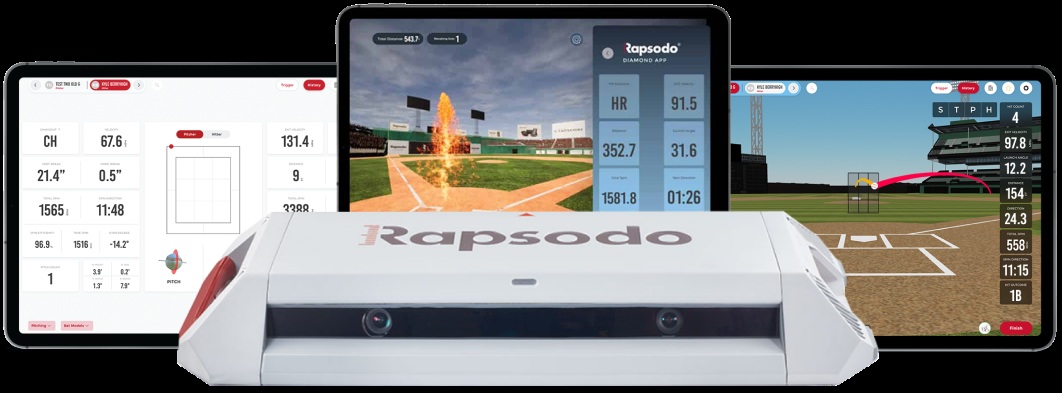
A radar gun can report speed. Rapsodo combines radar with cameras to describe more of the event: spin, launch, movement and the video that lets a coach connect a number to a motion. Its expertise spans sensors, computer vision, flight modeling and software that keeps an athlete’s sessions together.
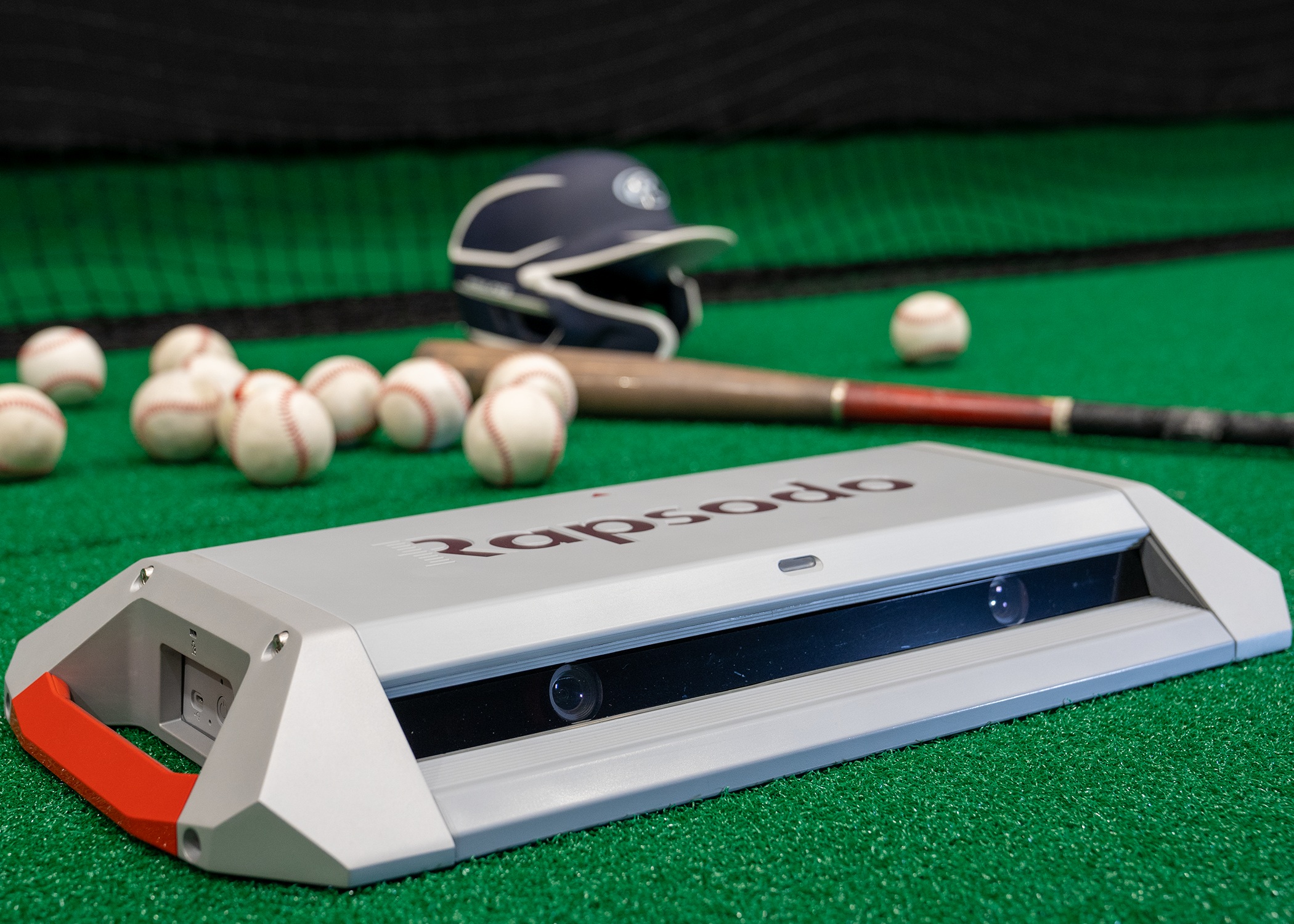
The PRO 2.0, announced in January 2024, puts hitting and pitching in one unit with two cameras and two radars. The baseball PRO 3.0 adds a third camera and live-on-live tracking, capturing a pitcher facing a hitter. Its seam-orientation and seam-shifted-wake data give pitch designers another way to investigate movement.
The record also changes the conversation after practice. A coach can revisit a session instead of relying entirely on memory. Video gives the athlete something recognizable to discuss alongside the statistics. The point of collecting a history is to make comparison possible across sessions, rather than let each practice disappear when everyone leaves the field.
Softball gets its own app and measurements, including pitcher stride length and approach angles. That distinction matters. A softball coach needs a tool fitted to softball’s delivery and field, rather than a baseball dashboard with a different label.
Ohtani meets the practice business.
Shohei Ohtani became Rapsodo’s technology ambassador in April 2024, after already using its equipment. His two-way role made the partnership unusually literal: one athlete, hitting and pitching, endorsing a device that measures both.
The institutional use is more revealing than the endorsement. USA Baseball incorporates PRO 3.0 into Prospect Development Pipeline performance assessments, national-team identification events and training. The customers extend from professional organizations and colleges to academies, school teams and individuals. A shared measurement can help a coach compare sessions; it cannot, by itself, tell a scout whom to sign.
“I only wished I had started using it earlier.”
Shohei Ohtani · April 2024
The second price tag
Rapsodo sells hardware directly and through retailers, then charges for software access and richer features. That puts consumer equipment and recurring software revenue in the same shopping basket. Golfers encounter it at home or on the range; diamond-sports programs buy into a longer player-development workflow.
As checked in October 2026, PRO 2.0 baseball hardware is listed at $3,500 and PRO 3.0 at $8,500. Pro Series membership sits alongside the equipment purchase. Compare packages carefully: the number of players, sport and service tier affect what a program buys.
The new MLM2XPRO golf monitor costs $899.99. Core is $199.99 annually; Studios is $399.99 annually and includes Core. One hardware purchase plus one full year of Core totals $1,099.98 before tax, ignoring trial timing. A net, mat, screen and suitable computer can add substantially to a home setup.
Choose your annual plan.
Measure the shot. Question the number.
Rapsodo competes with Garmin’s portable golf monitors and with professional tracking suppliers such as Trackman. Its proposition centers on portable measurement paired with video and sport-specific software. Buyers should compare the particular metric and workflow they need, rather than count the figures on a specification sheet.
For an individual golfer, the appeal is a practice session that leaves a record. For a team, the work includes player profiles, rosters and reviewing results together. Those are different buying decisions, even when both begin with a small piece of tracking hardware. The software has to suit the people responsible for using the measurements.
Here is an easily missed detail: measured launch conditions and calculated flight are different things. Rapsodo’s published MLM2PRO algorithm comparison fed the same launch inputs into different flight models. That tests agreement between calculations. It does not independently prove that the devices capture every real shot with equal accuracy.
Setup matters, too. MLM2PRO needs 6.5-8.5 feet behind the ball and at least eight feet of flight into a net. Measured spin requires RPT-patterned balls. Club-data capture needs precise placement and leveling. A cramped, poorly lit room or a casual alignment can undermine the reason for buying the monitor.
Measure your room.
Make the next repetition count
The method a reader can copy is modest: establish a baseline, change one thing, compare a group of repetitions, then review the video. A golfer might map carry distances across clubs. A pitcher might compare grips. Keep the setup and balls consistent enough that an equipment change does not masquerade as improvement.
That is an editorial prescription for using feedback, rather than a promise of lower scores. A bigger number may be irrelevant to the actual task. Training still needs a question, interpretation and a coach or athlete prepared to act on the answer.
Finishing the hole
On October 15, 2026, Rapsodo launched MLM2XPRO and Studios, bringing putting to its golf simulation and a 4K course library to compatible PCs. Existing MLM2PRO owners also gained access to the new app environment. The direction is clear: keep practice, stored performance and playing at home inside the same service.
The company began with someone having trouble seeing a ball. Its continuing challenge is making the resulting information worth looking at. The useful moment arrives when a player returns to the hitting area with a specific adjustment in mind.