A third baseman drifts into shallow right field. A ground ball arrives. He fields it. The out looks ordinary, but the statistic has a problem: almost no third baseman makes a play there. Should the player receive credit for extraordinary range, or should somebody thank the person who told him where to stand?
- SIS turns game footage into detailed data for teams, media, and betting operators.
- Its specialty is assigning credit for work ordinary statistics miss.
- Buy a research subscription, license a feed, or connect data to film.
That question sits near the center of Sports Info Solutions. The Pennsylvania company collects, analyzes, and distributes sports data. Its particular obsession is the distance between what happened and who made it happen. A box score records an outcome. SIS wants to unpack the labor behind it.
01 / The trouble with standing in the right place
Founded in 2002 as Baseball Info Solutions, SIS grew from the statistical world of John Dewan and Bill James. Dewan had previously co-founded STATS Inc.; his work with James on Project Scoresheet belonged to an earlier effort to make baseball more measurable. The new company carried that instinct into detailed observation.
Defensive Runs Saved became a signature expression of it. Tracked since 2003, the metric estimates defensive contributions in runs. That makes an unglamorous act, such as preventing a hit, legible alongside baseball’s more conspicuous achievements. The difficulty is deciding which part of prevention belongs to which person.
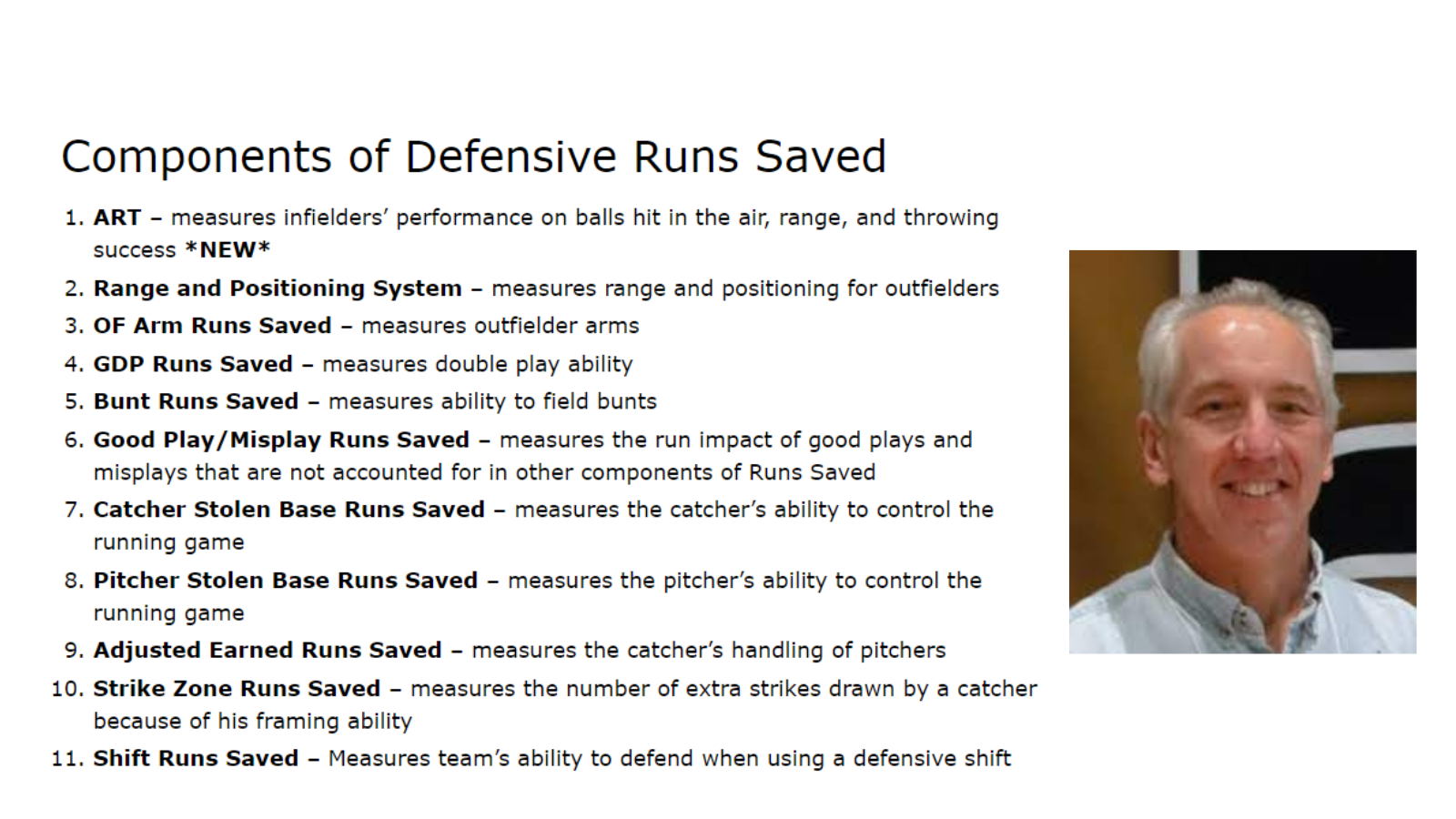
Shifting exposed the difficulty. In 2012, SIS recognized that unusual positioning could distort individual evaluations, exemplified by Toronto third baseman Brett Lawrie. Its initial response excluded shift plays from individual assessments. As shifts spread, that workaround left more defense outside the individual calculation.
Before the 2020 season, SIS introduced its PART system: Positioning, Air balls, Range, and Throwing. Starting-position data let it separate team positioning from a fielder’s actions. The lesson travels well beyond baseball: before rewarding someone for a result, measure the circumstances that made the result possible.
02 / Twenty-two players. One attribution problem.
Football brought a larger version of the same puzzle. SIS expanded into the sport and adopted its current name in 2016. A quarterback’s completion depends on protection, placement, separation, and what happens after the catch. Conventional totals collapse those contributions into a few familiar columns.
SIS’s Total Points system starts with Expected Points Added, an estimate of how a play changes scoring prospects, and distributes value using its charting. Blocking and broken tackles enter the picture. So do coverage and pressure. Its purpose is to compare contributions across positions without pretending every job resembles quarterbacking.
The calculations keep changing. In August 2024, richer information about accuracy and receiver openness shifted credit on a documented Jalen Hurts-to-DeVonta Smith completion. Hurts’s assigned value fell from 2.2 points to 0.4; Smith’s rose from 1.8 to 2.7. The completed pass stayed the same. The explanation became more specific.
“Scouts matter because not everything that counts can be counted”John Park, Dallas Cowboys director of strategic football operations, in a testimonial published by SIS
That explains the company’s unusual combination of skills. Its staff includes former athletes, coaches, and scouts alongside researchers and technologists. Data scouts chart games; analysts develop models. Current CEO Matt Manocherian, appointed in 2025, previously scouted for the Saints and Browns. He arrived at SIS as a football consultant in 2016.
03 / Sell the observation. Deliver the workflow.
SIS sells data feeds, analytics, applications, and consulting. Baseball coverage extends through the majors, minors, college, and international leagues. Basketball products examine advantages created or prevented, including actions away from the ball. Its 2023 acquisition of Blueprint Stats added stat-taking and visualization technology after a partnership that began in 2022.
Different buyers need different delivery. A team can investigate prospects or tendencies. A writer can interrogate a leaderboard. A front office can bring an injury history into a player evaluation, while a league can turn its games into a consistent feed for partners. The underlying observations travel into several businesses, each asking a different question. A sportsbook needs live updates quickly enough to manage a changing market. SIS’s live college feeds separate mid-play alerts, immediate game-state updates, and subsequent play-level detail. DraftKings and Entain appear among its named users.
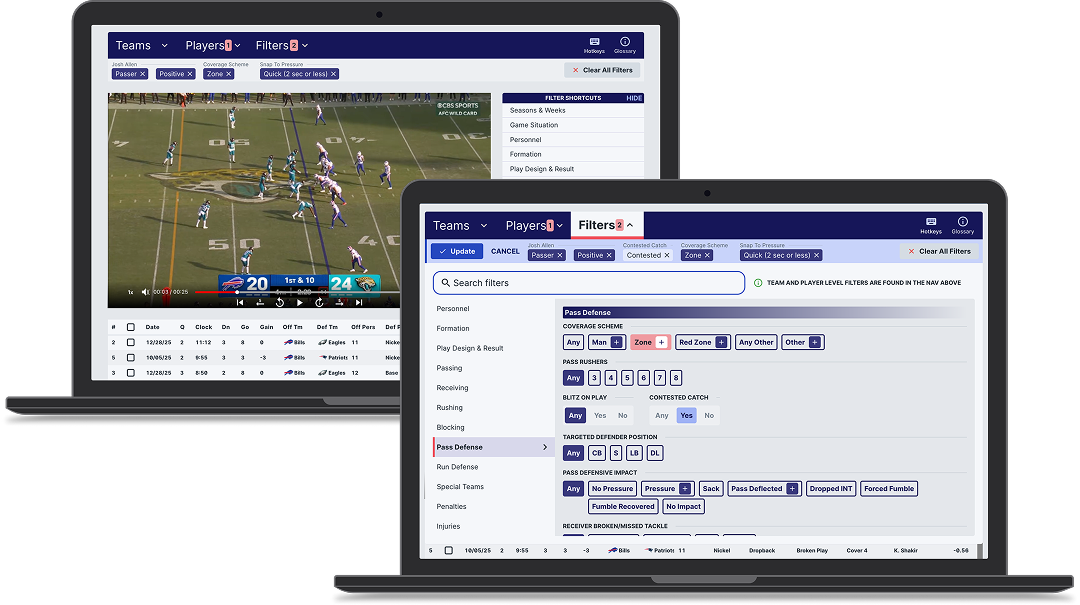
The product also has to meet people inside their existing tools. SIS Film Room turns advanced filters into shareable video cutups. Its Catapult integration carries SIS fields into a familiar video environment. This is a practical distinction in a market that also includes Stats Perform, Sportradar, and football specialist PFF: SIS offers detailed charting and configurable delivery, with film connected to the questions.
04 / The price of a better question
The public subscription store lists NFL DataHub access at $99.99 monthly or $749.99 annually; NFL plus NCAA costs $199.99 monthly or $1,399.99 annually. These packages include analytical features such as advanced filters and CSV export. Enterprise data feeds are a separate sales conversation. A subscription’s publication permissions do not grant unrestricted data redistribution.
Its first outside investment, announced in April 2021 and led by Audeo Capital, supported product expansion and deeper sports-gaming relationships. More recently, a March 2026 Dropback partnership put 250-plus SIS data points into college roster-valuation workflows. Existing Dropback clients were promised core data without an additional charge; advanced insights depended on their plan.
There is a useful limit to all this precision. Revised models can change historical rankings, and newer observations cannot always be backfilled. A metric needs its methodology, coverage, and context attached. Buyers should test the actual decision they want to improve. SIS’s most transferable habit is simple: find the missing observation, collect it consistently, then reconsider who deserves the credit.