The old keyboard command Alt-Tab has a modest job: leave one window and enter another. It was an apt name for Yossi Mlynsky’s first company, although probably more apt than anyone intended. Alt Tab Mobile began as a software studio making products for startups. Over time, the business itself changed windows. The studio became UpStack, and the assignment grew from building software to building the teams that build software.
The transition suits Mlynsky’s career. He has moved through the industry less like a celebrity founder than a product manager with a restless browser. Visual arts came first at the University of Sydney. Then came computer and software engineering at the University of Technology Sydney, completed with second-class honours. His early working years took him through a distinctly Australian stretch of the internet: Kazaa, CareerOne under Monster, Bupa Australia, ninemsn, BT Financial Group and Macquarie Bank.
Those names span file sharing, media, health insurance, recruitment and banking. They are connected by the untidy middle where a technical system has to meet an actual user. Product managers live there, translating wishes into requirements and requirements into work that engineers can finish. Mlynsky carried that habit into entrepreneurship.
A founder honest enough to ask
An early public profile of Mlynsky is charming because it has not yet acquired the varnish that success usually adds. He presents himself as the founder of Alt Tab Mobile, a builder of mobile products, a husband and father of four, and someone good at assembling a company without much money. Then comes a frank admission: he is looking for advisers and guidance about taking the business to the next level. In the same breath, he offers to help other startups with development processes and mobile work.
There is a whole founder’s education inside that exchange. Confidence and incompleteness sit beside one another. He knew how to ship; he did not pretend to know every road from a services studio to a larger enterprise. Later, he would become the adviser - working with MealPal on growth, mentoring women-led startups through Monarq Incubator and volunteering with education projects. Expertise arrived as accumulated practice, not as an origin story rewritten after the fact.
The decade before the overnight trend
UpStack’s public history begins in 2010, with Alt Tab as the earlier identity. Its fundraising materials also describe a later operating chapter beginning in 2017. The dates make more sense together than they do in combat: one marks the roots of the company, the other the version investors were being asked to back. Businesses rarely spring from a clean line in a spreadsheet. They molt.
The new name carried a broader proposition. UpStack would find and vet remote engineers, match them with fast-growing companies, help with onboarding and handle the practical machinery around distributed work. A studio sells a project. A talent network has to sell reliable judgment again and again.
That distinction mattered when the pandemic turned remote work from a preference into an emergency. UpStack reported 68 percent growth in 2020, then 100 percent growth in 2021. Fundraising materials put 2020 revenue at $6.9 million and the following year’s run rate at $12 million. They also reported 340 percent revenue growth from 2018 through 2020. The company did not predict a global shutdown. It had simply spent years practicing the organizational form that suddenly became useful.
Mlynsky’s part in the business remained recognizably product-minded. UpStack describes its values as people, trust and value. These are operational constraints, rather than an engineering framework, when colleagues do not share a building. You need a way to judge communication, make expectations legible and create belonging across borders.
Consider the humble company inbox. As UpStack changed email providers, it extended permanent company addresses to more developers. The practical goal involved cost, security and easier account management. The cultural effect was more interesting: thousands of remote engineers could carry an address that said they belonged to the same enterprise. In distributed work, a line after the @ symbol can be a tiny office badge.
The judgment hiding inside the marketplace
Talent platforms tend to advertise their inventory. UpStack’s language emphasizes filtering: technical ability, communication, personality and fit. The company says it recruits from the top one percent of applicants, a marketing claim that points toward the actual difficulty. A database can hold many names. A client needs a small number of people who can enter an existing codebase, understand the product and work with strangers.
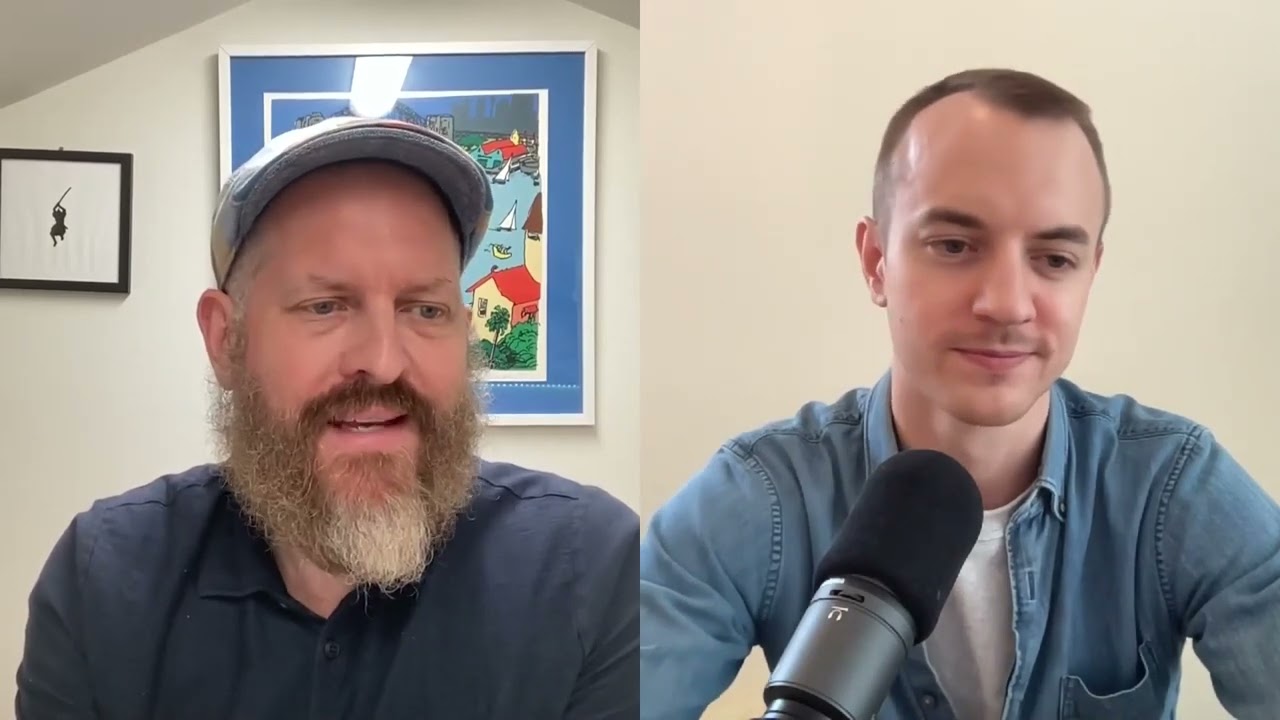
Mlynsky has spent years interviewing other operators about that problem. In one conversation, Canny co-founder Andrew Rasmussen discussed the engineering skills a startup should seek and how a remote team scales. On a 2021 podcast, Mlynsky separated in-house employees, freelancers, agencies and consultancies, then considered how companies identify talent and help people without remote experience adapt. This is less glamorous than predicting the future. It is closer to maintaining one.
The company’s 2021 crowdfunding campaign made the model available for public inspection. UpStack said its clients included Intercom, MealPal, IKEA, Taskrabbit, Juul and InVision, and that those clients had collectively raised more than $1.4 billion. The round ultimately drew 325 investors and about $392,000. Crowdfunding carries its own theatre, but the underlying proposition was sober: companies would continue needing software, and the pool of people capable of making it should not be constrained by commuting distance.
Now the machine can type
In 2026, Mlynsky’s public attention moved toward a new labor complication. Generative AI can produce code quickly. It can also produce a codebase that nobody wishes to inherit. His recent writing circles one blunt distinction: everyone can generate code; almost nobody can ship it.
He tells of meeting a founder who hired a junior engineer with prestigious experience to rebuild a platform using AI tools. Four months later, the resulting code had become difficult to touch. The anecdote fits Mlynsky’s longer argument about talent. Inputs are easy to count: résumés, frameworks, lines of code, models invoked. Product work is judged by what survives contact with customers, maintenance and the next engineer.
His skepticism has the familiar impatience of an operator watching a new tool outrun the vocabulary around it. He uses AI while questioning its claims. Mlynsky has asked what employers even mean by “AI engineer,” noting that candidates who carry the title fall into messier groups than the label suggests. He spent hours reading patents for AI agents, interested in the less theatrical clues hidden in corporate filings. One surprise was that a bank, Citibank, had filed for a layered evaluation framework for autonomous agents while public discussion remained fixed on the model labs.
He applies the same test to content. Can an automated system create text, social posts, images and designs on a regular basis that match careful human work? His public challenge ended with three useful words: “Prove me wrong.” It is a more generous posture than certainty. He wants evidence before anyone replaces an old craft out of sentiment for the new one.
AI makes a first draft cheaper. It does not make architecture, testing, communication, maintenance or responsibility disappear. In a hiring business, the premium shifts toward people who can turn abundance into dependable work.
The billboard and the garden
Mlynsky’s public persona has its small counterweights. There is the cap that appears in portraits and interviews, informal enough to survive the journey from mobile studio to Times Square. There is his delight at seeing UpStack on one of those billboards, a New York founder allowing himself a clean moment of pride. There are occasional departures from software discourse: a Falcon Heavy clip, a sunny afternoon cut short for gardening.
The gardening post may be the most useful metaphor available, although one suspects Mlynsky would roll his eyes at it. Distributed companies require cultivation: repeated screening, careful matching, written expectations and enough contact to keep a network from becoming merely a list. Growth is attractive on a chart. It is messier in the soil.
UpStack’s reported cumulative revenue has passed $55 million on Mlynsky’s own account. The more interesting continuity is harder to compress. The founder who once asked strangers for advice still asks public questions. The product manager who translated user needs into engineering work now examines whether AI changes what an engineer is. The company whose old name meant switching windows keeps adapting to the next one.
Underneath the problem of distance sits the larger problem of trust: who can work, who can finish, and how people recognize one another as teammates when the old signals disappear. Remote work made that question urgent. AI makes it urgent again.