A deeply unglamorous screen in American business is a payer portal waiting for one more document. It has no cinematic soundtrack. It does have fields, passwords, deadlines, status checks and the special suspense of wondering whether a submission has moved at all. Sam Slezek looked at this administrative thicket and saw the place to start a company.
Arctic Health, which Slezek co-founded in New York in 2025, works on provider credentialing and payer contracting. In plain English, it helps healthcare organizations do the long, exacting work required to establish relationships with insurance networks and enroll providers. The company combines experienced credentialing operators with software that collects and validates information, navigates portals, submits paperwork and monitors what happens next.
When Slezek announced the company's Y Combinator launch, he described getting in-network as “a more complex labyrinth than I could have ever imagined.” Labyrinth is an excellent startup word because it implies both misery and a map. Arctic Health is trying to make the map, then walk the route on the customer's behalf.
“One pain keeps showing up first: getting in-network with insurance companies.”Sam Slezek, announcing Arctic Health's launch
A résumé that learned to rhyme
Slezek arrived at this particular maze by taking a route that looks varied on paper and remarkably consistent in retrospect. He studied computer science and economics at Duke University, graduated magna cum laude in 2016 with a 3.9 GPA, and began his career at Morgan Stanley in New York. There, in Global Capital Markets, he covered financial institutions and built models for debt and hybrid instruments. He was already close to insurance, although from the capital side of the table.
A year later, he moved to San Francisco and joined Amasia as the venture firm's first full-time associate. The job added a second vantage point: instead of modeling an institution, he evaluated companies trying to change one. He built an outbound sourcing process, sourced investments in Focusmate, Beeswax, Enwoven and Clarity, and worked on diligence and portfolio operating models. His technical training even followed him onto the finance floor; at Morgan Stanley he had used Python to clean and aggregate data.
Ten years, five operating lenses
finance
venture
product
frontier data
founder
Then came Instacart, where his work escaped the spreadsheet and entered the grocery aisle. Slezek joined business operations in 2019 and moved into product management in 2020. He founded the subscription product team and helped reshape the growth strategy for what became Instacart+. His account of the work says subscription usage rose from roughly 40 percent of orders to roughly 60 percent. Partnerships with Chase, Grubhub, Mastercard and Delta turned membership into an ecosystem rather than a lonely monthly charge.
The grocery store was the classroom
An especially revealing Instacart project was Scan & Pay, the company's first in-store checkout product. The premise was simple enough for a customer: scan groceries with a phone, keep an eye on the running total and pay without waiting at a register. The launch was anything but simple. Slezek led a 15-person team from idea to pilot at Foodcellar Market in Queens. His remit included hardware selection, procurement, the retailer relationship, software product management, marketing, staffing, testing and the physical setup in the store.
This is the hidden education of an operator. A product is never merely the thing on the screen. It is the scanner that must work, the sign a shopper must notice, the store colleague who must understand the flow, and the odd item priced by weight. Slezek reported that usage went from single-digit orders a day to more than 200 orders a week within two months. Instacart later described Scan & Pay's full deployment at Foodcellar, including its heaviest use around peak hours and for baskets of fewer than ten items.
The connection to Arctic Health is not grocery, of course. It is the discipline of treating the entire outcome as the product. A credentialing dashboard can look handsome while a provider remains unenrolled. Arctic Health's proposition is that the work continues past the interface: collect, check, submit, follow up, negotiate and monitor.
An expert-data detour
After Instacart, Slezek's next publicly documented chapter was short and dense. He joined Scale AI in March 2025 as a strategic product manager and launched the Human Frontier Collective, an internal venture for expert-level frontier data. He described the platform as growing beyond $1 million in weekly revenue in under three months. He also designed and coded parts of its delivery system, including an early model-debate approach for checking the accuracy of difficult answers.
Scale later credited Slezek and four colleagues for foundational work behind its published “autoraters” system. That project put multiple models into a structured debate, with another model judging the result, while human experts remained part of the quality process. The notable idea was not that a model could speak. It was that reliable work required a designed system of checks, roles and escalation.
That distinction now sits inside Arctic Health's own origin story. The founders say they had watched powerful AI tools fall short in workflows governed by specific rules, unusual data and real consequences. So the company does not present expertise as a quaint thing software will shortly remove. It hires credentialing specialists and pairs them with automation. The expert handles the edge case; the system gets another lesson.
By April 2026, Slezek reported that Arctic Health had served more than 20 clinics, set up more than 100 new group contracts with payers, and handled enrollment and ongoing record maintenance for hundreds of providers. Those numbers belong to an early company, not a victory lap. They do show the work had moved beyond the diagram.
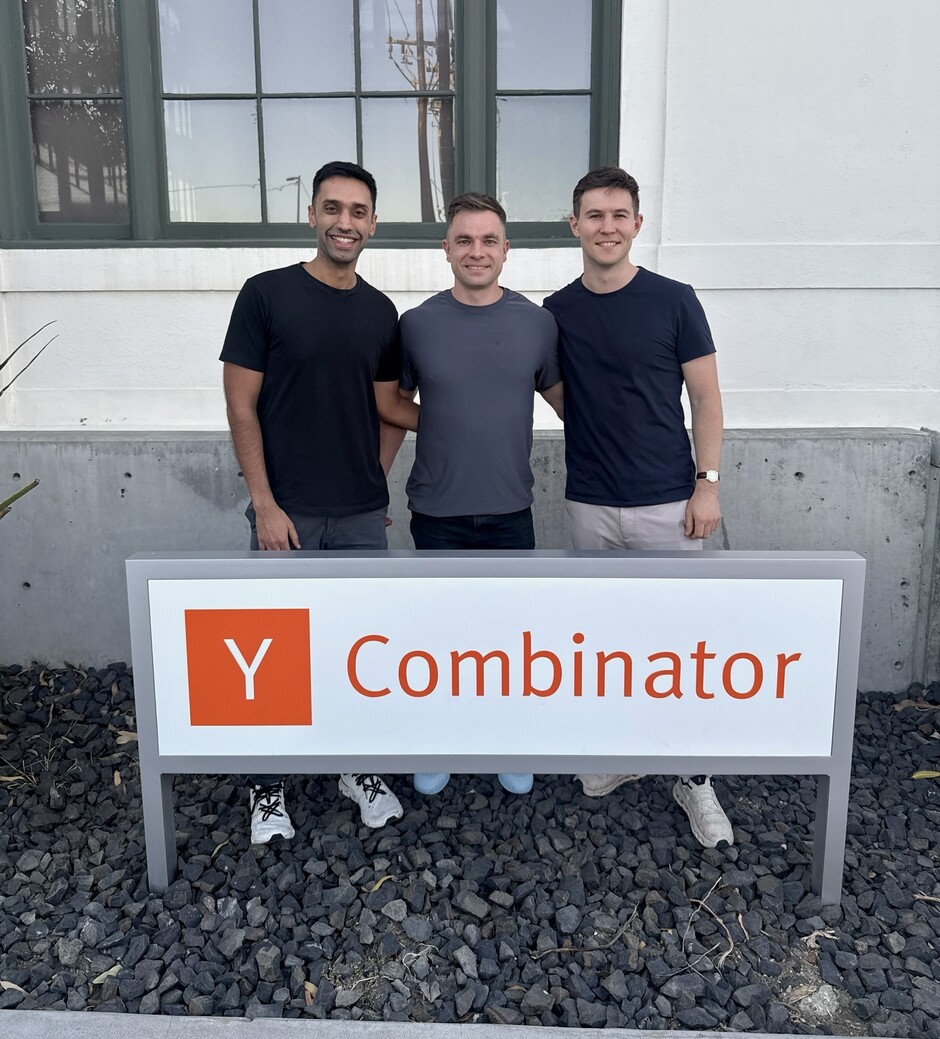
The team itself is a small study in complementary scars. Chief technology officer Raghav Mehrish worked as a senior engineer at Airbnb and Zenefits, then co-founded the ticketing platform Handstamp. Chief operating officer Michael Clark helped build Instabase's inside-sales operation and worked with healthcare customers before spending time in credit investing. Slezek occupies the product-and-business corner. Four people appear on Arctic Health's Y Combinator listing, which means nobody has the luxury of mistaking a job title for a fence. The company's method reflects that compactness: technology, operations and domain expertise sit together because the workflow refuses to separate them politely. In a larger company, a troublesome portal might become somebody else's ticket. In a four-person startup, the ticket is the company. That proximity can be uncomfortable. It is also how the founders learn which parts of the process deserve code, which demand judgment, and which simply require a determined human being to call again.
The useful amateur
There is another Slezek thread, quieter but revealing. Before Arctic Health, he co-founded Bia Technologies with his father, Skip Slezek. The family and veteran-owned company in Northampton, Massachusetts, works in military electronic and optical hardware. Its profile describes the younger Slezek's appetite for small business and lists a collection of off-hours pursuits: acting, surfing, DJing, basketball, chess and golf.
The list is almost suspiciously well stocked, but it fits the career. Acting asks for close observation. DJing rewards timing and attention to a room. Chess demands sequences. Basketball insists that the plan survive contact with moving people. Slezek played varsity basketball and football at Williston Northampton School; at Duke, his activities included club basketball and the Chronicle's editorial board. He also served as a teaching assistant in a service-learning course where students used LEGO robots while mentoring local schoolchildren.
None of this proves a grand theory of personality. Public biographies are outlines, not x-rays. The outline here does suggest comfort with switching contexts and a willingness to learn by doing. Slezek moved from analyst to investor, from operator to product leader, and from employee to founder. Each transition traded a little distance for a little more responsibility.
The founder's edge can be a pile of old jobs that suddenly become one job.
The business of finishing
Arctic Health's ambition is larger than making forms less irritating. Every completed submission can teach its system how a portal behaves. Communications can reveal whom to contact and when. Enrollment outcomes can indicate which networks are open. Contracting work can build a picture of how terms vary by specialty and region. The humble workflow becomes a data set, provided the company keeps doing the humble work.
That may be why Slezek's winding path matters. Finance taught him to model incentives. Venture taught him to inspect a market. Instacart taught him to ship through operational complexity. Scale taught him how expert judgment and machine reasoning can reinforce each other. A family hardware business offered an earlier lesson in execution with someone whose career had been built around it.
Now those lessons meet inside a category few dinner guests would fight to discuss. This is often where durable software begins: not with a dazzling noun, but with a stubborn verb. Validate. Submit. Call. Check. Repeat. The paperwork nobody wants is still work somebody must finish. Slezek has built a career by moving closer to the finish line.