The doctors were there. The patients were there. The permission to connect the two was stuck somewhere among payer portals, state rules, missing forms and unanswered follow-ups. At Tono Health, a virtual dermatology practice, the queue lasted so long that its previous enrollment vendor produced no approved payer applications in two years. Tono estimated the first year of idle provider capacity cost it $1 million to $1.5 million. A waiting room with no patients is a sad sight; a waiting room with patients and a doctor barred by paperwork is an expensive absurdity.
- Assured runs credentialing, payer enrollment, licensing, rosters and monitoring from one provider record.
- Its founders met the problem while building a virtual sleep clinic; they founded Assured in 2024.
- Tono reports 50 approvals from its first 60 applications after switching. Ten were delayed by closed payer panels.
- The company reported more than 100 healthcare customers and $25 million in total funding by July 2026.
Tono's new partner was Assured, a New York company selling the unromantic machinery of healthcare growth. It began by cleaning up Tono's underlying data: its legal entities, clinician profiles in CAQH, and the information each insurer expected to see. Then came a first batch of 60 applications. Fifty won approval in the first month. The other ten ran into closed payer panels, which no software can open by typing faster. Assured identified the blockage and held those applications for another window. Tono eventually moved to more than 120 submissions.
That sequence explains Assured better than a promise to make forms disappear. Forms did not disappear. Someone still had to know which form belonged to which payer, whether a physician's license was current, which tax entity would bill, and when to chase a status update. Assured built software and a specialist operation to do that work as a connected process.
A company born in the gap
Varun Krishnamurthy and Rahul Shivkumar knew the interval between hiring a clinician and booking a billable visit from their previous business. Dawn Health, a virtual sleep clinic, had to onboard providers across states. Krishnamurthy has said that getting a clinician credentialed and in network could take 60 days or more. The pair watched information travel through spreadsheets, PDFs, fax machines and hand-managed verifications. After Dawn Health was acquired in late 2023, they founded Assured in 2024.
Their insight was that a credentialing file is only one stop. A provider may have a valid license yet still lack a verified education record. A committee may approve the file while a payer application remains unsent. A payer may accept the provider while its directory still shows the wrong location. Each handoff invites re-entry, and each re-entry invites a small mistake with a long tail.
The journey behind a first appointment
Assured's product places those stops around one provider record. Its agents draw data from CAQH and other systems, verify credentials against more than 2,000 primary sources, assemble committee-ready packets, prepare payer-specific applications, submit through supported portals or PDFs, and track follow-ups. The company also manages multi-state licenses, renewal dates, sanctions checks and payer rosters. Human specialists take the exceptions: a missing school record, an unusual state board process, a closed panel, or a payer that still wants a phone call.
Assured advertises a credentialing packet ready in under 48 hours once documentation is complete. That is a useful clock, but a narrow one. Committee review and payer decisions are separate steps, often outside the company's control. The more interesting promise is fewer pauses between the steps. A verified record can feed the enrollment application; a new location can update the roster; an expiring license can trigger a renewal before it interrupts care.
The first thing to fail was the handoff
At Tono, the predecessor process generated errors and silence. Applications took weeks to submit and came back with missing documents or requests for rework. The team could not reliably tell what had happened to an application. Assured's intervention began with foundational data, not a dramatic button press. It fixed CAQH profiles and entity relationships, then ran applications in a batch. The order matters: automated mistakes still travel at automated speed.
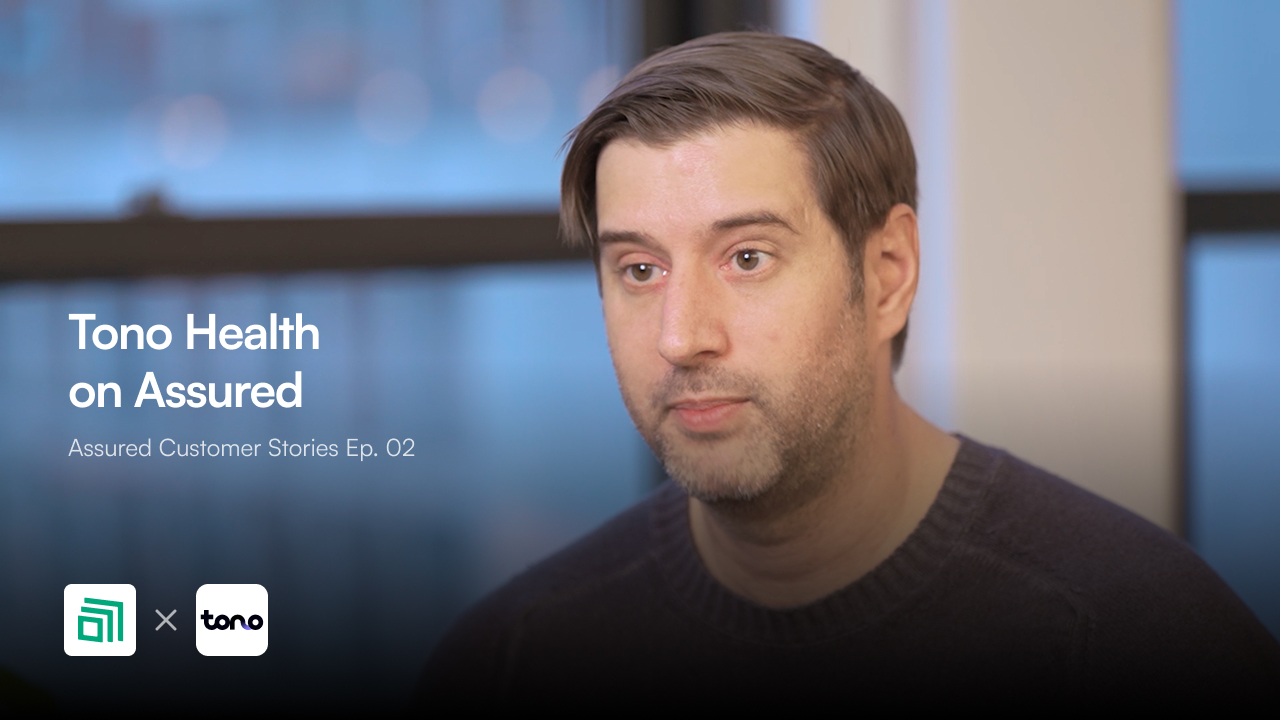
“We went from not having any contracts done to getting contracts done within one month.”Bryson Tombridge, Tono Health co-founder, in Assured's customer account
The results are customer-reported, and they are specific enough to be instructive. In Tono's telling, 50 of 60 first-batch applications were approved, an 83 percent rate. The remaining ten were caught by closed panels. Tono says three employees who had been dedicated to enrollment follow-up could spend more time on patient and provider support. It also attributes substantial subsequent growth to getting the enrollment pipeline moving. Those later growth figures belong to Tono's broader business, so the 50 approvals are the cleanest measure of what changed at the bottleneck.
The market for a completed task
Assured serves organizations with many moving provider relationships: virtual clinics, multi-specialty groups, health systems and health plans. Houston Methodist appears among its customers. Birches Health, a behavioral addiction care company, says it grew from 10 providers in two states to more than 800 across all 50 states while working with Assured. It reports up to 75 percent faster processing per credential and no enrollment denials since the switch. Blossom Health, a psychiatry provider network, says Assured sends payer enrollments within 72 hours of receiving complete provider data and has processed more than 2,000 of its enrollments.
These buyers can hire an internal credentialing team, pay a traditional outsourcing firm, or use competing software such as Medallion and Verifiable. Assured's claim is that it carries out the repetitive work as well as recording its progress. This is the distinction investors at Insight Partners singled out when they led a $19 million Series A in July 2026. First Round Capital and Kindred Ventures also participated; total announced funding reached $25 million. By then Assured said it served more than 100 healthcare organizations.
Its NCQA certification as a Credentials Verification Organization helps establish that its verification work meets a recognized standard. It does not make payer panels open, erase state licensing rules or guarantee an insurer's answer. Those ten Tono applications are a reminder that even a tidy system must wait on institutions outside it.
What the next operator can borrow
The practical lesson from Assured is available even to teams that never buy it. Start with a clean provider record. Tie each clinician to the correct legal entity, tax ID, state, location and payer. Verify documents before a batch submission, and keep a named owner and next action on every application. Measure the time from complete provider data to submission, then from submission to effective date; those are different clocks. Record why an application stalls, because an error, a closed panel and an unanswered follow-up call require different remedies.
A small practice with a handful of stable providers may be able to do this in a disciplined spreadsheet. A network adding hundreds of clinicians across many states will find that each new payer and location multiplies the number of relationships to maintain. That is where Assured fits: in the arithmetic of scale, where one slightly stale record can become fifty slightly wrong applications.
The curious thing about Assured is that its most convincing number is modest. Fifty approvals. It is not a moonshot statistic. It is the count of people whose work could finally pass through an administrative door. In healthcare, sometimes the future arrives as a correctly completed form.
Follow the trail
Explore Assured's product, the customer accounts and its July funding announcement.