The check was almost as tall as the people holding it. Onstage at Deel’s Tel Aviv startup competition, Yonatan Pistiner stood with a microphone, a SLED.AI T-shirt and a piece of ceremonial banking worth $50,000. It was a cheerful way to advertise a company concerned with registrations, solicitations and proposal submissions. Procurement rarely gets such flattering lighting.
The picture belongs near the end of this story. Its beginning is quieter: a child working through jazz solos, then a founder trying to bring music software to American schools. Somewhere between the music lesson and the purchasing decision, Pistiner discovered a problem that would become another company. He had gone looking for students. He found himself learning how the buyer worked.
Before the purchasing department
Pistiner’s early reference points included John Coltrane and Pat Metheny. He has described spending years trying to master their solos. His later explanation of entrepreneurship borrows from jazz: “playing the changes,” the business of keeping your own musical voice while moving through a shifting harmonic structure. It is an apt image for a career whose two main ventures initially seem to belong on different shelves.
He wanted to make music and to build something of his own. Musico joined those interests in an interactive system for teaching people to play. Looking back, he has acknowledged that the startup did not take off as he had intended. He also leaves some of the explanation unfinished. That candor gives the account texture: experience can provide a new direction before it provides a tidy explanation of the old one.
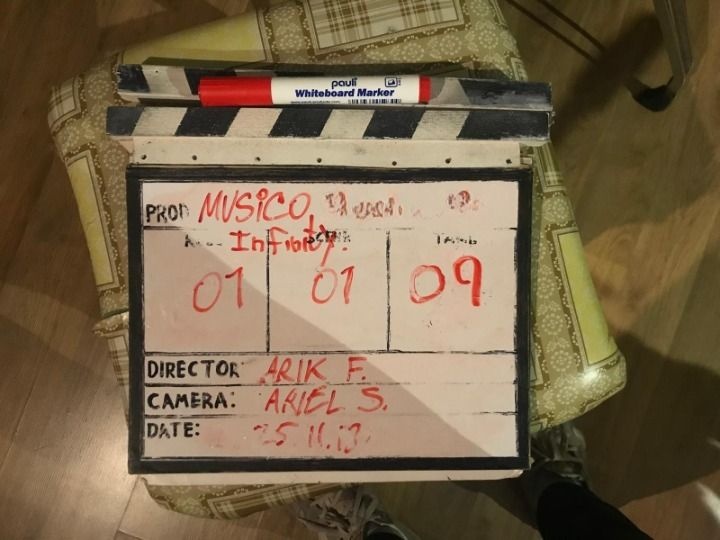
In 2017, Musico appeared among the six companies in Fusion LA’s first accelerator cohort. Pistiner and fellow founder Barak Inbar were attached to an idea centered on musical collaboration. The company was described as a place for co-creation and production, bringing the habits of shared documents and software collaboration into music. Its ambition was a common language for people making things together.
That early description matters because it puts collaboration near the beginning of the company’s story. The later teaching platform also dealt with people working on musical material together, though in a different relationship. A teacher needs to demonstrate, listen and correct; a student needs something useful to practice afterward. Shared material gives that relationship a place to continue between conversations.
A lesson with someone on the other side of the world
Musico’s teaching proposition became concrete. Teachers could start with prepared lessons and add personal recordings, clips and notation. They could keep track of student progress in the same environment. Those are ordinary working tasks, but ordinary tasks accumulate. Preparing an explanation once and being able to return to it is a recognizable attraction for anyone who teaches the same difficult passage more than once.
The product addressed individual instructors as well as schools. A teacher with an existing group of students could use the platform to organize their work; a school could bring it into a larger teaching operation. The business therefore depended on educators choosing to make software part of an established practice. The instrument was already there. The question concerned everything arranged around it.
Pistiner had a personal example of what distance learning could change. He played chess, and in a 2021 interview he described taking lessons online with teachers in France, England and the United States. The experience widened his choice of instruction. Geography had stopped making the decision for him. It was a useful comparison for a music founder thinking about relationships between teachers and learners.
His education argument kept the teacher involved. Interactive material could make practice more engaging, while an educator could assess progress and correct mistakes. In that same 2021 account, he reported more than 7,000 weekly students and roughly 250 institutions using Musico. Those figures belong to that period. They describe the scale he reported then, alongside his ambition to bring human teaching and interactive learning together.
Music teaching needs a path from explanation to practice. Government sales needs a path from opportunity to submission. Pistiner’s work has moved toward the steps between intention and action.
The buyer behind the classroom
Schools made sense as prospective customers for a music education product. Reaching them introduced another discipline. Pistiner has described spending two years selling education technology to U.S. school districts. The experience exposed the barriers of government contracting: finding the relevant opportunity, understanding the requirements and completing the steps needed to compete. The school was a customer with a purchasing system attached.
That experience expanded the problem he wanted to work on. His later account of the market describes capable businesses encountering registrations, demands for previous experience and unfamiliar compliance requirements. A company might have something a public buyer could use and still struggle with the process required to offer it. The useful product and the acceptable submission were separate pieces of work.
He tried outside help. Consultants found opportunities; other people wrote proposals. In his telling, the arrangement was expensive and frustrating, especially when the people being paid had little connection to whether the bid succeeded. Conversations with dozens of other business-to-business companies persuaded him that the difficulty extended beyond his own venture. The repeated frustration began to look like a customer problem.
“I chose to build.”
Yonatan Pistiner, on pursuing the procurement problem
There is a change in perspective here. Musico approached a school with something to teach. The procurement venture approached a business with help getting through the buying process. The earlier sales experience remained relevant, but the customer had moved. Pistiner was now interested in the companies standing where he had stood, trying to understand how an unfamiliar public market could become accessible.
A public business listing dates Sling RFP to January 2025 and names Pistiner as its co-founder and CEO. Its stated work included procurement intelligence, compliance checks and assistance with requests for proposals. The subsequent SLED.AI identity places him in the same broad field. The chronology gives the newer venture a practical origin: time spent confronting the process before time spent offering to manage it.
The paperwork becomes the work
At SLED.AI, Pistiner is CEO and co-founder. The company describes a service spanning opportunity discovery, registration, proposal preparation and submission. It serves businesses seeking government revenue, including first-time contractors and specialists without their own proposal resources. Its proposition gives a founder a straightforward division of labor: the business has something to deliver, and SLED.AI takes on the contracting work needed to pursue a buyer.
Idan Benaun is the CTO, responsible for the platform. Roy Laor, co-founder and COO, runs the operating side of helping businesses enter the public sector. Those roles make the company easier to picture than a broad promise about artificial intelligence does. There is software to build, work to manage and a customer trying to reach a contracting decision.
- 01Find & matchIdentify an opportunity
- 02Qualify & registerPrepare to compete
- 03Write & submitComplete the proposal
- 04Learn & improveApply the experience
Pistiner has described the model as delivering an outcome rather than asking a customer to operate another tool. In his account, SLED.AI runs the pipeline, writes the proposals and manages submissions across public agencies. The distinction concerns who does the work. A business can buy software and still need someone to use it; this model puts execution inside the service being offered.
One example he shared concerned a client entering the public sector without previous contracting experience. Pistiner reported that the team became registered, completed the necessary preparation and submitted a bid within weeks. The client then won a $600,000 contract for cloud integration and workflow automation services, he said. It is his account of a client result, rather than a promise about what another customer will achieve.
The detail he emphasized was what a first award makes possible afterward: a record of performance and a more credible starting point for future bids. That is a different unit of progress from a software login. It also helps explain his attachment to the field. The founder who struggled to reach a school buyer now describes his work in terms of another company getting through.
Three minutes, then Paris
The Tel Aviv competition gave that work a brief stage appearance. Laor described the team reconsidering what an audience needed from a three-minute pitch. They opened with a short, attention-catching hook and used customer case studies to make the business concrete. Pistiner delivered the presentation. Laor’s account emphasized the energy he brought to the room and the importance of leaving listeners with something they could remember.

Pistiner subsequently reported the $50,000 award and preparations to travel to Paris with Laor and Benaun for the global finals. He wrote about looking forward to meeting founders, hearing ideas and sharing what SLED.AI was trying to do. His account made room for enjoying the occasion amid the uncertainty and small advances of building a company. The oversized check helped mark a pause.
The musical analogy returns naturally here. A presentation has an audience, a time limit and choices about what to leave out. A company has customers, constraints and a structure its founder must learn. Pistiner’s career has given him reasons to think about both. The child studying solos became a music software founder; the founder trying to sell that software found a purchasing problem worth staying with.
For now, the practical ambition is to help other businesses move through that problem. It is a curious destination for someone who began with music, until the intervening experience comes into view. A classroom needs a teacher and a student. Selling to the classroom requires meeting the people who buy. Pistiner followed that part of the lesson into his next working day.