The boy could manage Wii Tennis without understanding English. Music practice was another matter. Visiting his brother’s family, Yuval Kaminka saw a nephew teach himself a video game through trial and error, then resist the invitation to pick up an instrument. The lesson was sitting there in the living room: the child already knew how to learn. Something about the way music practice was presented made him prefer doing something else.
Kaminka had played violin as a child. He knew the distance between wanting to make music and wanting to practice it. His early idea was to make that distance shorter by borrowing some of the invitation and immediate response of a game. A wrong note could become a reason to try again. The instrument would still be real. The experience around it could change.
That domestic observation became part of the origin story of JoyTunes, the company now called Simply. It also gives a useful way into Kaminka’s career. He has spent years working on what happens after somebody says they would like to learn.
A recorder meets venture capital
His training pointed toward a different business. Kaminka held technological leadership roles in Unit 8200, completed computer science studies at the Open University, and pursued a master’s degree at the Weizmann Institute of Science, with research in computational neurobiology. He later led the research team at ConicIT. There was plenty in that background to interest a technology investor before anyone mentioned a piano.
Roey Izkovsky, who had been his instructor in the army, became his co-founder. Kaminka’s younger brother Yigal brought the musician’s expertise. Their combination put technical reasoning and musical knowledge in the same founding conversation. In his later account of the decision, Yuval explained that cyber was the familiar route for people coming out of their unit, with investors interested in precisely that experience.
Instead, their investor meetings could involve a recorder. Kaminka recalled sitting with fellow Unit 8200 graduates in a venture capital office and producing the instrument to demonstrate the idea. It is an appealingly awkward image: an investment discussion briefly dependent on a small wind instrument. The demonstration made the proposal tangible. Play something, and software responds.
Early JoyTunes products explored instrument-controlled games. Over time, the company also built tools for music teachers and a self-learning companion for households. The audience and the business model took work to discover. Kaminka has described changing both, shelving products, and resisting pressure to expand too soon. The company’s eventual shape was assembled through those decisions, rather than arriving complete with the original inspiration.
The household becomes the customer
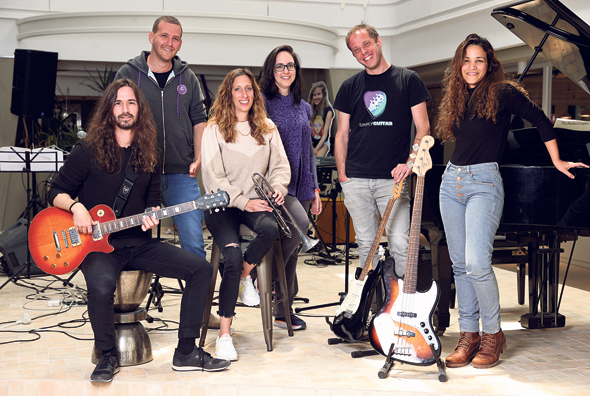
The move toward a subscription learning companion changed the relationship with the learner. A game could introduce an instrument. A teacher’s tool could support lessons. A service for the home had to make sense to someone returning to practice on their own, perhaps after a long day, perhaps with only a few spare minutes.
Simply Piano used the phone or tablet’s microphone to hear what was being played and give feedback. The player could use an actual piano. That arrangement connected an ordinary device with a physical skill: press the key, hear the sound, see a response, continue. The learner’s hands did the work.
Kaminka talked about adults returning to an old musical ambition and younger people taking up guitar. These are different reasons to start, even when both lead to a lesson on a screen. The imagined customer grew beyond the child being urged to practice. Someone might want to play for an occasion, make music with other people, or finally do something long postponed.
For Kaminka, the ambition also involved a choice about household time. His discussion of the business kept returning to people spending that time making something. A subscription could be judged by the activity it helped put into an evening, alongside the usual measures of whether people signed up and stayed.
The hamburger in the spreadsheet
Making that ambition affordable required less lyrical work. In a 2017 pricing account, Kaminka described a problem in China: people were using the apps, but converting to paid memberships at a lower rate than in the United States. Lowering prices increased purchases. Initially, the extra purchases did not compensate for the discount. At a 50 percent reduction, he reported, conversion more than doubled.
The team then needed an approach for other countries without conducting a separate, lengthy pricing investigation in each one. They turned to the Big Mac Index, using local hamburger prices as a practical guide for adjusting membership prices across 60 countries. Local currency prices received a further tidy-up.
Revenue indexed to 100 before the test. Kaminka reported a 15% worldwide revenue increase. A historical result, not a current growth rate.
Kaminka reported a 15 percent increase in worldwide revenue from the experiment. The burger was a proxy, and the test belonged to its particular moment. Still, it is a telling detail. The founder’s broad promise had reached the spreadsheet, where the difference between interest and a purchase had to be counted. Even a musical mission needs someone willing to inspect the decimal places.
Small teams, real disagreements
Growth raised another practical question: how could the company employ more people without slowing everyone down? In his 2019 writing, Kaminka described the frustration of decisions traveling through layers of approval. JoyTunes organized work into pods, small groups of roughly four to ten people with a shared goal and the skills needed to pursue it.
A pod could include developers, a product lead, musicians, marketing, data, and design. The organizing idea was to put people around a problem they could solve together. Professional guilds supported learning and standards across the groups. Kaminka also listed drawbacks: gaps between pods, demanding hiring requirements, and difficulties fitting occasional or part-time work into the arrangement.
The limitations matter. He was presenting a structure they were adapting, with mentoring needed to help people exercise the responsibility they had been given. Freedom did not remove the need to learn how to make a decision.
At a 2021 event, he supplied a more revealing test of the approach. Teams sometimes went ahead with choices he opposed. They took his feedback into account, explained why they preferred another course, and continued. He acknowledged that he often found he had been wrong. A company can print the word ownership very cheaply. Allowing someone to use it when the CEO objects has a different price.
He called colleagues co-builders. The term extended participation beyond the people present at the founding. He also set out three conditions for the journey: substantial growth, work he believed did good, and pursuing it without sacrificing family. Those conditions made his ambition sound demanding in several directions at once.
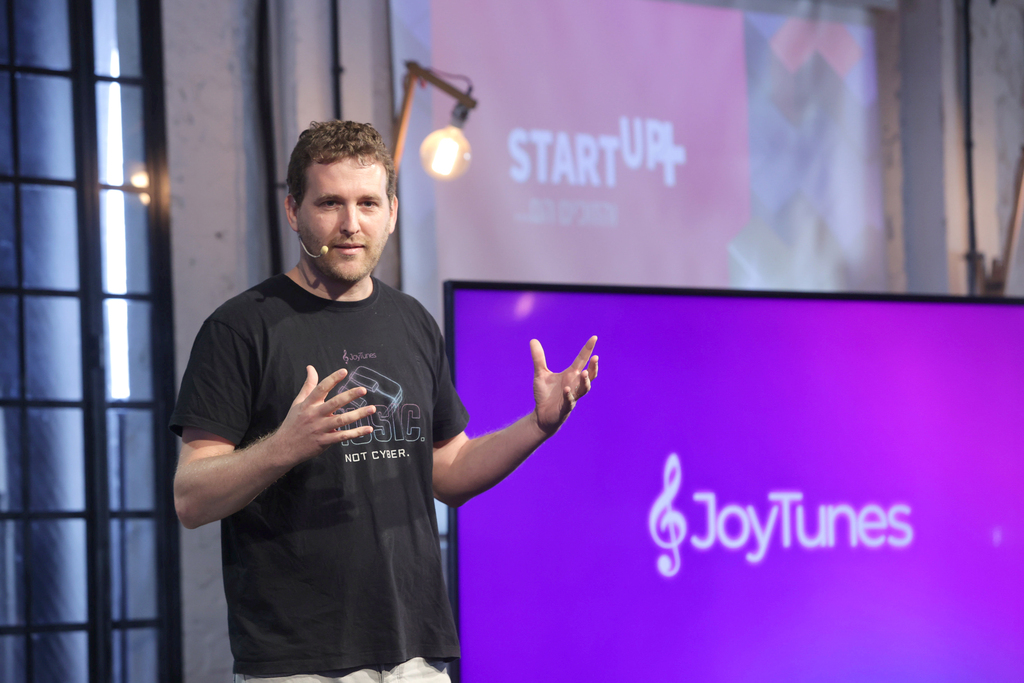
“For me it’s people.”
Yuval Kaminka, on where he invests his time, 2020
Feedback, with help from Mom
The interest in how people work has a family connection. Kaminka credits his mother, Shlomit Kaminka, an HR leader, with inspiring his enthusiasm for culture and teams. She also helped with a concrete organizational problem. In 2016, he wrote about introducing a performance-review process at a startup of 19 people.
He had thought frequent conversations provided enough feedback. Two colleagues said they did not know how they were doing. An employee’s surprise at the company’s dissatisfaction offered a further warning. Reading Ben Horowitz’s discussion of management debt helped change his mind.
The resulting process included advance notice, self-evaluation, feedback from colleagues, and goals written down together. The CEO could receive feedback too. Kaminka thanked his mother for contributing to the work. For someone designing software that tells a learner how an attempt went, discovering that colleagues needed clearer signals was a particularly apt lesson.
He has been candid about uncertainty elsewhere. In a 2021 podcast conversation, he described learning to weigh advice according to the experience behind it, and to speak with more question marks. His phrase, “probability is the mathematical side of faith,” catches the combination: a scientific vocabulary attached to a decision that still requires commitment.
Two shirts and a bigger name
By June 2021, JoyTunes had reached a different scale. A $50 million round led by GV was reported at a $1 billion company valuation. The number marked an investment milestone for the business. It also made the modest early demonstration with a recorder seem rather far away.
Yet the name of the company had a problem a financial milestone could not solve. Kaminka and growth lead Nathaniel Yankelevich were on a walking meeting, one wearing a JoyTunes T-shirt and the other a Simply Piano shirt. A mutual friend thought they worked for competing businesses. Their clothes had managed to conceal the fact that they were colleagues.
The brand team later recounted the incident while explaining the transition to Simply. Learners already recognized that name. The company also wanted room to grow beyond music, making the word “tunes” an increasingly awkward boundary. Simply emerged from a process that considered more than 50 possible names.
In July 2022, Kaminka announced the change after a year-long transition. He described a broader focus on meaningful creative activities at home. The change joined familiar products under a name with space for other hobbies. Drawing now sits alongside piano, guitar, singing, and tuning in the company’s offering.
The instrument stays real
Kaminka’s next imagined classroom could sit in the learner’s field of view. In June 2023, following Apple’s Vision Pro announcement, he wrote about mixed reality guiding a child with a real guitar. Digital cues could show where fingers should go. A virtual audience could add a performance setting. He presented these scenes as possibilities, with the technology still needing to mature.
By October 2026, Simply’s official innovation pages describe piano experiences for Vision OS and Android XR, as well as music and drawing experiences involving Meta glasses. The company presents a vision of a creative companion that understands the activity in front of it and offers guidance. The hardware has changed considerably since those early music games.
The persistent thread is easier to recognize. An instrument is in someone’s hands. A person is attempting something unfamiliar. Software offers a response that may help make another attempt worthwhile. Kaminka’s accounts of building the company include much the same rhythm: notice confusion, try an adjustment, accept feedback, continue.
The nephew with the tennis game supplies a fitting place to leave him. The boy’s willingness to learn was already visible. Kaminka took the other half of the scene seriously, the reluctance to practice, and spent his career working on the invitation. The business grew around a question familiar to anyone with an untouched instrument at home: what would make you pick it up today?