Yoav Zurel's parents knew how to shop. A television purchase merited comparison, deliberation, a little homework. Ask what they paid to keep their retirement money invested, however, and the answer became less precise. Shmuel and Rina thought the cost was small. They could not say what it was. Their son checked.
Across ten retirement accounts, they were paying an annual fee of 1%. Zurel had already struggled with his own startup's retirement-plan paperwork, despite having studied computer science. The family example made the problem harder to dismiss. People who took care with an ordinary household purchase could leave a much larger, recurring expense unexamined. The receipt, apparently, was easier to understand when it came with a television.
“In the financial world you can't compare,” Zurel said in 2015. That observation gives his career a useful starting point. He was interested in the distance between having money and understanding what happened to it. FeeX, the company he co-founded in 2012, began by helping people inspect investment fees. Its successor, Pontera, would eventually put financial advisers closer to workplace retirement accounts. Between those two products lies a long education in how people actually use financial information.
Five ideas in the bin
Zurel did not arrive at university with retirement software waiting in a drawer. At IDC Herzliya, now Reichman University, his friend David Weisz decided to apply for the Zell Entrepreneurship Program. Zurel had not been considering it. He applied after thinking it over. A friend's application turned out to have consequences rather larger than a change in the semester's timetable.
The program introduced them to investors, the practical work of starting a company, and a mentor, Uri Levine. Levine had co-founded Waze. Zurel and Weisz spent months considering ideas and discarding them. One involved sharing online articles with useful passages already highlighted. Another concerned the experience of jogging. They wanted a problem with more weight than either proposal could carry.
By Zurel's later account, five ideas had been abandoned. Levine supplied the financial-fee problem that became FeeX. Accepting it required the younger founders to loosen their attachment to originating the idea themselves. “Because of our egos, we wanted our own idea,” Zurel admitted in 2014. It is an unusually economical description of an expensive entrepreneurial habit: insisting that the problem arrive with your signature on it.
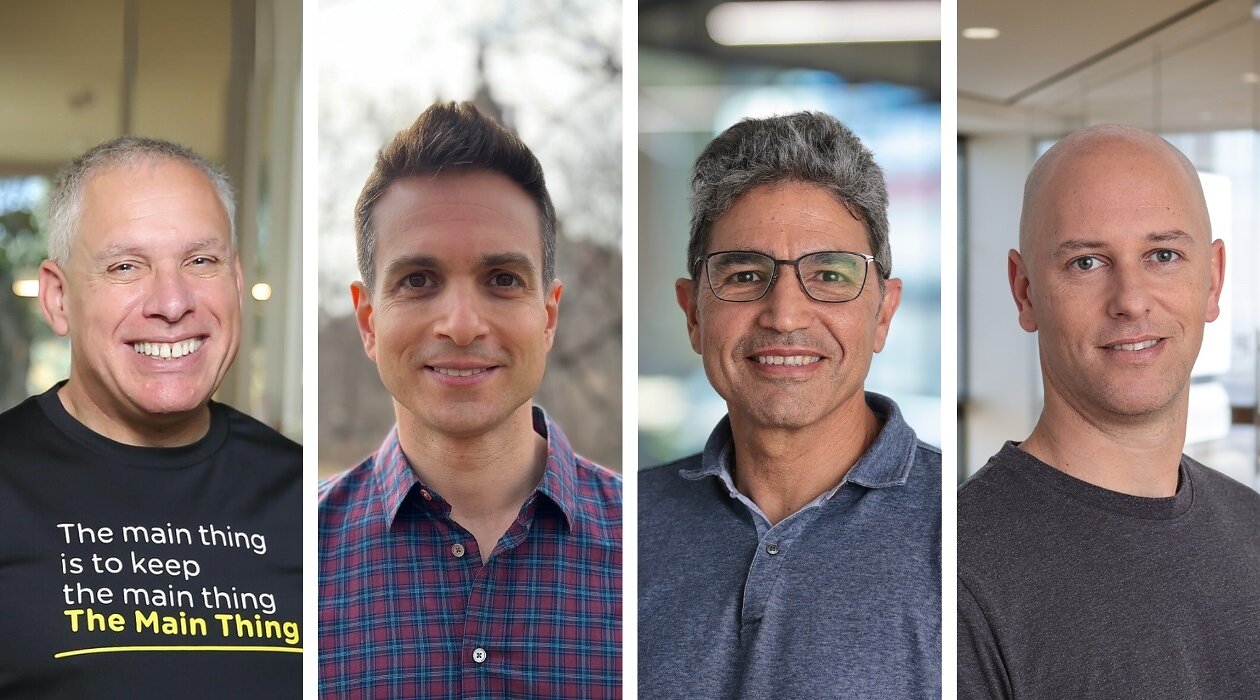
Levine became a co-founder, investor and chairman. Eyal Halahmi joined the founding group alongside Zurel and Weisz. The friendships and introductions mattered as much as the initial concept. Zurel's earlier work had included a support-engineering job at Wix in 2010 and 2011. His route into financial technology ran through computer science, customer support and an entrepreneurship classroom, rather than a previous career selling investment products.
A favor that lasted eleven years
The early company also grew through an invitation that sounded temporary. Zurel asked Shay Meller, whom he had known for years, to help find and prepare offices. Meller was finishing his studies and preparing for a law internship. Finding a startup somewhere to sit was supposed to be a project with an end.
Then the first product began taking shape. Meller moved into professional work at the company. On the day he was due to leave, he postponed the internship for a year. When the law office called again, he chose to stay. By 2024, he had spent more than eleven years with the business and become its chief analysis operations officer.
The episode is a more concrete window onto Zurel's company than a statement about culture. An old acquaintance came to solve an office problem and stayed to build a career. It also places the founder among colleagues whose histories extend beyond their current titles. The retirement platform was being assembled by people making decisions about their own working lives, sometimes with a law firm waiting patiently on the other line.
“In the financial world you can't compare.”
Yoav Zurel, 2015
The bill was only the beginning
FeeX's early promise was understandable: gather the scattered information, reveal the charges, help people see alternatives. The harder commercial question was who would pay for that assistance. In 2014, Zurel openly described a business still working through its revenue model. Helping someone discover a cost and building a durable business around that discovery were separate jobs.
The later shift brought advisers into the center. In 2018, the company launched a platform for US financial advisers to manage clients' long-term savings. A workplace retirement account can sit outside the systems an adviser uses for other investments. The industry calls these accounts “held away,” a phrase with all the warmth of a missing-parcel notice. Yet they may contain a substantial part of a family's savings.
Pontera's proposition is to make those accounts usable within the broader advice relationship. Its software supports analysis, monitoring, rebalancing and reporting. The account remains where it is held. For an adviser, the attraction is being able to consider retirement assets alongside the rest of a client's finances, rather than treating the workplace plan as a separate administrative country.
The connections extend into the software advisers already use. Pontera has integrated with portfolio-management systems so information from retirement accounts can appear within an established working routine. That detail helps explain the company's evolution. An isolated fee report asks a consumer to begin a task. An integration tries to make the task part of a professional's normal day. For Zurel, building the connection meant working with an ecosystem of firms, rather than simply persuading individual savers to visit a new website.
The FeeX name gave way to Pontera in February 2022. Zurel explained the new name through “pont,” the Latin word for bridge. The change accompanied the announcement of $80 million raised across three rounds led by Lightspeed Venture Partners. The bridge image matched the operational task: connecting an existing account, an existing adviser and a client who wanted the two to work together.
The investment also supported a business stretched across two places. At the end of 2023, Pontera described plans to expand research and development in Israel while adding staff in the United States. Its headquarters were in New York, with much of its workforce in Herzliya. Zurel was running a company whose technical organization and principal customer market were separated by an ocean. The plan to hire more than fifty people in Israel during 2024 made the next stage concrete: additional engineering, data, product and security work behind the adviser-facing service.
Investors were buying into that connection. ICONIQ Growth led a $60 million round announced in December 2023, bringing reported total funding to $160 million at that point. Pontera said revenue had more than quadrupled since its previous fundraising announcement. Those are company milestones, rather than a measure of any individual saver's result. They do show how far Zurel's job had traveled from explaining a family fee statement.
- 2012See the feesFeeX begins with consumer transparency.
- 2018Bring in the adviserA platform for managing retirement assets.
- 2022Build the bridgeFeeX becomes Pontera.
- 2026Keep the client involvedA non-discretionary advice workflow.
A bridge needs permission at both ends
The name also contains an awkward truth about infrastructure. A bridge needs cooperation at both ends. In October 2025, Zurel published an open letter criticizing Fidelity's restrictions on platforms that use customer credentials to access retirement accounts. He presented the conflict as a question of consumer choice: should savers be able to connect the adviser they already trust to their workplace plan?
Fidelity disputed Pontera's characterization. It said its concern was the use of customer credentials and the protection of accounts. It also said outside advisers could work with solutions using safe practices. That distinction matters. Supporting a person's freedom to seek advice does not settle the question of how software should gain access to an account.
Zurel has argued for an API connection, pointing to Pontera's work with 401GO. Fidelity said it had met with Pontera and that its concerns were known. The disagreement put him in a different public role: a founder contesting the conditions under which his product could operate. It also exposed the limits of a tidy technology story. Useful software still operates among institutions with their own obligations and authority.
His writing had already moved toward that wider argument. In July 2024, he used retirement-saver research to make the case for access to professional guidance, while acknowledging that plan providers offered their own tools and services. His preferred adviser might be outside the plan provider's organization. That preference is central to Pontera's business, and it makes the question of access much more consequential than a convenient login.
Who gets to press the button?
By September 2026, Pontera was describing another way to work. Its non-discretionary advice model lets an adviser make recommendations while leaving implementation with the client. The supporting workflow includes guidance, reminders, monitoring and records for supervision. The ordinary translation is familiar: advice can be perfectly sensible and still wait a long time for someone to act on it.
This version of the product addresses the space between a recommendation and its execution. Who sends the plan documents? Who checks whether the suggested change happened? What can a supervisor review later? These are undramatic questions, but a retirement system is full of them. A platform that ignores the follow-up has left a considerable part of the work on somebody else's desk.
For Zurel, the sequence is revealing. He has moved from making charges visible, to supporting adviser management, to accommodating a model in which clients retain the final action. The work keeps returning to the same practical difficulty: understanding an account does not automatically make it easier to use. Each new product arrangement attempts to close another part of that distance.
The ambition he states is to help millions of Americans retire better. The family story gives that ambition a scale small enough to examine. Two careful people could compare televisions and still miss what their retirement accounts cost. Years later, their son's company is occupied with advisers, interfaces, permissions and follow-up. The subject has become more complicated. The opening question remains admirably plain: what, exactly, is happening to the money?