The music was supposed to help. In a London dementia care home, nurses played songs to stir memories in Sam Shear’s grandmother. But she could not hear them. Before a melody could do its work, something more ordinary had to happen: she needed access to hearing care. Shear recalls the episode in his 2026 account of founding Yes Hearing. It is a business origin with an unusually practical punch line. The missing ingredient was sitting between the music and its listener.
- The offer: prescription hearing aids, fitted and supported by licensed professionals at home or remotely.
- The customer: adults who want clinical help without the effort of repeated trips.
- The price question: compare the device, the visits and the ongoing care together.
01 / Three reasons to say no
Shear’s family supplied a small catalog of resistance. In his account, his grandfather disliked what a hearing aid suggested about age. Another relative objected to the expense. Another found the appointments exhausting. A retailer could answer the price objection and still lose the customer. A clinic could offer excellent care and still ask someone to undertake a journey they would rather postpone.
Yes Hearing began in New York in 2019, founded by Shear and Oliver Philips, whom its company history identifies as CEO and COO. The proposition joined online shopping and consultation to professional house calls. For an older person managing transport, or an adult child trying to arrange a parent’s appointment, the destination matters. Privacy matters too. The waiting room can be a surprisingly expensive piece of furniture when its price is measured in reluctance.
02 / A device needs an introduction
The company sells hearing aids from manufacturers including Oticon, Signia, Phonak, ReSound and Starkey. Its catalog offers familiar choices: rechargeable models, Bluetooth connectivity and different wearing styles. Yes Hearing’s role is to connect that hardware to a person’s hearing needs, budget and daily routine. Its expertise sits in the professional network and the delivery of care.
The published process begins with a consultation and a recommendation. A specialist then brings the devices to the home, tests hearing, programs the aids and fits them. Follow-up provides another opportunity to solve problems. Someone who can order a device confidently may still need help with its controls, its charger or the software that accompanies it.
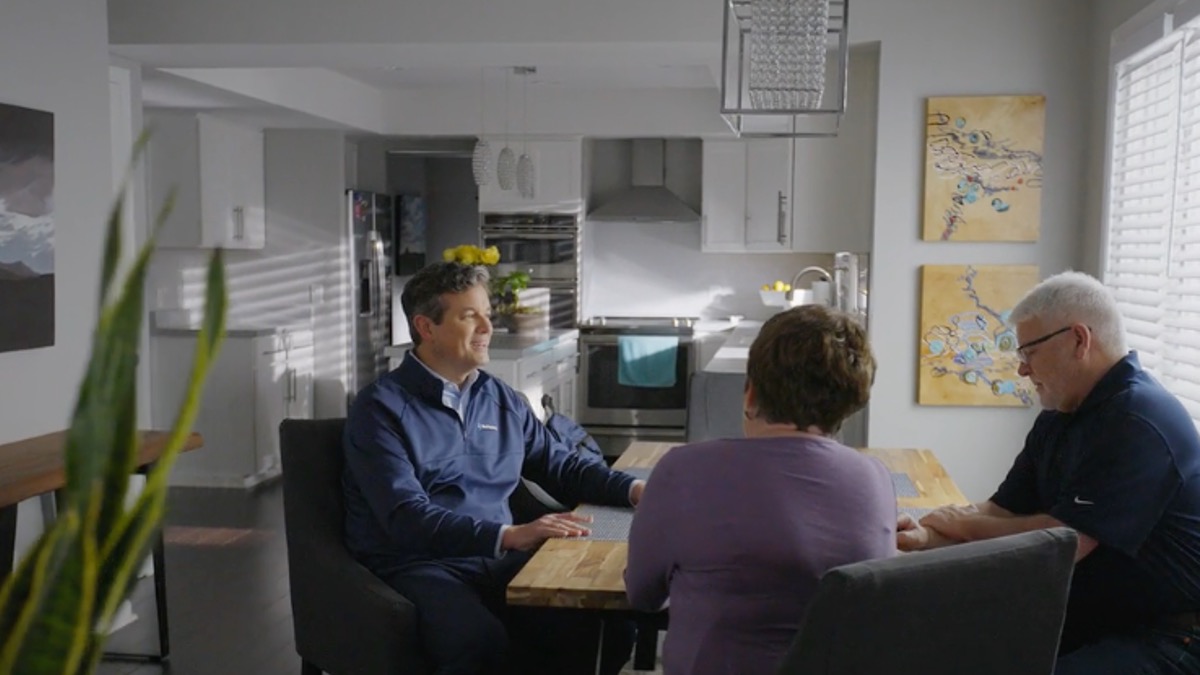
The setting offers a useful advantage: a professional can see the circumstances in which the customer will use the product. Family members can participate. Questions arise beside the television or dining table where conversation actually happens. That is a persuasive reason for the model, although a house call alone does not establish a better clinical outcome. The quality of the assessment and fitting still does the work.
03 / Read the second price tag
The product hub advertises starting prices of $1,395 per pair for Essential, $2,995 for Advanced, $3,495 for Premium and $3,995 for Ultimate. It describes the higher levels as suited to busier, noisier environments. These are starting prices for categories, not a promise that every model costs the same. The advertised saving of up to 40% is the company’s comparison with retail pricing.
There is a second calculation. A separate service-plan page lists monthly care at $39, $59 and $129, depending on support and home-visit allowances. At the monthly rates, twelve months would cost $468, $708 or $1,548 before any annual-payment discount. A useful quote therefore names the exact device and spells out the care included. A percentage saving cannot tell you how often a specialist will return.
For the buyer, there are three different purchases hiding in one: the hearing aid, the initial work of making it usable, and access to help over time. An experienced user may place less value on repeated home visits than someone buying a first pair. Neither should have to guess which service allowance is attached to the quote. The sensible comparison is the total for the same device and the same period of care, with return conditions beside it.
The economics are straightforward: Yes Hearing earns money through device retail and care offerings. It also reaches customers through benefits partnerships. Delta Dental of Colorado’s DeltaHearing program combines hearing aid discounts with home or virtual professional care. Its brochure makes the conditions concrete: availability depends on ZIP code and product, and a $195 administration fee may be withheld if a home visit occurs during the trial. Package details deserve the same attention as the hardware.
“Hearing aids were never really the product.”Sam Shear, August 2026
04 / The network is the hard part
A house-call business needs people who can make the calls. The November 2022 financing announcement reported a $10 million Series A led by Blue Heron Capital, with Primetime Partners, Ensemble Innovation Ventures, Maccabee Ventures and Gaingels participating. The money was intended to expand direct-to-consumer operations and the home-care technology platform. Software helps arrange care; a licensed professional must still arrive.
Shear’s August 2026 essay reports more than 800 providers across 43 states, with home-visit reach to over 80% of the U.S. population and a virtual pathway for the remainder. Those are founder-reported figures, dated rather than timeless. The company also advertises clinic appointments in Garland, Texas. A customer should establish which route is available locally before choosing a package.

05 / What the house call teaches
In a 2023 founder interview, Shear described an early trap: seeking perfection made launching harder. He also described founders calling customers who canceled or returned devices. The useful lesson is a method: listen at the moment someone abandons the purchase. That conversation may reveal more than another successful checkout.
Yes Hearing occupies the space between clinic-based care and buying a device online with little hands-on help. Its approach suits someone who values professional attention and wants to avoid travel. The advantage narrows when a nearby clinic offers convenient, satisfactory care, or when a customer’s needs are met by a suitable lower-cost option. The business depends on local availability, capable fitting and support that earns its price.
The operational test comes after the first appointment. A missed visit or an unanswered question can undo the convenience that persuaded a customer to buy. Sending care into the home removes a journey for the patient while adding one for the provider. That trade works when the company can coordinate the people, equipment and follow-up reliably.
There is something here other companies can copy. Examine every task the customer must perform before your product becomes useful. Then ask which tasks your company could take on. Yes Hearing’s answer is wonderfully literal: the appointment travels. The customer stays where the conversations are.