Yehuda Niv spent nearly four years with a manuscript in a drawer. He had done the part that earns a person the right to complain about publishing: he had written a book. Getting it into somebody else’s hands proved rather less straightforward. The drawer, that discreet retirement home for ambition, almost acquired another permanent resident.
He eventually published it. Then he made a more consequential decision: he would build a publishing business himself. An electronics engineer by training, Niv began Niv Publishing from his dorm room. Years later, he co-founded Spines, applying software and artificial intelligence to the steps between a finished manuscript and a book available to readers.
There is an agreeable irony here. Someone who struggled to release one book now wants to help a million authors release theirs. The ambition is large; its origin is small enough to fit in a desk.
A musician takes the engineering route
Niv grew up in Beersheba, in southern Israel, where the future presented to him had a distinctly technical syllabus. He attended a military school operated by the Israeli Air Force. Engineering was the route he understood to offer a successful life. Entrepreneurship barely appeared on his map.
Music did. As a teenager, he wrote songs and imagined becoming a musician. He tells that part of his history with a little self-mockery: his confidence in the music apparently exceeded the audience’s. Songs led him toward longer storytelling. The technical education continued alongside the urge to make something other people might hear or read.
His academic record includes a bachelor’s degree in computer and electronics engineering from SCE - Shamoon College of Engineering, and a master’s in computers and electrical engineering from Ben-Gurion University of the Negev. His early work included electronics engineering in the Air Force, followed by teaching and laboratory administration. Before he was considering book distribution, he was working with systems of a rather different kind.
One undergraduate project offers a pleasing connection between the two interests. Niv worked on recording musical sources with a spherical microphone array, investigating how signal processing could separate sounds. Music and engineering were already sharing the room. Publishing would eventually give the writer a place there, too.
“The hardest part of writing a book shouldn't be getting it published.”
Yehuda Niv
The customer changes the business plan
Niv Publishing began in 2013. Starting a company in student accommodation has become a familiar entrepreneurial detail; the more revealing part is what happened to the original idea once customers encountered it. Niv initially expected to teach authors how to publish independently. The authors preferred to pay someone to manage the work.
He changed the offer to full publishing services. This was an early encounter with a lesson he still stresses: the customer’s preference deserves more attention than the founder’s attachment to a method. A person can want control over a book without wanting a second occupation organising its production.
That distinction helps explain the business he later built. Authors can care intensely about a cover, a paragraph or a pronunciation while having very little appetite for coordinating every person and process required to deliver it. Niv had experienced the distance between writing and publication himself. His customers supplied further evidence of where the work became burdensome.
The operation grew. Niv describes Niv Publishing as a business with roughly 400 team members and more than 1,200 new titles annually. Those figures belong to his Israeli publishing company, a useful distinction when looking at his subsequent venture. He remains its founder and chairman; Spines is a separate chapter.
Niv Publishing begins.
Spines is founded.
A $16 million Series A.
Payroll provides its own education
Growth did not spare him the ordinary indignities of running a company. In 2018, Niv recalls reaching a payroll deadline without the cash to pay salaries. A mentor and a financial specialist helped him address the business’s cash management. The episode gave a practical edge to his subsequent advice about money.
He also describes a long relationship with Alon Werber, a mentor he met through a programme intended to connect engineering students with professional guidance. Niv asked for help becoming an entrepreneur. An arrangement scheduled for six months stretched into years, with Werber eventually joining Spines’ advisory board.
Those two experiences sit well together: one concerns an immediate problem, the other the value of having someone to call before the next one arrives. Niv’s account of building companies leaves room for instruction, intervention and other people’s experience. The dorm room makes a tidy origin story. The continuing education happened outside it.
Why build a second publisher?
By the time Spines took shape, Niv had a business that already published books. His reason for starting again came partly from investing in technology startups. Seeing what founders were building with AI led him to consider how exposed his own industry might become. He decided to participate in that change.
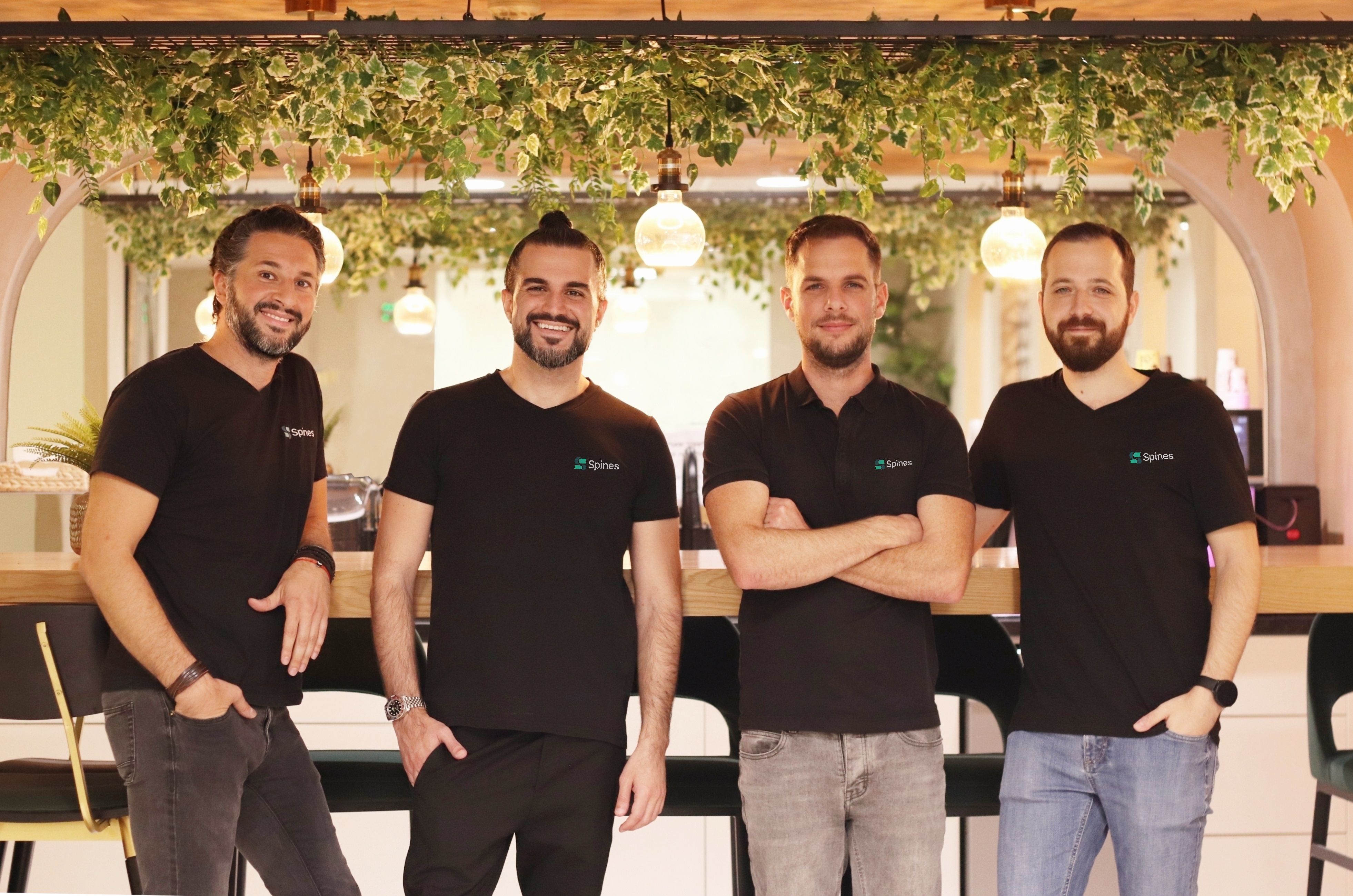
Spines, founded in 2021, brought him together with Lev David, Niv Ovdat and Nir Kenner. The company targeted the American market and assembled publishing tasks into a single platform: proofreading, formatting, cover design, audiobook production, distribution and tools for marketing. The manuscript remains the starting point.
Niv describes the appeal through individual bottlenecks. A cover requires interpretation, proposals, feedback and approval. An audiobook adds another production process. Distribution brings its own administration. His approach is to examine each step and ask how much time and coordination software can remove.
That way of thinking bears the marks of his engineering background. The author encounters one book; the business sees a sequence of operations. Bringing those perspectives together is the proposition. Whether the result satisfies a particular writer still depends on the work delivered, a question no diagram or software demonstration can settle in advance.
- 01Author’s
manuscript - 02Production
& design - 03Formats
& distribution - 04Marketing
& royalties
A funding round begins over coffee
His second company also changed his relationship with capital. Niv Publishing had been bootstrapped. Spines raised venture funding, including a $6.5 million seed round announced in April 2024 and a $16 million Series A announced that November. Zeev Ventures led the latter, with existing investors participating.
Niv’s account of the Series A begins with incoming interest after the seed announcement. Investor Michael Eisenberg advised him to tell prospective backers the company was not raising. Conversations continued anyway. Niv met several firms and then sought advice from Oren Zeev about which partner to choose.
The adviser became the investor. Niv recalls that Zeev asked to see the presentation, investigated the business and offered to lead the round. Niv remembers the attraction as the distance between a promise and a product: he had described what he wanted to build, then returned having built it.
It is a useful anecdote precisely because the coffee is incidental. The work existed before the meeting. His advice to other founders is to get a product into customers’ hands and learn from their response. Fundraising occupies plenty of the conversation around startups; in his telling, operating the business gives that conversation something to be about.
Let the questions wait until the meeting
Niv’s management habits are similarly practical. He describes regular team meetings, individual conversations with senior leaders and a daily window when colleagues can bring questions. A calendar appointment can do a surprising amount of work against the irresistible belief that every question needs answering immediately.
He has also dealt with the familiar argument between marketing and sales: one department questions the quality of the leads, the other the ability to close them. His response has included having marketers listen to sales calls and giving the departments shared goals. The point is to make them hear the same customer.
These are modest details beside a funding announcement, but they explain how he thinks about a founder’s time. A company needs decisions from its chief executive; it also needs the chief executive to have time to think. A diary filled entirely with interruptions supplies plenty of activity and very little room for either.
The argument beyond the bookshelf
Publishing through AI has brought objections as well as customers. Niv has taken part in discussions that question whether automation widens access or simply adds more books without enough editorial care. In April 2025, he joined publishers Joe Biel and Elly Blue for a conversation explicitly framed around that disagreement.
His stated position is that authors write their books and Spines handles the publishing work. The distinction matters to his account of the company, although it leaves a substantial debate about editing, design and how readers discover worthwhile work. A faster route to publication still leaves an author with the task of finding an audience.
His plans extend across languages. In 2025, he discussed translation into Spanish, French, German, Italian, Polish and Portuguese. In April 2026, he reported more than 6,000 authors subscribed to Spines and described a future in which readers have more power to decide which stories succeed. Those are his reported figures and his forecast, respectively.
For all that attention to reach and production, one of his favourite memories is strikingly tangible. He ordered copies of the first books produced through Spines so he could inspect them. Holding the finished objects made the software’s work real to him. After years around books, another delivery could still matter.
The company’s name returns to a similar image: a library extending into the distance, each spine belonging to a writer whose work has reached the shelf. Niv wants to help a million authors get there. It is an ambition that will require rather more than a convincing story. At least he knows what the drawer looks like.
Keep the conversation going
Find Yehuda online, watch a conversation or follow the publishing argument.