Yann Schuermans was sent to look more closely at the middlemen. Around 2017, while working at AB InBev, he took on a project involving the company’s distributors in China. The starting assumption was adversarial: understand these complicated intermediaries, find the pressure points, improve the brewer’s position. Then he went to meet them. The assignment began to change meaning.
Wholesalers and distributors were doing work that looked different from the other side of the table. They understood local customers. They had relationships and infrastructure. They helped connect a large manufacturer to places it could not simply reach by wishing harder. Schuermans came away thinking about how to align those businesses with the brands they served.
It is a useful beginning for a founder story because it contains a revision. Before there was Baskit, there was an executive who had to reconsider the premise of his assignment. The people between the factory and the shop turned out to be people worth building with.
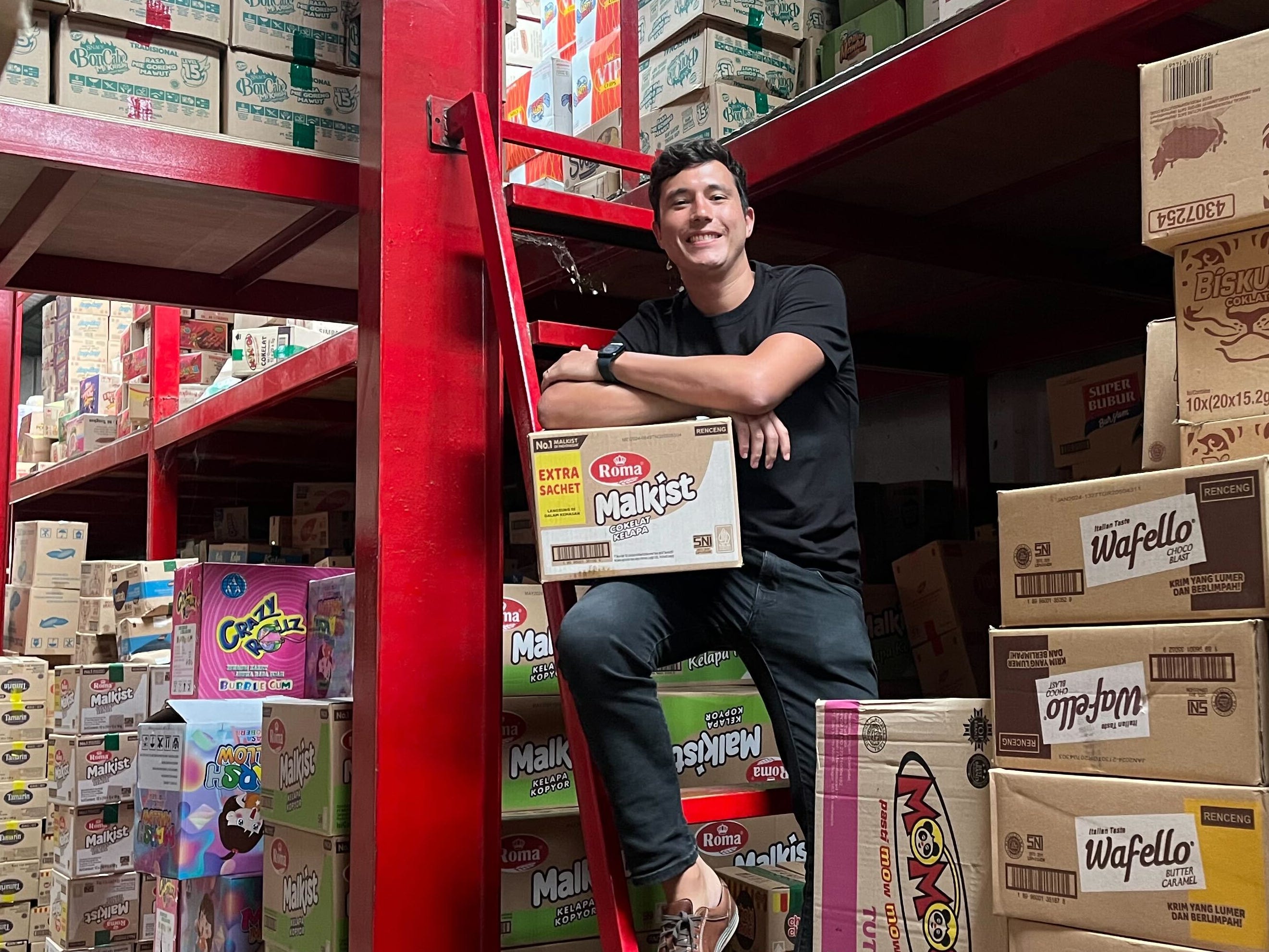
Beer, oranges, and a familiar trade
His family had already spent a long time thinking about how things get made and moved. Schuermans describes more than 400 years of manufacturing and distribution history. On the Belgian side, the family brewed beer. After the brewery closed in the 1950s, relatives moved to Brazil and entered the orange juice business. The product changed; the practical problem of getting it to customers remained.
He identifies as Belgian-Brazilian. His route into the same broad trade took him through university in Britain and a career across Asian consumer goods markets. AB InBev gave him experience in China, India and Southeast Asia, including responsibility for Hong Kong and Macau. His work also encompassed regional strategy and mergers and acquisitions.
That combination matters. A general manager has to make an operation work. Someone dealing with acquisitions has to understand what a business is worth, how it fits together and what may go wrong after the signatures. Both perspectives have a place in a company trying to connect software, physical distribution and finance.
He credits AB InBev with teaching him urgency, ownership and attention to costs. These are useful habits for a founder dealing with businesses that have goods to sell and bills to settle. A distributor has little use for a software company’s philosophical difficulties with the existence of Monday.
- AB InBevConsumer goods, market leadership, strategy and M&A
- Circles.LifeAn intermediate step into startup work
- BaskitCo-founded in 2022; commercial launch that November
A business with room for the middle
Before founding Baskit, Schuermans worked at Circles.Life. The intermediate step gave his career a transition between a large corporation and a company of his own. When Baskit arrived in 2022, it carried a premise grounded in his earlier work: established distributors and wholesalers could be customers and partners in a technology business.
Betatron, which led the company’s 2023 seed round, explained the attraction in plain commercial terms. Traditional wholesalers have relationships that are often personal. They know their markets. They can offer terms their customers value. Those qualities help explain why a new entrant may find them difficult to dislodge.
For Schuermans, those existing ties give the company something to work with. Baskit provides tools and services intended to help distribution businesses manage stock, improve visibility and grow. The distributor brings knowledge of the places and people already being served. Each side has something the other needs.
In June 2023, Baskit had brought more than 50 wholesalers in West Java into its network. That is a more useful early picture than a sweeping map of Southeast Asia: a particular set of businesses, in a particular part of Indonesia, trying an approach. A regional ambition still has to become a working arrangement somewhere.
The $3.3 million seed round gave the team money to develop its technology and expand. Investors included Betatron, Forge Ventures, Investible, 1982 Ventures, DS/X Ventures and Orvel Ventures, alongside businessman Michael Sampoerna. The round followed a $1.5 million pre-seed announced that March.
The paperwork follows you
There is an appealing physicality to this story: beer, juice, warehouses, cartons. Yet some of Schuermans’s work involves keeping less photogenic things in order. During Baskit’s seed financing, the team used an investment vehicle to simplify the ownership structure. His experience in corporate finance and M&A gave him a reason to care about the details.
The problem was familiar to companies raising money from multiple investors. As the capital structure became more complicated, it could create extra work for later fundraising. Baskit used Auptimate’s founder SPV service to organise that part of the process. The objective was a clearer cap table and a simpler arrangement for managing investments.
“Make sure your cap table is clean!”
Yann Schuermans
It is advice with the glamour of a well-filed tax return. It also fits the business. A founder asking distributors to improve the organisation of orders and inventory has good reason to organise the company’s own paperwork. Administrative discipline is part of making the next decision easier.
Baskit’s stated mission brings together cash flow solutions, access to distribution and operational technology. Its operating principles include taking responsibility for outcomes, thinking clearly and protecting what the team builds. For a business handling the connections between different companies, clarity has a practical job: each party needs to understand what happens next.
A profitable month, then another border
By the end of 2024, Schuermans had a different kind of milestone to discuss. He said Baskit had recorded its first profitable month. He also reported an eight-figure annualized revenue milestone, hundreds of new customers and the release of features for the company’s supply chain software.
The list is revealing in its mixture. Revenue sat alongside product delivery and hiring. A company of this kind has to coordinate all three. Signing a customer creates work for the product and operating teams. Bringing people aboard creates costs. A profitable month means something because those activities have to meet in the accounts.
His public account of the year also emphasised building a competitive culture while hiring responsibly. That links back to the cost awareness he says he learned at AB InBev. The vocabulary of growth can become pleasantly detached from the expense of achieving it. A monthly result brings the conversation back to earth.
Investors remained part of the work beyond fundraising. In a later account of a Jakarta board visit, Schuermans described Forge Ventures’ Tiang Lim Foo and Betatron’s Arshad Chowdhury joining customer visits and a town hall. The itinerary put discussions about the company beside time with the businesses it serves.
In April 2026, Baskit announced a $4.4 million Series A first close led by Cento Ventures. It also disclosed a separate $3 million revolving credit facility from HSBC Innovation Banking. The company put its total equity raised at $9.9 million. The credit facility serves a different purpose from ownership capital, a distinction worth keeping in view.
The announcement described a network serving more than 60 brands and hundreds of distributors and wholesalers. It set out plans to deepen the Indonesian operation and expand into the Philippines. Schuermans’s next task is to take an approach developed in one market into another, with the same attention to how local distribution actually works.
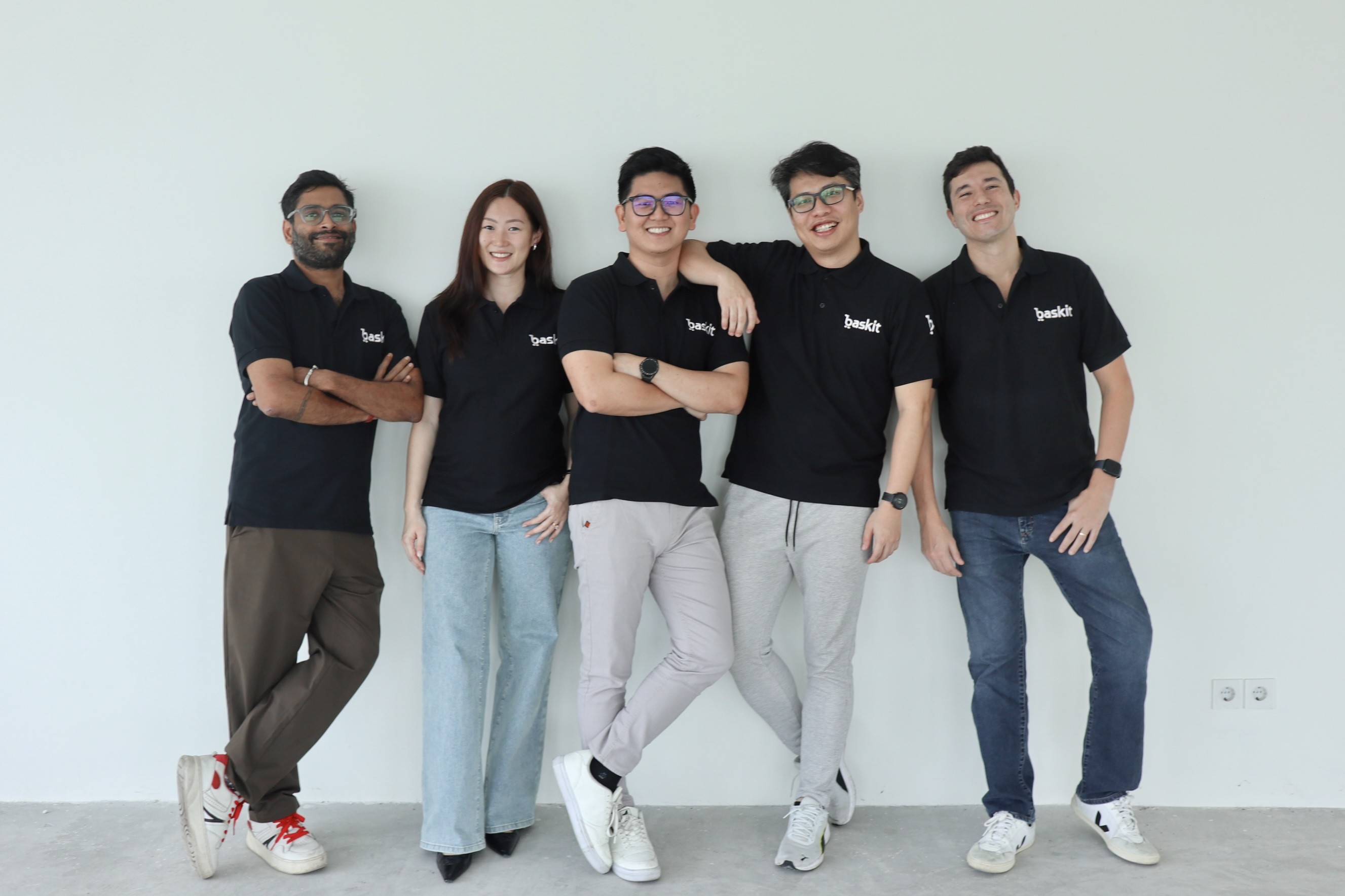
Coffee before the next meeting
His own move closer to the customers came in 2023, when he relocated from Singapore to Jakarta. He co-founded Baskit with his wife, Yoonjung Yi, whom he met at AB InBev. Abhishek Pansari is also a co-founder. Building the company brought their working lives into the same venture.
In an early description of his routine, Schuermans said he spent more time in the field than in the office. He visited warehouses, drank kopi with owners and worked on his Indonesian. The detail makes the company’s premise easier to picture: understanding a distributor requires being willing to stay for the conversation.
There are other conversations he enjoys. Supply chains and Brazilian jiu jitsu are subjects he says he can talk about for hours. He named City of God as a favourite film, taking pride in it as a Brazilian. Asked for an ice cream preference, he admitted a leaning toward savoury things.
Those small answers bring some texture to a career otherwise told through markets, roles and funding rounds. They belong beside the warehouses and the financial paperwork. Schuermans is building a company whose central relationship asks people to understand one another’s business. His own story became interesting when he started doing exactly that.