The middleman has survived another business plan. At Quqo, that is intentional. The company’s approach to Vietnam’s traditional retail trade starts with a useful admission: the people moving products between manufacturers and neighborhood shops already do work that matters. Quqo wants their orders, stock records and sales visits to run through better software. The distributor gets a place in the system, and the corner shop gets another way to buy.
It is a less cinematic proposition than sweeping away an entire supply chain. It is also a more interesting one. A marketplace can display goods without understanding much about the business that delivers them. Quqo’s proposition reaches behind the catalogue into the daily routines of distribution. Its customers include the small retailer placing an order and the larger organization trying to serve hundreds of such buyers.
The company, led by co-founder and CEO Jaime Roldan, gained an early public marker in December 2022, when Touchstone Partners announced a $1 million seed investment. At that point, Quqo reported a network supporting more than 5,000 stores in Ho Chi Minh City. The question behind the funding was practical: could software make a fragmented retail network cheaper and easier to serve while leaving its existing participants in business?
The distributor gets a seat at the table
Quqo describes its model as asset-light. In the 2022 investment announcement, that meant acting as a third party connecting buyers and suppliers, rather than displacing the distributors. This distinction shapes the business. A company buying and reselling inventory has to organize its economics around the goods it owns. Quqo’s stated approach puts the emphasis on coordinating other businesses and improving the information passing between them.
For Roldan, the problem was the complexity and manual work spread across distribution’s many levels. His diagnosis was straightforward: manufacturers and retailers were connected through a process that could be made easier to manage. The company’s response was to give shops an online purchasing channel and give the supply side tools to support it.
“Our platform connects suppliers and buyers through digitalization.”
Jaime Roldan · CEO and co-founder · December 2022
The competitive distinction is therefore a choice about whom to recruit. A distributor can bring supplier relationships, local coverage and an existing sales operation. Quqo can offer that business a digital ordering channel. The arrangement makes the distributor both a potential customer and a participant in the network. Its commercial logic depends on those parties finding enough benefit to keep working together.
A shopkeeper buys back some time
The retailer-facing proposition begins with restocking. Quqo’s business website describes a digital catalogue through which a shop can order without waiting for a commercial visit. It also promotes delivery scheduling and orders brought to the business. The pitch is easy to recognize: fewer trips to buy stock, more control over when to order, and access to offers in one place.
Customer comments published by Quqo give that proposition a human scale. Quang Đạo describes being able to use a phone to order instead of depending on a visiting seller. Anh Tùng highlights promotions and checking products when the delivery arrives. These are company-selected testimonials, but the tasks they describe are concrete. The convenience is measured in the shopkeeper’s day, not in the number of software features on a slide.

There is a useful distinction between making an order possible and making a new habit stick. The first is a product task. The second also involves confidence in what arrives and whom to contact when something goes wrong. Quqo’s customer-facing material includes support as part of the service. For a retailer trying a new purchasing channel, a person who answers can matter as much as the catalogue.
Three tools follow the same order
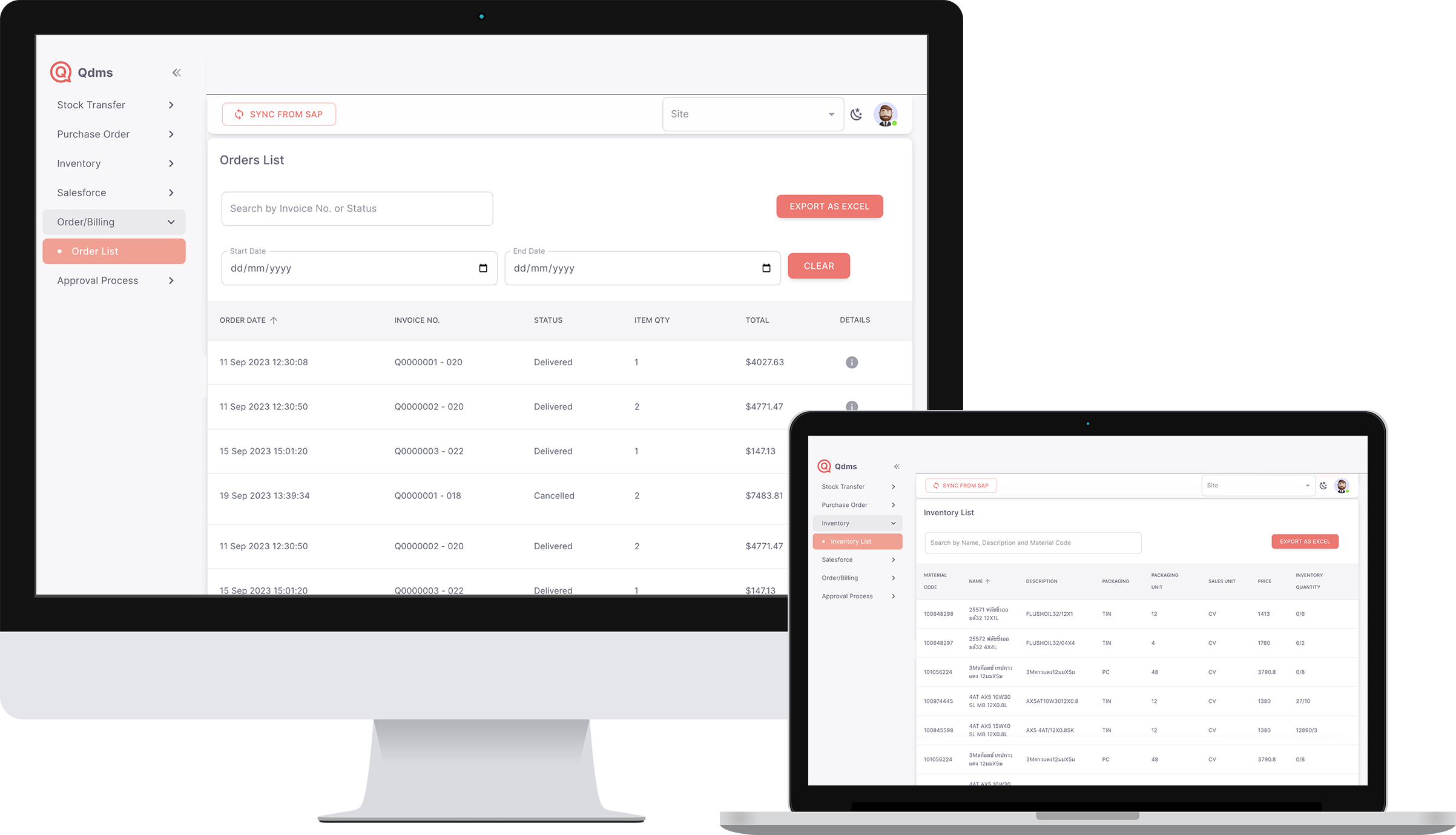
The named products divide the work sensibly. Quqo Marketplace handles retailer purchasing. Qrew serves field sales teams, with visit planning, customer records and offline order capture. Qdms covers distribution administration, including inventory and invoices. Business intelligence adds an analytical layer. Together, they describe a business trying to connect the buying screen to the work needed to fulfill the purchase.
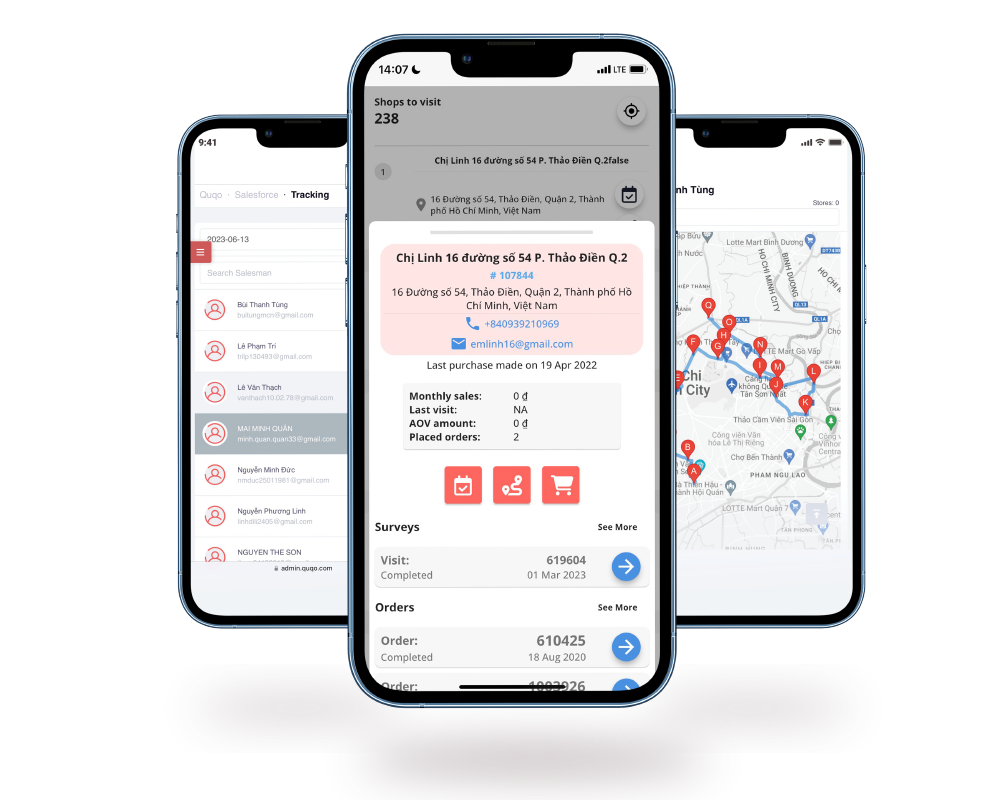
Offline order capture is an especially revealing detail. It acknowledges that a field tool has to function away from a dependable connection. As a design principle, this is worth copying: identify the point where the user’s environment interrupts the task, then protect the task. A sales representative standing with a buyer needs to preserve the order. Perfect connectivity is a poor prerequisite for getting paid work done.
Marketplace
Qrew
Qdms
Connecting those steps is the harder commercial proposition. The shop wants the right goods. The sales team wants a usable account history. The distributor wants stock and orders to agree. Software becomes valuable when an entry made for one task helps the next person act. Requiring every participant to repeat the same information would eat into the efficiency the system is meant to provide.
The million-dollar test
Touchstone’s December 2022 investment was intended to support hiring, customer growth and expansion of the distribution network. Quqo said it had onboarded more than 40 distributors and grown gross merchandise value elevenfold since the start of that year. It also set out plans to reach Da Nang, Hanoi and other Vietnamese cities in 2023. Those were the company’s figures and intentions at the time.
The elevenfold figure deserves its full name. Gross merchandise value measures the value of transactions moving through a platform; it does not tell the reader how much revenue the platform keeps. Nor does a larger order book, by itself, establish profit. The funding announcement offered evidence of adoption and investor interest. Evaluating the economics requires attention to the cost of supporting those transactions.
That is why the asset-light choice matters. Working through existing distributors can reduce the need to recreate their infrastructure, but coordination still takes effort. Accounts need onboarding, orders need reliable handling, and software needs to fit existing processes. For a prospective buyer, the sensible comparison is the total cost of getting the job done, including implementation and staff time. A subscription figure alone would tell only part of that story.
From the stock order to the payment
By May 2024, Quqo had attracted a different kind of partner. Visa selected it for its Asia Pacific accelerator, one of five companies chosen from more than 300 applicants. Visa’s description extended beyond FMCG to healthcare and the automotive aftermarket, and included e-wallet and buy-now-pay-later capabilities alongside the marketplace and business software.
The six-month program offered access to Visa specialists to develop and test solutions. Quqo subsequently appeared at the 2024 Visa Everywhere Initiative global finals, where Roldan pitched the business. Selection and a public pitch are meaningful access points; they should be read as partnership and product-development milestones.
The attraction of payments is easy to see from the retailer’s side. Selecting the next batch of stock creates an immediate payment task. Joining those steps could remove another administrative handoff. Financing introduces a separate challenge: the ability to place an order says little, on its own, about the ability to repay credit. Any expansion from purchasing into finance has to make that distinction work in practice.
A regional stage, a local job
Quqo’s July 2023 appearance at AppWorks’ Batch 26 demo day put it among businesses pursuing opportunities across Southeast Asia. AppWorks identified it as a digital supply chain company for SMEs and mom-and-pop shops. That description is more useful than borrowing the labels of neighboring startups: the same event included web3 companies, but proximity on a stage does not make their products interchangeable.
The company was also listed among the 33 SME100 Awards 2023 Vietnam winners. Such recognition broadens a young business’s visibility. The continuing test, however, happens in the less glamorous setting of repeat orders. Can the retailer find what is needed? Can the distributor act on the order? Can both sides trust the information enough to use the system again?
That practical emphasis also appears in an account from former chief of staff Darryl Han. Writing about his own career, he described Quqo as a place where he learned to combine entrepreneurial involvement with management. It is one person’s perspective, but it fits the work this model asks of a team: stay close enough to the daily operation to notice friction, while building processes that more customers can use.
Keep the relationship. Fix the handoff.
The transferable idea in Quqo’s approach is to examine existing relationships before deciding which businesses to replace. Where distributors already have useful coverage, software can make that coverage more accessible. Where stock records are unreliable or fulfillment repeatedly disappoints, a better interface has limits. A digital order still needs someone to deliver the goods.
For a retailer, the useful starting point is a real restocking task. For a distributor, it is a real sales route or order workflow. Trying the software against those jobs gives both a clearer basis for judging it than a broad promise of transformation. Quqo has chosen to work in the gap between the screen and the shop shelf. The value of the business will be decided by how much easier it makes the next delivery.
Follow the order
Explore Quqo’s products or its retailer website. Find the company on LinkedIn, Instagram and Facebook.
Further reading: the 2022 investment announcement, AppWorks’ Batch 26 demo day and Visa’s 2024 accelerator cohort.