At Borsheims, a watch could be worth a small fortune. Counting watches, however, was an exercise in patience. The Omaha jeweler had considered RFID roughly a decade before adopting it. The demonstration disappointed: jewelry still had to be moved around to be read, and the tags were expensive. A technology meant to remove work seemed to have brought some of its own.
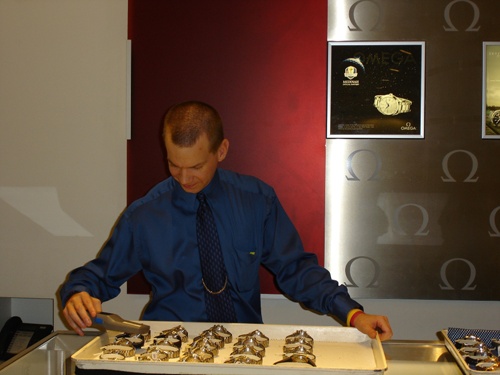
Then came a different trial. In 2012, Borsheims put TJS tags on its high-value watches. Staff could read more than 400 tags in under 15 minutes. The old count had taken over 30. Here was a proposition a retailer could understand before anyone opened a presentation: finish the same necessary job in less than half the time.
- The job: connect physical jewelry with the records describing it.
- The tools: RFID tags and scanners, ZeroShrink tracking, Swim POS and device middleware.
- The stakes: fewer hours counting, earlier warnings about missing stock, better evidence for decisions.
The useful number is the interval
TJS works in the space between an object and an assumption. A stock record says a ring exists. A locked case suggests it is safe. Neither establishes that the ring is where somebody believes it to be. Radio frequency identification gives that physical object a readable identity, allowing software to compare what staff find with what the business expects.
ZeroShrink combines tags, scanners and inventory software. Employees scan merchandise and reconcile the results. When a recorded item does not appear, the discrepancy can be investigated. The attraction is partly speed, partly timing. Discover a missing piece at closing and the search concerns a day. Discover it during an annual count and the search becomes a historical project.
More than 400 watches. Reported bounds, not exact measurements. Bar lengths illustrate the comparison.
Borsheims’ finance chief, Erin Limas, said the system had paid for itself through labor savings, shrinkage elimination and improved control. That was one retailer’s reported experience. The mechanism is more portable than the outcome: make checking cheap enough in time and effort that checking happens frequently.
First came the gold loan
TJS began in Dubai in 2005 as The Jewelry Store, exploring a financing problem. Gold jewelry was inventory, but it was also somebody’s financial exposure. A lender needed confidence about the metal supporting an arrangement. TJS developed tracking technology and worked with Standard Bank, Brink’s Global Services and HID Global.
The original business included a vaulted wholesale showroom. By October 2008, management had decided to concentrate on technology, leaving wholesale jewelry and the vault to Damas. Experience inside the business, alongside market response, convinced the company that inventory monitoring could stand on its own. A tool developed for one arrangement had become the more attractive business.
Gabriel Nasser, identified as founder and CEO in the 2026 acquisition announcement, brought RFID experience from OATSystems. TJS’s expertise sits at an awkward junction: valuable objects, retail routines, specialist tags and financial accountability. Each part has to cooperate with the others.
The scanner has to fit the jewelry
A jeweler does not handle every item alike. TJS offers reusable cotton-thread tags, single-use tamper-evident wire tags and adhesive tags for diamond parcels. The distinction is practical. A tag must identify the object without making it unpleasant to display, awkward to handle or easy to substitute.
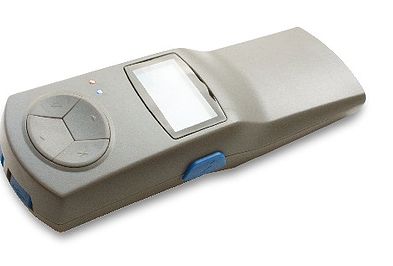
The hardware catalog includes focused HF handheld readers, longer-range UHF scanners and PJM equipment for diamond parcels. TJS advertises its PJM Diamond Pad Scanner as capable of reading more than 750 tags in under five seconds. That is a vendor specification for particular equipment, rather than a promise about every display case.
Software connections matter, too. In 2011, TJS introduced POSLink after jewelers struggled to keep ZeroShrink updated following POS transactions. The adapter automated that transfer. Today, DeviceManager X supplies middleware through which applications communicate with scanners, printers and scales. The small, tedious gap between two systems can determine whether an otherwise useful tool gets used.
“ZeroShrink is now helping us do our inventory at least five times faster.”Wei Ming Chen, R.S. Nazarian
A monthly bill, a physical commitment
Swim, TJS’s cloud POS offering, extends the relationship beyond counting. It serves jewelers selling, making and repairing jewelry. Its creator, Raeleen Kaesehagen, originally wrote it for her parents’ store in 1997; it became available to other stores in 2000. Even its name is an operational ambition: Savings with Improved Management.
The published plans list $79, $139 and $269 per month per store, with unlimited users and a 30-day trial. The page does not specify a currency code. Lower tiers depend on new sales and inventory entries each month, rather than the total accumulated stock database. These software subscriptions should be distinguished from the equipment, tags and implementation involved in an RFID deployment.
The commercial lesson is visible in that pricing policy. A growing archive does not itself force a store onto a higher plan; the policy measures new activity. A busy month can require an upgrade, and a quieter one can support a downgrade. For an owner deciding whether to try the software, this is a more useful detail than a long list of features.
The alternatives depend on the job. Manual and barcode counts compete for staff time. Fixed RFID equipment changes how a store is fitted out. TJS emphasizes mobile scanning, while keeping different reader types in its catalog for different tasks.
TJS says it serves more than 300 customers in over 30 countries, including retailers, wholesalers, manufacturers, lenders and insurers. Its partner list includes jewelry software providers such as The Edge. Integration belongs in its positioning: an existing POS can be something to connect, rather than something a customer must abandon.
The gold comes back into view
In July 2026, Monetary Metals acquired TJS in an all-share transaction valuing it at $28.5 million. Their collaboration had begun in 2024. TJS retained its brand and leadership, with independent board oversight of its assurance work. The deal connects physical verification with a parent business that finances companies using gold.
For a jeweler evaluating the technology, the useful first move is modest: test representative merchandise, measure the count, and follow discrepancies through to resolution. Readers and tags must match; stock needs correct tagging; somebody must investigate exceptions. A scan cannot repair careless records by itself. Borsheims began with watches before expanding. Start with a tray. Establish what changed. Then decide how much of the store should follow.