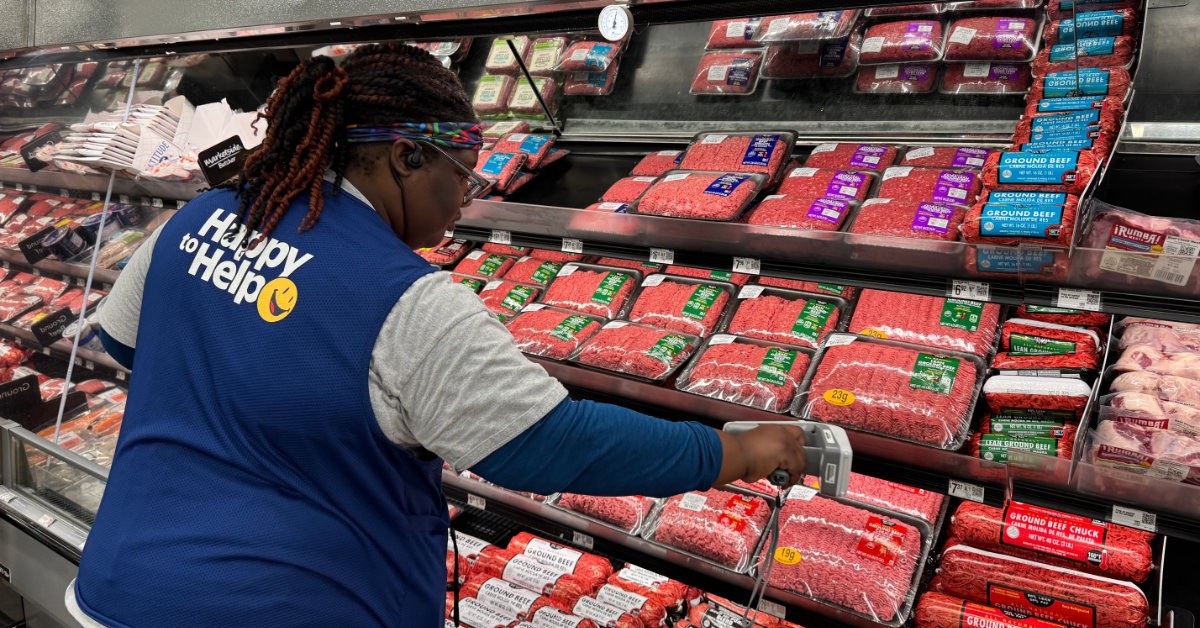
Consider the supermarket meat case. Every package has a price. Every package has a deadline. Yet knowing how many packages remain, and which should sell first, can still demand an employee’s patient inspection. The information is right there on the label. The difficulty is getting it into a system that can do something useful with it.
This is an unexpectedly good place to understand Avery Dennison. In October 2025, the company and Walmart announced work on RFID for fresh departments, including meat, bakery and deli. Their problem was physical before it was digital: reliable identification in cold, high-moisture environments. A clever dashboard cannot compensate for a tag that cannot be read.
- The foundation: adhesive materials, films, tapes and branding.
- The expansion: RFID tags, product identities and supply chain software.
- The test: better information that changes decisions.
The sticker’s second job
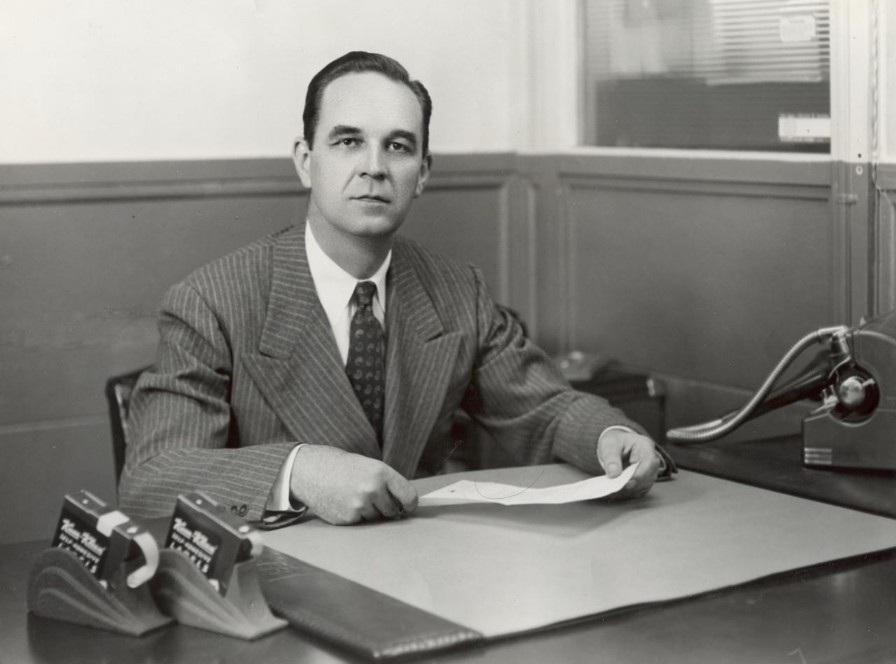
The first job was simpler. In 1935, Ray Stanton Avery borrowed $100 from his future wife, Dorothy Durfee, and assembled a labeling machine from secondhand parts and a saber saw. His removable price stickers were sold under the name Kum Kleen. The name promised something wonderfully specific: the sticker could come off without leaving a mess.
That origin matters because it established a habit of solving the awkward last inch between information and an object. Getting a price onto merchandise required an adhesive, a printable surface and a way to manufacture both repeatedly. Today’s intelligent label adds an antenna, a chip and a digital record. The underlying commercial question remains recognizable: how do you make information travel with the thing?

Avery merged with Dennison Manufacturing in 1990. In 2013, the company sold its office products businesses, a useful correction for anyone picturing stationery. The present business supplies label converters, packaging companies, apparel factories, retailers and industrial manufacturers. Its expertise includes adhesive chemistry, coating, films, printing and radio-frequency engineering. The label is where those disciplines meet.
The range explains why “packaging company” only gets you partway there. A vehicle wrap needs a film that prints well and holds its shape. An industrial assembly may need tape that bonds reliably. A garment needs branding and care information. These are different purchases, united by the need to put a dependable material onto something else.
The price of knowing
There are two engines here. Materials Group sells the papers, films and functional materials that help other businesses make and package products. Solutions Group supplies branding and information products, including intelligent labels and shelf-edge systems. Repeated production creates repeated demand for consumables. Software, hardware and services extend what the physical products can do.
Rounded values. Materials still supplies most revenue.
Buying the additional capabilities was expensive. Avery Dennison completed its purchase of Smartrac’s transponder business in 2020 at an announced €225 million before customary adjustments. In 2021, it bought Vestcom, the shelf-edge pricing and labeling specialist, for an announced $1.45 billion, also subject to adjustments. Those transactions added different pieces: RFID capability on one side, store-level data and messaging on the other.
The distinction from competitors is the combination. Label materials buyers can consider suppliers such as UPM Raflatac and Lintec; apparel identification buyers can consider Checkpoint or SML. Avery Dennison’s argument is that it can connect materials, manufacturing and identification across the same customer’s operations. That breadth is useful when the problem crosses departments.
The financial picture adds some restraint to the technology story. Fiscal 2025 sales were $8.8555 billion, up 1.1%, while organic sales rose just 0.2%. A broad installed customer base produces substantial revenue, but new identification products still have to earn their place inside a mature industrial business.
Start where the record goes wrong
Optica, launched in 2024, packages that argument into supply chain solutions. It brings together intelligent labels, the atma.io connected product cloud, field hardware and technical support. The intended customer is a brand, retailer or factory trying to connect what its records say with what is actually being made, packed or shipped.
- 01IdentifyGive the item an ID
- 02ReadCapture the handoff
- 03ConnectUpdate its record
- 04ActRestock or investigate
Illustrative workflow, not a measured customer result.
JD Sports provides a concrete example. Its published case study describes using Optica, QR codes, RFID and centralized product data to connect a garment’s journey. Suppliers can upload certification information; the retailer can follow production and share product stories with shoppers. The important change is that a label becomes a doorway into a shared record.
“Once you have RFID and data centralized”
Liz Larkin, JD Sports, on the starting point for new applications
For another business, the sensible thing to copy is the narrow starting point. Choose a handoff where inventory records regularly become unreliable. Test identification there. Measure reading reliability, time spent counting, packing errors or waste. Then decide whether another location earns its installation cost. This is a practical inference from the cases, rather than a promise of identical savings.
A signal is only the beginning
Fresh food makes the limits visible. In February 2026, Avery Dennison launched AD IdentiFresh, an inlay series designed for bakery, meat, deli and produce. Its antenna design and construction address densely stacked products and wet, cold conditions; it uses Impinj M800-series chips. Improving the read is essential. Someone still has to rotate the stock or mark it down.
That is also where a deployment can disappoint. Bad product data, poor reader coverage or a workflow nobody owns can leave a business with more signals and the same old mistakes. For a simple operation, the cost of tags, hardware, integration and training may outweigh the benefit. Count the whole system before counting the savings.
The economics will differ by task. A missed garment and a package approaching its use-by date create different losses and different deadlines. A pilot should therefore begin with the decision employees need to make, then work backward to the data, reader placement and label construction needed to support it.
Avery Dennison is widening its options. It announced a $75 million minority investment in Wiliot in April 2026, then an active Bluetooth label range in September, with initial orders planned for late 2026. The announced active labels use thin printed batteries; one version adds a tamper-evidence loop. That gives shipment tracking a different set of tools from the passive RFID used for mass inventory. Second-quarter sales reached $2.46 billion, up 10.9% year over year. The company that once made a price easier to attach is now trying to make a product easier to understand. The useful part begins when somebody acts on the answer.