In 2018, Stevensang went visiting shops with a rather modest description of his job. He was a “suggestion box.” After decades in distribution, he was collecting the complaints, questions and practical difficulties of merchants trying to bring their businesses online. Retirement had apparently left him with an inconvenient amount of unfinished business.
The detail is his own, recalled publicly after GudangAda was established. It gives the enterprise a beginning more revealing than a funding announcement: an experienced executive asking shopkeepers what was getting in their way. A suggestion box, after all, has one useful quality for an aspiring founder. It does very little talking.
The retirement that did not stick
Stevensang had already spent a substantial career inside the trade he hoped to change. From 1992 to 2017, he led PT Arta Boga Cemerlang as chief executive. The distributor was associated with Orang Tua Group, whose products included Tango wafers and Formula toothpaste. This was the business of familiar goods making their repeated journeys to shop shelves.
His technology interests also predated the startup. His career included integrated systems work in 2004, a distributor-owned B2B commerce platform in 2013, and further digital modernization in 2016. By the time he founded GudangAda, he had worked on the relationship between distribution and software for years.
That background changes how the launch looks. A long career can provide a comfortable reason to leave things alone; it can also supply a detailed inventory of things that ought to work better. Stevensang chose to return to those problems. GudangAda began operating in January 2019, following the preparatory work of the previous year.
His return had the peculiar advantage of beginning where many new businesses hope eventually to arrive: with knowledge of the customers. The challenge was to turn that familiarity into something merchants could use. Knowing a trade and persuading it to change are separate jobs.
He later said friends and family had encouraged him to keep to his retirement plan. Building GudangAda meant choosing a familiar industry over their advice.
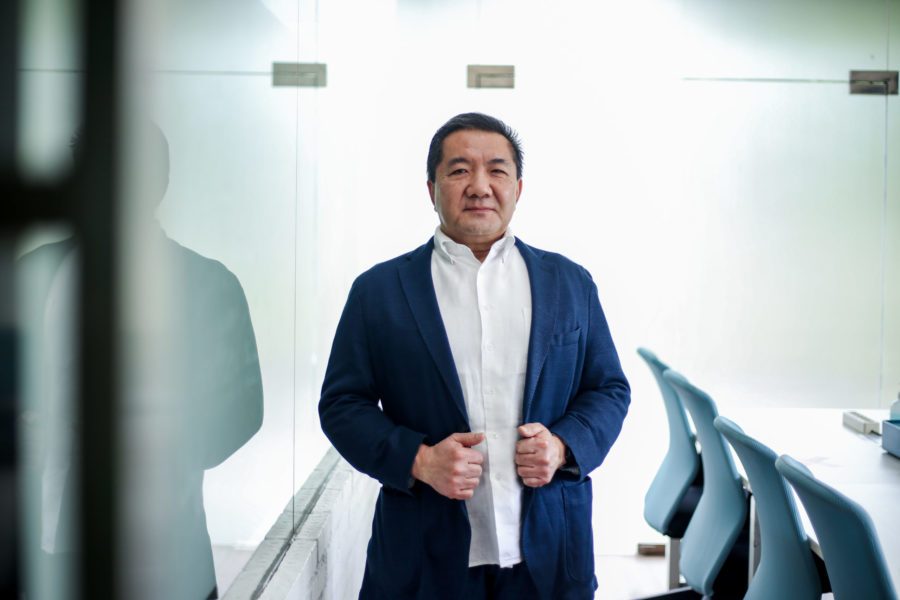
The wholesaler was already there
Consider the small retailer’s restocking trip. In describing the market in 2020, Stevensang explained that buying fresh inventory could require a shopkeeper to close the business, sometimes for an entire day. The errand came with a second bill: the sales that could not happen while the proprietor was away.
The supply side had its own inefficiencies. Salespeople needed time to learn routes and build relationships; staff turnover made that investment harder to recover. Wholesalers wanted buyers. Retailers wanted an assortment they could afford. The people involved were already doing business, but finding one another and completing an order could consume expensive time.
GudangAda brought manufacturers, wholesalers and retailers into a shared digital marketplace. The appeal was practical: find stock, compare the available choices and organize replenishment with fewer interruptions. Its customers included the neighborhood shops known as warungs, businesses for which a small improvement in the daily routine could matter.
Stevensang’s established contacts helped him bring trading partners into the platform. He treated those relationships as part of the business infrastructure. “Good relationships and mutual trust are crucial in this business,” he said in 2020. Software would operate among people who already had reasons to trust, doubt and negotiate with one another.
“Good relationships and mutual trust are crucial in this business.”
Stevensang, 2020
In his description of the model in 2021, existing wholesalers remained participants. GudangAda connected retailers to nearby supply, including wholesalers within a five-kilometre radius. The attraction of that approach is easy to understand: the stock and local knowledge were already there. A useful network could give them more work to do.
A marketplace needs shoes
An ordering screen still needs someone willing to use it. In 2021, Stevensang described a business development team of more than 600 people working across more than 500 Indonesian cities. Part of their work was teaching traders how to join and use the service. Digital distribution involved a considerable amount of ordinary, physical explanation.
That staffing choice followed the audience. A merchant accustomed to established routines needed more than a new download. Someone had to demonstrate the process, answer questions and make the proposed convenience credible. The logic of the approach was to make a first transaction feel manageable enough that there might be a second.
Stevensang linked candid merchant feedback to his familiarity with their work. “Because we speak the same language,” he said in 2021, traders could discuss their problems openly. Registration options and different points of contact were among the ways the company tried to make joining easier. An elegant product loses some charm if nobody gets through the front door.
The educational ambition later acquired a public program. In 2022, GudangAda announced a collaboration with Jakarta’s administration under the name “1 Juta Warung Melek Digital,” a digital literacy initiative with a million-warung ambition. Its name described the target; it should not be read as a count of merchants trained.
Stevensang presented the work as helping the participants in the FMCG chain adapt. Training belonged alongside the trading tools. For a founder with years inside distribution, that was a concrete way to bring the existing trade into the new system.
A large cheque, a small-shop problem
By July 2021, GudangAda was announcing figures on a different scale. Its Series B exceeded $100 million, against an initial target of $75 million. Asia Partners and Falcon Edge led the round, with existing investors also participating. Total funding stood at approximately $135 million.
The company said it had about 500,000 SME users at that point. These are figures from that period, useful for understanding the attention GudangAda attracted. They describe the early marketplace chapter rather than the size of its business today.
Stevensang set out plans to strengthen logistics, payments, marketing, data and related merchant services. The ambition was to address more of the work surrounding the order. A completed purchase still left the goods needing to arrive and the shop needing to manage what came next.
Funding made those plans more visible. It also gave the career a convenient public milestone: the veteran distributor had become the founder of a heavily financed technology company. For the shopkeeper, the relevant milestone was more prosaic. Did the order arrive, and did the arrangement make replenishment easier? Those questions give the large numbers their everyday context.
The pleasure of an argument
Stevensang’s own account of leadership gave considerable space to listening. In a May 2021 essay, he described spending time with colleagues in their daily work so he could understand their difficulties. He advocated receptiveness to criticism and continued learning, even after a long career. Experience, in this telling, came with more homework.
Former CFO JJ Ang supplied a colleague’s view when he announced his departure in 2023. He thanked Stevensang for hearing different perspectives and working through decisions together. Then came an unusually affectionate line for a corporate farewell: “I will miss our debates.”
“I will miss our debates.”
JJ Ang, reflecting on working with Stevensang, 2023
Ang’s reflection placed their working relationship alongside the financing round he had helped close. He stressed execution and capital management as well as raising money. It is a useful companion to the headline figures: somebody had to make decisions about what the business would do with the money.
Employees also had a forum called Ask Steven Anything, where discussions ranged across the company and personal development. A public account of the sessions described an effort to keep staff informed about goals and strategy. The name had the welcome virtue of requiring almost no explanation.
In 2023, Stevensang described enjoying a discussion with economist Bhima Yudhistira about the B2B market and changing shopping habits. He wanted to hear more perspectives from people interested in the sector. Across these accounts, conversation recurs as a working practice: with merchants, with colleagues and with people examining the market from outside the company.
A different shelf, a familiar trade
GudangAda’s subsequent direction brings the distribution experience back into view. It expanded into beauty in 2022, followed by a network of more than 1,000 beauty general-trade outlets in 2023 and a wider modern-trade offering in 2024.
Today, GudangAda identifies its founder as Henry Stevensang and positions GudangAda Beauty as a partner for brands entering and expanding in Indonesia. The services include distribution, logistics, fulfillment and offline marketing execution. It is a business description rooted in getting products into the market and keeping them moving.
The transition deserves its own date line. By January 2026, GudangAda’s recent history included falling revenue in 2024 and a bet on beauty retail. The early funding chapter and the later change of focus belong to the same company’s history. Reading them together gives a more useful account of Stevensang’s work than preserving the company forever at its July 2021 scale.
In 2021, he had also spoken about eventual expansion into other Southeast Asian markets. Those were ambitions for the years ahead. The business GudangAda presents today centers on Indonesia and the distribution needs of beauty brands.
There is continuity in the work even as the shelves change. Manufacturers need routes to customers. Retailers need products they can sell. Goods need to arrive. Stevensang’s return from retirement put him back among those recurring demands, with a different set of tools and more people to ask. The shop visit remains a sensible place to begin.
More from Stevensang’s world
- Stevensang on LinkedIn ↗
- His essay: Building blocks of success ↗
- The 2020 interview about distribution and trust ↗
- The early collaboration model · partner feature ↗
- The July 2021 funding announcement ↗
- JJ Ang’s reflections on the CEO-CFO partnership ↗
- Watch: GudangAda Talks with Bhima Yudhistira ↗
- GudangAda’s founder biography and beauty timeline ↗
- The January 2026 beauty-business update · subscription ↗
- GudangAda website ↗