A fund executive has an awkward professional obligation: the product on his desk must somehow become the product the customer needs. Yang Wenbin spent years inside that arrangement. Eventually, the obligation began to bother him. Every employer had its own funds, every launch required enthusiasm, and the customer’s choice ended roughly where the company’s catalogue did.
When he explained his departure from the fund industry in 2011, Yang described the frustration plainly. Promoting the firm came with the job. Doing it indefinitely left too little room for his own sense of purpose. In 2007, he and several colleagues founded Howbuy, known in Chinese as 好买财富. They wanted to sell funds from different managers and decide which deserved a place on the shelf.
It was a familiar retail idea with an unfamiliar financial consequence. A supermarket can stock competing brands without appearing disloyal to the toothpaste. A fund executive who wants to recommend a rival’s product has a more complicated conversation ahead. Yang chose to change his employer, and then his business model, to make that conversation possible.
Today he remains the Shanghai-based founder, chairman and CEO of Haomai Wealth Management, whose English brand is Howbuy. His career follows the growing distance between making a financial product available and helping somebody live with the decision to buy it.
Before the shelves, a red waistcoat
Yang’s acquaintance with markets began in 1992. His early work included the Shanghai business of Tianjin Securities and research at ING Barings. He later described himself as one of China’s early “red waistcoats”, the exchange-floor traders whose clothing made their job visible. Long before investment moved onto a phone, he had worked where transactions had a physical address.
His education took a different route into finance. He entered Peking University’s geophysics department in 1988 and earned a science degree. Later came an MBA at Shanghai Jiao Tong University’s Antai college and a financial EMBA at its Shanghai Advanced Institute of Finance. The science background would eventually supply the vocabulary for his investment classes.
At HuaAn Fund, which he joined in 1998, Yang participated in designing and launching HuaAn Innovation, China’s first open-ended fund, in 2001. He remembered investors queuing through the night for reservation numbers before completing subscription procedures. That memory matters: he had seen enthusiasm for funds before he began worrying about what investors actually earned from them.
He subsequently worked at China International Fund Management, then known through its Chinese name Shangtou Morgan, and HSBC Jintrust. Research, marketing and senior management all formed part of his professional education. By the time he became a founder, the fund industry was familiar territory. Independence was the experiment.
A business plan meets a calendar
Howbuy’s founding group included Le Jiaqing, Tao Yi, Zhang Ru and Chen Da. They brought shared experience from fund companies and a degree of trust that a new enterprise could hardly purchase off the shelf. Yang remembered visiting regulator Hong Lei at nine in the morning on January 4, 2007, to discuss independent distribution. He expected licensing to arrive much sooner than it did.
The company was established that year. Its public-fund sales qualification arrived in February 2012, among China’s first batch for independent distributors. Between those dates lay a formidable stretch of ordinary business expenses. A licence can arrive late; payroll tends to be punctual.
During that interval, private-fund research, distribution and advisory work gave Howbuy a way forward. Yang also sold a property to help support the business. The detail is unusually concrete for an industry fond of discussing other people’s allocation decisions: his commitment to the company changed his own balance sheet.
The wait left him with a useful distinction between a permission and a business. Permission would allow public-fund sales. Meanwhile, a team, research capability and customer relationships still had to be built. His later patience about investing had an entrepreneurial precedent, paid for before it could be turned into a lecture.
- 2001Helps launch
HuaAn Innovation - 2007Founds Howbuy
with colleagues - 2012Independent fund
sales qualification
Who pays for independent judgment?
A wider shelf solves only part of the customer’s problem. Somebody must select the products, explain them and remain available afterward. Somebody must also pay for that work. In March 2012, Howbuy drew attention over reports of a distribution arrangement involving a 40 percent share of a fund’s management fee. Yang publicly defended reasonable trailing commissions as consistent with international practice.
His argument was about incentives: recurring compensation could reduce the temptation to push customers into repeated purchases and sales just to generate commissions. That was his defence of the model, rather than proof that a distributor’s interests automatically matched every client’s. The question of how advice earns its living belongs inside his story.
In a 2016 interview, Yang described another boundary. Howbuy focused on standardised products and avoided business whose risks it could not grasp. He also explained the need for physical wealth centres alongside online distribution. Digital information could travel easily; understanding a customer and explaining risk required more work.
That same conversation treated the company’s New Third Board listing as a matter of governance as well as fundraising. Yang valued the institutional rules built through the process. The founder who wanted more freedom had reached the stage of explaining why his enterprise needed more structure.
The shopkeeper starts teaching
By 2018, Yang was making a case for a classroom. Some customers had earned handsome returns on a particular purchase, he observed, without acquiring a way to think about the next one. A successful transaction could leave the owner of the money just as vulnerable to a poor decision afterward. Luck had an excellent sales record and a less dependable curriculum.
Howbuy had moved knowledge transfer ahead of product selection in its mission in 2017. Its offline business school offered modules on allocation, fund selection, private equity and overseas investing. Yang taught the introductory allocation material. He described a programme of roughly nine to ten hours focused on basic knowledge, with specific product pitches left outside the lesson.
His teaching also returned to the people behind funds. In a 2019 essay accompanying interviews with private-fund managers, he asked readers to look beyond annual rankings and the size of a business. His research team had spent nearly six months visiting ten managers. He wanted to understand judgment, limitations and character alongside the numbers.
“选基金,就是选人。”
Yang Wenbin · 2019
Choosing funds means choosing people. Translation.
“Choosing funds means choosing people,” in translation. The observation has a pleasingly untechnical sound. Applying it requires interviews, inconvenient questions and a willingness to notice where a talented manager’s ability stops. Yang’s version of professional trust depends on examining the professional first.
Three dimensions for a nervous investor
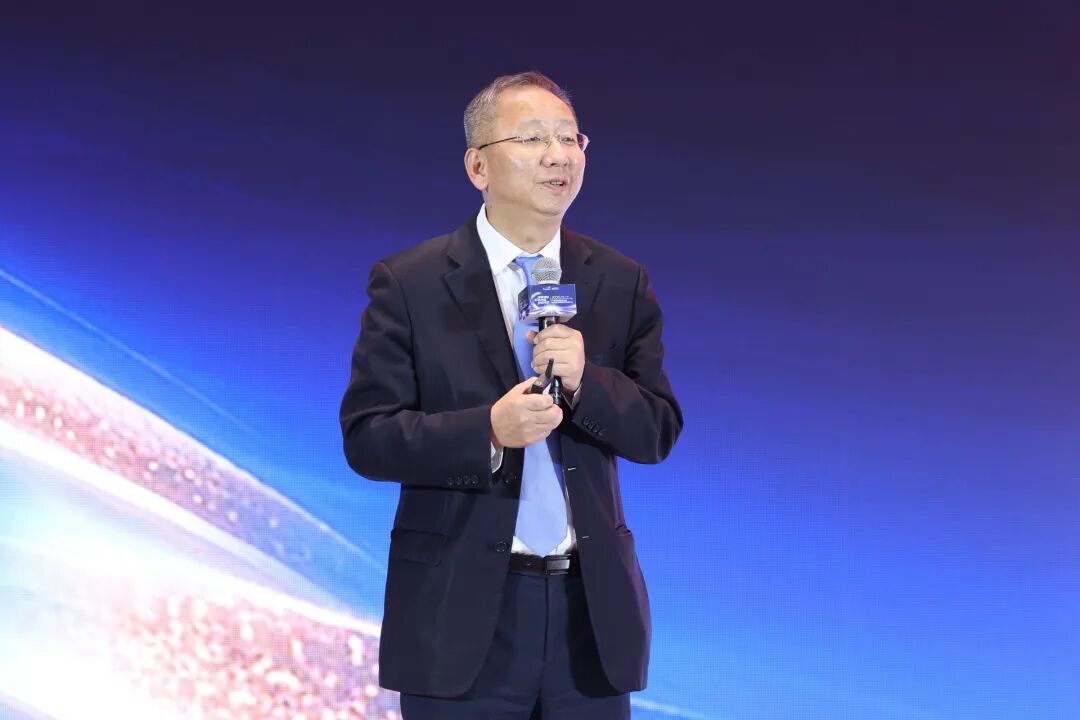
Yang eventually gave his lessons a name: the length, breadth and height of investing. The phrase borrows its organising idea from his science education. Length concerns time. Breadth concerns allocation across different assets. Height concerns understanding the roles of professionals and choosing help with sufficient knowledge to judge it.
In his 2023 course, he described two components of an investor’s result: the fund’s gains or losses, and the effect of the investor’s behaviour. The distinction gave Howbuy a reason to work on decisions after a purchase. A well-researched product could still be held, sold or repeatedly exchanged in ways that undermined the customer’s experience.
His separate lesson on length asked why investors found patience so difficult. He contrasted the willingness to hold property with the tendency to watch and trade funds. The relevant observation is about temperament and time, rather than a promise about what any particular fund will return.
By November 2025, speaking at an investment-adviser conference in Guangzhou’s Nansha district, he described advisers through three jobs: asset allocation, product selection and behavioural coaching. He emphasised that trust takes time and that training requires theory and practice. The customer remained in the picture after the paperwork was finished.
The class he never quite left
There is another classroom in Yang’s life, well before the investment seminars. In 1985, as a first-year high-school student at Shanghai’s Nanyang Model High School, he attended Wang Shengmin’s aesthetic-education lessons. Years later, watching Dead Poets Society, he recognised something of his own school experience. The comparison was his, complete with the thought that his class had enjoyed its version earlier.
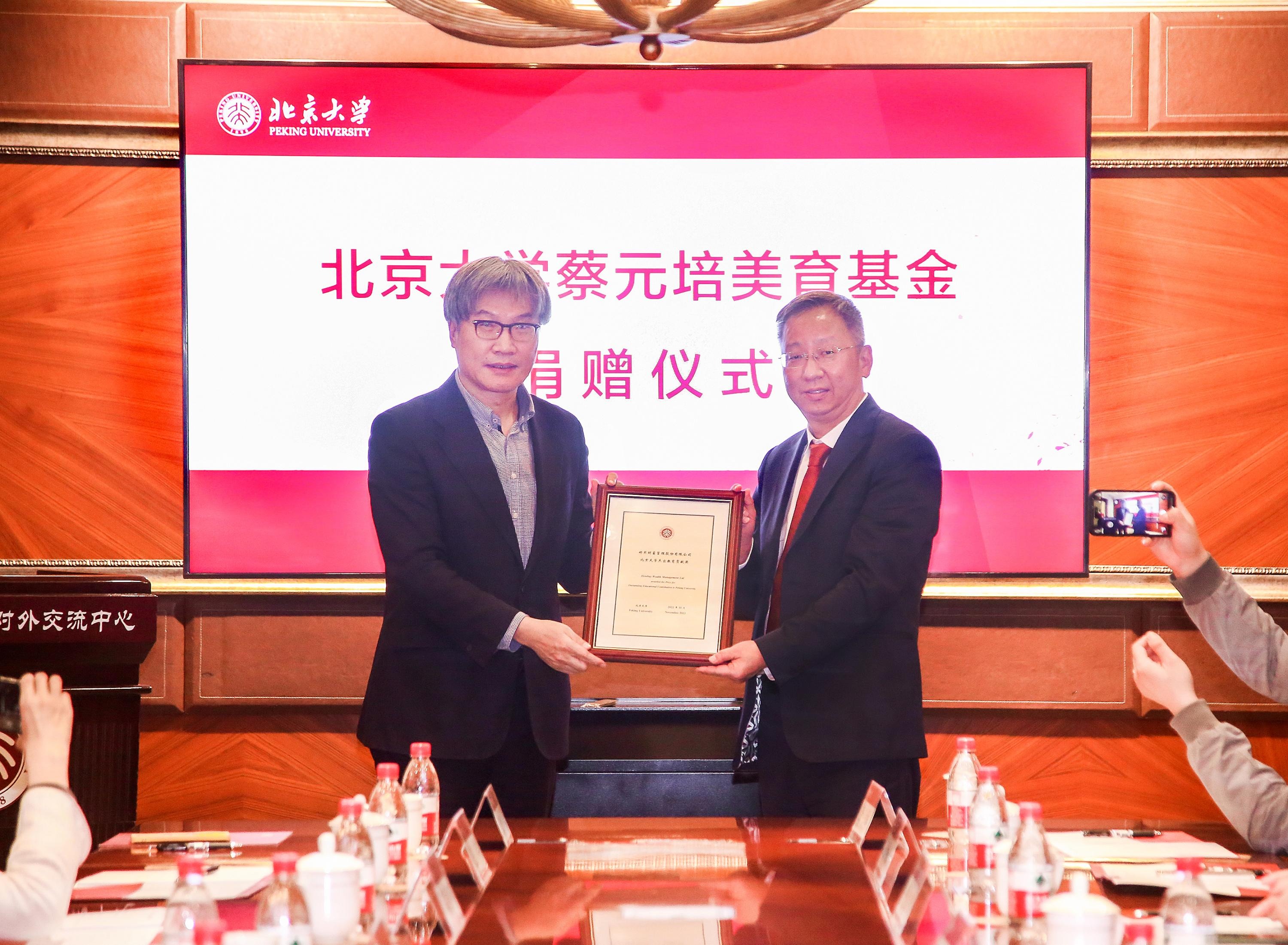
In 2022, Howbuy established the Cai Yuanpei Aesthetic Education Fund at Peking University. At its February 2023 donation ceremony, Yang attended with his wife, Bao Lei, also a member of the university’s 1988 entering class. The fund supported teachers and work in aesthetic education. Yang linked its name to the former university president’s ideas about the place of beauty in education.
A Wang Shengmin aesthetic-education fund followed in July 2023, extending support toward secondary-school teaching. The gesture gave a school memory an institutional future. Amid a career occupied with assessing managers, Yang had also kept track of a teacher whose influence resisted the usual performance table.
In December that year, Howbuy reported that eleven teachers had received awards across the first two rounds of the university fund. This was education measured through teachers supported and lessons made possible. A financial founder’s public life had found room for a subject with no fund price to check.
Nineteen years, still choosing
Yang’s annual investor letters have continued the conversation. His letter looking toward 2026 used the idea of “dual lanes” to discuss technology, global allocation and balancing asset classes. In July 2026, Howbuy marked its nineteenth anniversary with nineteen questions for its founder, placing familiar concerns about judgment and long relationships inside a discussion of artificial intelligence.
Those newer tools sit beside a remarkably persistent problem. Yang began by wanting the freedom to recommend a fund beyond his employer’s catalogue. The resulting business led him into research, distribution fees, governance, classrooms and the patient work of explaining risk. Each answer made the original question a little larger.
The former trader’s red waistcoat once identified his place on an exchange floor. His later career has required a less obvious position: close enough to the products to understand them, close enough to customers to explain why they might need something else. Giving people more choice turned out to involve a considerable amount of teaching.