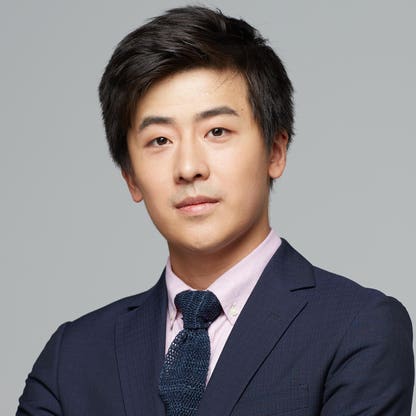
A Banker Who Bet on Access
Kevin Diao runs a fintech company built on a single conviction: an investor in Shanghai should be able to reach the same global assets as an institution in Manhattan.
Today Kevin Diao is the co-founder and chief executive of Meixin (MX) Global, a cross-border financial products and technology company based at 552 Broadway in New York. The firm's work is unglamorous in the best sense. It curates international alternative investments - private equity, hedge funds, private debt, real estate debt and preferred equity - and delivers them through a platform to wealth managers, independent advisors, private funds and family offices. The clients want exposure to markets outside their borders. Meixin's job is to make that exposure practical.
The mechanics matter more than the pitch. The company's MX Terminal aggregates many individual subscriptions into single access funds. That pooling lowers the minimum investment a person needs to participate, trims transaction costs, and automates the paperwork - subscription, redemption and reporting - that usually makes cross-border investing slow and expensive. It is a plumbing problem disguised as a finance problem, and Diao has spent the better part of a decade on the plumbing.
He came to it from the inside. Diao studied Finance and Economics at NYU's Stern School of Business, graduating in 2011. From there he moved through the institutions that define a conventional finance career: Bank of America Merrill Lynch, Societe Generale, and Greentech Capital Advisors, where his work touched mergers, corporate finance and advisory. It was a straight climb, the kind most people hold onto.
Diao stepped off it. In 2015, at 26, he co-founded Meixin Global in New York alongside his partners. The idea grew out of a gap he kept seeing from the banking side. China's wealth management market was enormous and, by the firm's read, badly underpenetrated - a sector measured in the trillions where individual investors had little practical route to high-quality assets abroad. "Global asset allocation and overseas investments, particularly for individual investors, remains a largely un-tapped market," he said around the company's Series A. The sentence is dry. The opportunity behind it was not.
Recognition followed the work. In 2017, Forbes named Diao to its 30 Under 30 Asia list in Finance and Venture Capital, a list with an acceptance rate reported to be lower than Harvard's - roughly four percent of applicants reached the final 300. "It is really an honor to be recognized," he said at the time. "We strive to change the way Chinese investors see overseas investments, as we continue to change the game; Meixin Global uses technology to provide them with a better and easier way to access high quality global assets." Two years later, Tatler Asia added him to its Gen.T Leaders of Tomorrow list in China, citing his work "for connecting China with the world financially."
The capital arrived to match the ambition. In August 2017, Meixin Global closed over $5 million in Series A financing led by Korea Investment Partners, with returning backer Bertelsmann Asia Investments and new investors joining the round. The firm said it would use the money to strengthen the technology platform, widen its product menu, and push into new geographies, including South Korea. Korea Investment Partners framed its interest plainly: it was looking for technology that could disrupt global asset allocation, and it viewed Meixin as leading that race.
What makes the company distinctive is how physically distributed it is. Meixin Global operates across New York, Houston, Beijing and Shanghai, and has partnered with large Chinese wealth firms including HNA Group and Jupai Holdings. Running a business across those time zones is a logistical grind, but it is also the point. A cross-border firm that only lives on one side of the border cannot do the job. Diao built the company to work across the divide rather than route around it.
There is an earlier chapter that explains the pattern. Before finance, Diao founded the Global Social Venture Competition, described as the largest student-led business plan competition in the world - an effort that connected young founders with mentors, exposure and capital. The through-line from that competition to Meixin Global is not the subject matter. It is the instinct: find talent or opportunity on one side, connect it to resources on the other, and remove the friction in between.
That instinct is what Meixin sells. Not a flashy app, not a promise of outsized returns, but access - the quiet infrastructure that lets money move to where it can work. Diao's wager is that the demand for that infrastructure only grows as more of the world's wealth looks for a home beyond its own market. For an investor sitting in Beijing or Shanghai, the distance to a global deal is measured in paperwork and minimums. Diao has spent his career trying to shorten it.