By 2023, Jackery had a peculiar advertising problem. The portable-power brand had reached 99% penetration in the outdoor-generators and portable-power audience segment described in its Amazon case study. It wanted new customers. It was running out of familiar people to ask.
- Xnurta automates bids, budgets, targeting, and campaign upkeep.
- Its AMC Hub helps teams find audiences and understand purchase journeys without writing SQL.
- The test is profitable growth and saved work, not the number of changes an AI makes.
The response was revealing. SparkXGlobal, using its Xnurta platform, combined Amazon DSP reports with Amazon Marketing Cloud insights. It found promising pockets among shoppers interested in camping furniture and cycling equipment. The team tailored creative to each segment, watched engagement, and increased the budget share for responsive groups two to three times.
Amazon’s published account reports 17% incremental reach and a 45% reduction in cost per add to cart. Those are campaign outcomes, not promises to the next customer. But the sequence is worth stealing: find an overlooked audience, give it a relevant message, then spend more only when the response earns it.
A dashboard doesn’t adjust a bid.
Xnurta sells the machinery for that sequence. Brands, marketplace sellers, and agencies use it to manage retail advertising, with Amazon, Walmart, and Criteo now central to its offering. Its particular bet is that the expensive gap sits between seeing a useful number and doing something about it.
AI Copilot handles changes to bids, budgets, and targets. Smart campaign creation helps organize new activity. Sponsored Ads management catches shoppers already searching; Amazon DSP supports display and video placements reaching people earlier in their buying journey. Analytics connects those activities so a team can judge more than the final click.
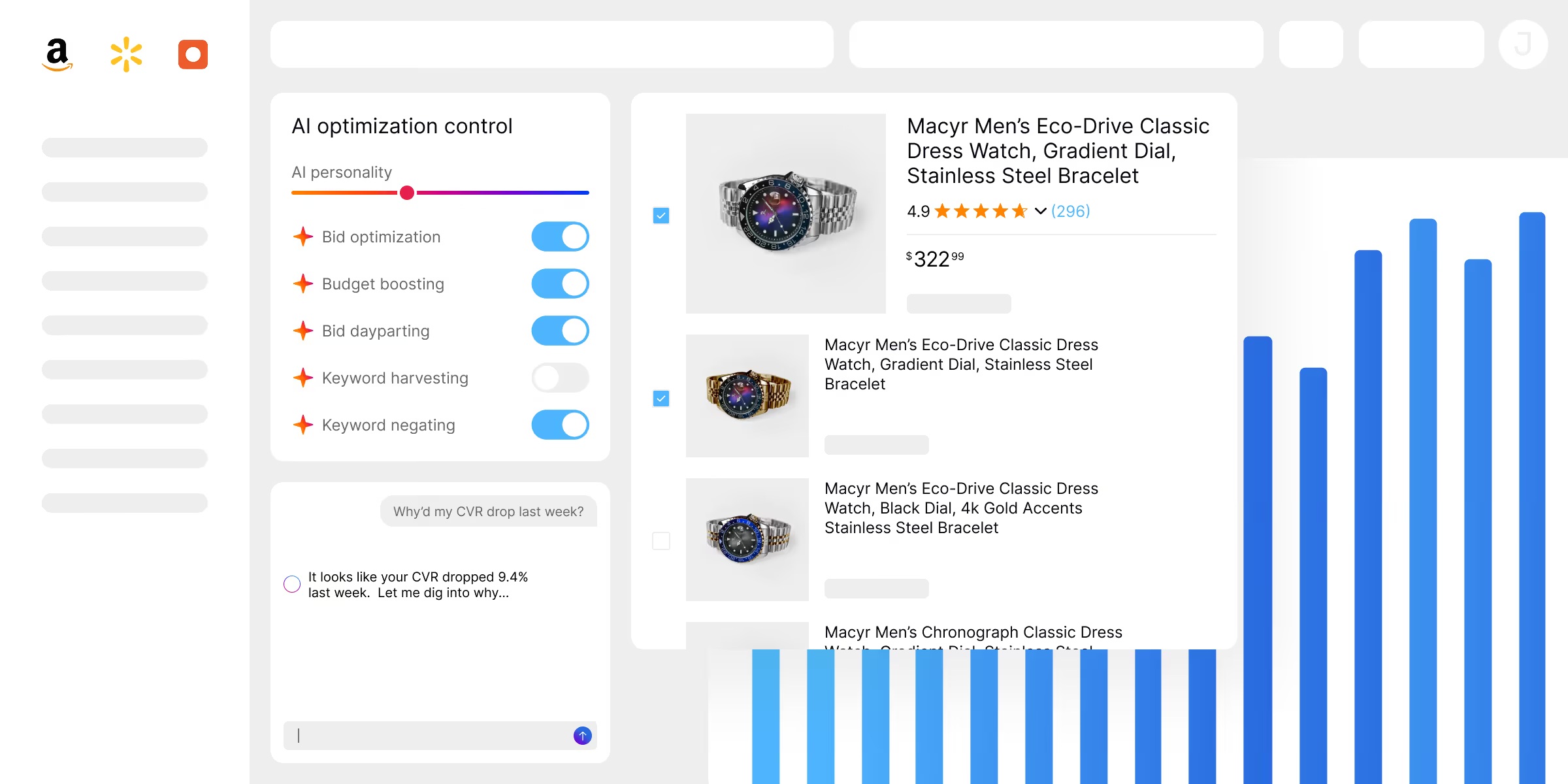
The networks do not all behave identically inside the product. Xnurta’s Criteo offering includes sponsored placements, bulk campaign edits, and rules for bids and budgets across participating retailers. Walmart management has its own campaign tools. A buyer should ask which actions are automated on each network, rather than assume an Amazon demonstration describes the entire system.
For an agency, the attraction is operational: more accounts bring more bids to check, reports to assemble, and budgets to pace. Xnurta offers a common execution layer. A February 2026 partnership with commerce agency Front Row puts that arrangement into practice, pairing the software with marketplace strategy and regional expertise.
- 01Read signalsAudience + campaign data
- 02Set the limitsTargets + spending caps
- 03ExecuteBids + budgets + targeting
- 04ReviewAction logs + outcomes
The query was the queue.
AMC Hub addresses a different bottleneck. Amazon Marketing Cloud can reveal relationships among ad exposures, audiences, and purchases. Getting an answer traditionally requires technical work. Xnurta packages that analysis in a no-code interface, with models for purchase paths, customer lifetime value, and overlapping audiences, plus tools to activate custom segments.
Goal Zero shows what this means beyond the interface. At the end of 2023, the portable-power company faced eroding market share, weak branded search, and returns below expectations. Xnurta connected advertising data, incorporated hashed first-party customer information for lookalike modeling, and built 97 audience segments. Its customer account reports Amazon sales growth above 30% year over year and an 80% improvement in TROAS.
The implementation matters as much as the headline result. This involved account connections, audience design, and monthly allocation decisions. Buying software was one step in rebuilding how the account operated.
Even tuna needs an incrementality test.
Bumble Bee Foods presented a wonderfully ordinary complication. Its new Snackers line needed buyers without simply taking them from the company’s existing products. A launch can look successful while the parent business stands still.
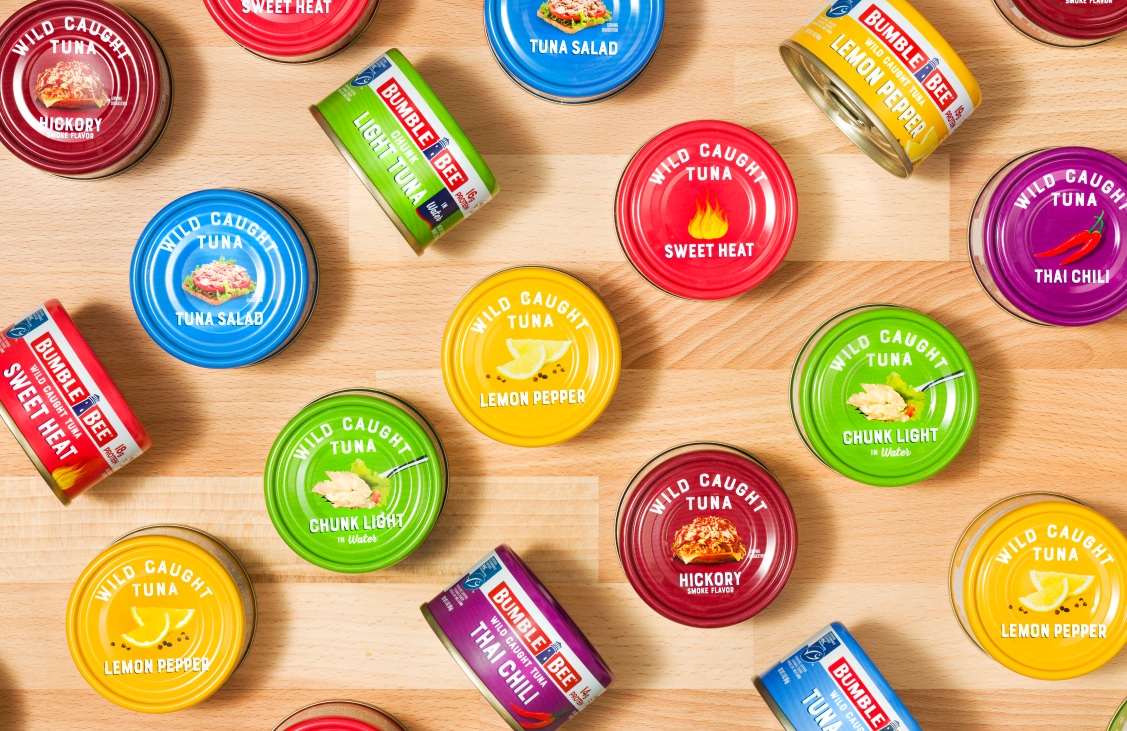
Agency C.A. Fortune shaped keywords around uses such as single-serve, on-the-go snacking. Xnurta supplied continuous optimization and AMC cross-product analysis. The teams used those signals to examine whether purchases added to baskets or substituted for established lines. Xnurta reports revenue growth 22% above goal over nine months.
The lesson travels beyond tuna: define what counts as additional business before an optimizer starts chasing conversions. Reported advertising sales alone cannot settle that question.
The machine gets boundaries.
Xnurta describes controls for bid ceilings, spending caps, and excluded targets, alongside logs explaining changes. The operator chooses the objectives and permitted actions. That division of responsibility is central to the product’s appeal.
It also explains the company’s newer tools. The AI Reporting Agent produces presentations from account data. Data Hub, launched in October 2025, sends advertising information into customers’ own analytics systems. In August 2026, Xnurta introduced an MCP connection for assistants including ChatGPT and Claude, starting with data queries while write capabilities entered closed beta.
“Today, Xnurta MCP starts with answers.”
Kashif Zafar, CEO, August 2026 launch announcement
The direction is clear: fewer exports and repeated instructions between systems. Availability still matters. A roadmap for an assistant to change campaigns is different from a capability already released to every customer.
The price of less busywork.
Xnurta’s Lead plan lists a starting price of $750 a month or 3% of ad spend for brands spending up to $80,000 monthly. Larger brands and agencies receive custom pricing. AMC is an add-on, so the entry price does not describe every setup.
That also means separating an account’s return on ad spend from the health of the business behind it. An optimizer can favor shoppers already close to buying because those conversions look efficient. The human review should ask whether the account is reaching additional buyers, preserving healthy margins, and supporting the products the company actually wants to grow. A good score needs a good definition.
A useful buying calculation compares the agreed software fee, media spend, and remaining staff effort with the value of improved performance and time recovered. At modest budgets, a fixed monthly charge needs careful justification. At greater scale, execution overhead becomes easier to see.
Alternatives include native advertising consoles and platforms such as Perpetua, Teikametrics, and CommerceIQ. Xnurta’s case rests on connecting execution, AMC analysis, and reporting. Competitors also offer automation; buyers should test actual workflows, controls, and economics rather than accept a category slogan.
Founded in 2018 as Xmars and renamed in January 2025, Xnurta has kept adding pieces around the same problem. The sensible adoption path is bounded: choose an account, set spending limits, agree on success measures, and inspect the changes. Automation can execute an objective efficiently. Choosing an objective worth executing remains the advertiser’s job.
Go closer.
Explore the product and the people behind it.