William Fairbairn chose a curious place to look for the future: the gap between two pieces of software. At Agicap, where he ran the UK business, he saw finance leaders juggling tools to complete ordinary operations. A company could buy the systems, configure them and still need someone to carry information from one screen to another. The computer had acquired a staff.
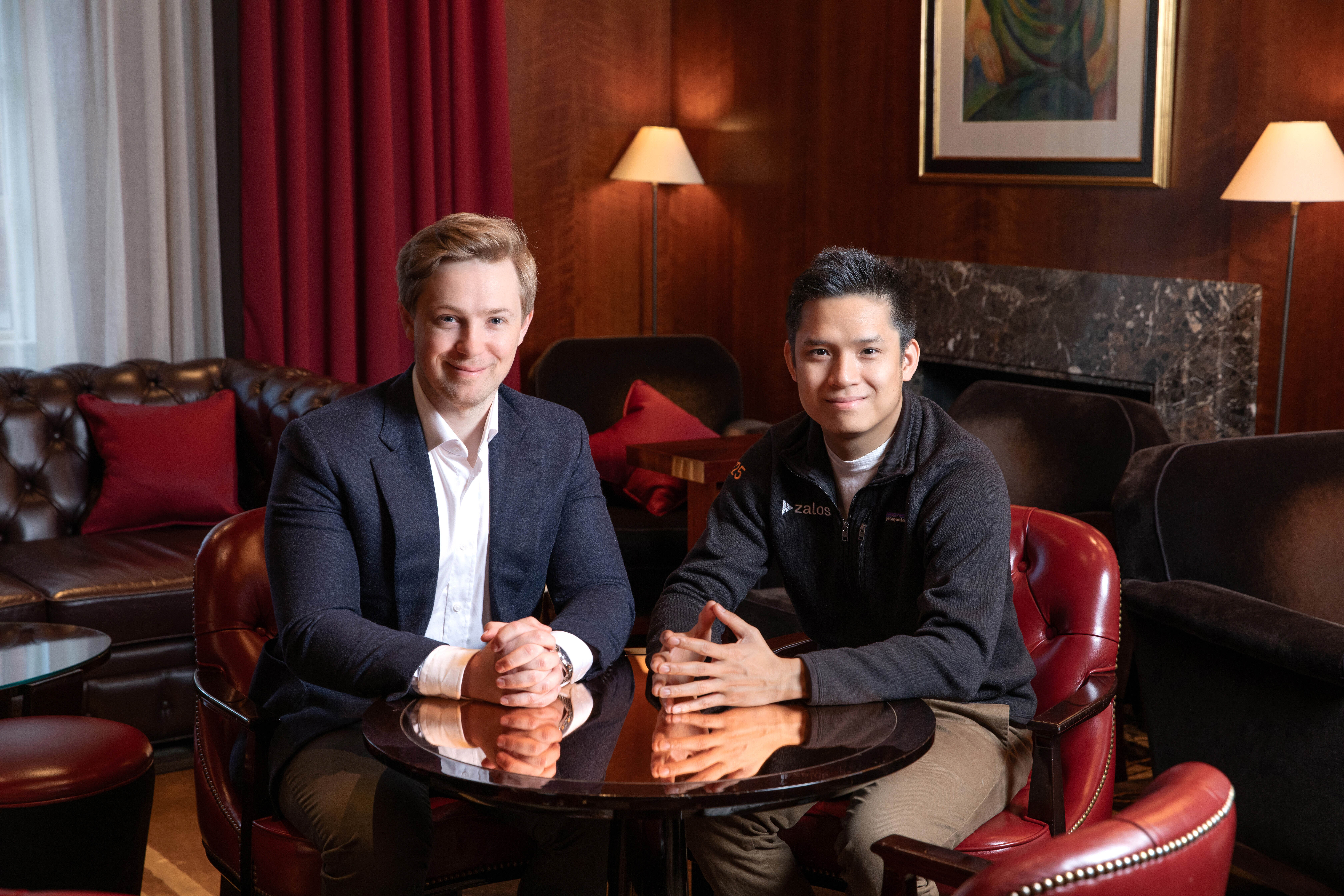
His response was to co-found Zalos with Hung Hoang. Their agents log into finance systems and perform workflows inside them. The customer keeps the existing setup. The work moves. It is a practical starting point for an ambitious business: accept that the expensive software is staying, then examine everything a person has to do around it.
Fairbairn arrived at that idea by a winding professional route. He had already built and sold a software company, worked in consulting and led a country business. Starting again meant returning to the question that a polished career can sometimes postpone: which problem deserves your time?
A sale, then another start
His first business began after university. It was bootstrapped B2B software, and he eventually sold it. His assessment of the proceeds is pleasingly ungrand: “Not enough to retire.” A successful exit can occupy an entire biography; Fairbairn allows his to remain a useful early chapter.
McKinsey’s technology practice followed, then Agicap. The sequence gave him experience of building a product, advising businesses and running an operation. On paper, those are three different jobs. Together, they help explain why his next company would concern itself with the awkward passage from a software promise to a customer’s actual working day.
His interest in finance automation predates Zalos. In May 2024, while discussing Agicap’s AI assistant, he highlighted supplier payment planning, cash information and the possibility of giving CFOs more time for strategic work. He was already thinking about how software could change the allocation of attention inside a finance department.
By the time he announced Zalos’s entry into Y Combinator, his language had become more specific. He described watching CFOs use numerous tools just to carry out basic operations. The complaint had moved from a general wish for better technology to a particular observation about how work was getting done.
A year spent finding the problem
At the beginning of 2025, Fairbairn was working alone. His account of the first quarter involves meeting people, attending hackathons and exploring AI. It is an unusually useful part of the story because it leaves the search visible. The eventual product did not arrive with a company biography attached.
He described the task plainly: “I was looking for a problem worth the next ten years.” The timescale matters. A decade is a long commitment to a fashionable technology, and an entirely plausible commitment to a stubborn business problem. The distinction helps explain the choice of finance operations.
From April through August, he and Hoang shipped and spoke with customers. Fairbairn says the feedback was encouraging, but their original thinking felt too small. They committed to agents that could execute work within enterprise resource planning systems, usually shortened to ERPs. The places where companies keep their financial records became the places where Zalos would work.
Hoang brought engineering experience from Apple Pay, including work on Buy Now Pay Later, alongside experience in AI companies. Fairbairn brought a view of the finance buyer and the daily friction around the product. Their backgrounds give the partnership a legible division of experience, without making either founder a decorative addition to the other.
The seed round was led by 14 Peaks, with Cohen Circle and 20VC participating. Funding gave the company resources to develop the technology and reach further into enterprise finance. The underlying choice remained the same: work within the systems customers have already organised their businesses around.
The people on both sides of the Atlantic
Zalos’s accelerator chapter also involved a geographical arrangement. Fairbairn was in San Francisco for Y Combinator. His wife, Lulu Ouyang, was in London with their young child, continuing her private equity career. In a public reflection, he gave her credit for the support that made the period possible.
He described her adaptability and her ability to remain present across work and family life. What makes the account memorable is its attention to her work as well as his. His startup was consuming time in California; her career continued to carry its own responsibilities in London. The founder’s calendar was part of a household arrangement.
Ouyang has also written about Zalos herself. As an investor at Hg, she connected its approach with an interest in AI that gets work done in existing systems. Her contribution to the public story combines personal support with a professional view of the product. She understands the proposition and has opinions about what makes it useful.
Y Combinator supplied another set of relationships. Fairbairn has singled out Tom Blomfield and Grey Baker for their experience in financial technology and their help with subjects such as pricing and enterprise growth. For a founder moving from familiar UK networks into the American market, those are concrete matters to discuss. Ambition still needs a price list.
Trust has to leave a trail
The appeal of operating existing software is easy to describe. The responsibility is harder. Finance teams need to know how a result was produced, what happened when something failed and who approved the outcome. An agent that can click a button inherits the consequences of that button.
Fairbairn’s explanation of Zalos’s reliability work includes dividing workflows into tasks and checking actions as they happen. The company describes records of agent activity, human review and controls as parts of the product. These details belong close to the promise of saved time: they determine whether a finance team can make use of that time with confidence.
“You can't automate what you don't understand.”
William Fairbairn
The longer ambition reaches beyond individual jobs. Fairbairn has discussed a finance context graph connecting a company’s systems. Zalos now presents a Finance Process Graph as a way to represent how work runs across them. A transaction has a history; a procedure has dependencies. Capturing those relationships gives the company more to work with than a sequence of clicks.
- ObserveLearn from files, recordings and existing systems.
- MapMake the process and its dependencies visible.
- Execute & reviewRun work, preserve evidence and flag exceptions.
This makes the customer’s existing habits significant. Written instructions might describe a procedure, while the files and screen recordings reveal how it is actually performed. Fairbairn’s recent emphasis on process mapping recognises that automation begins with those particulars. The spreadsheet beside the official system may contain an essential part of the explanation.
What a CV leaves out
Fairbairn applies a similar interest in practical evidence to hiring. In his 2026 writing, he argues that CVs remain useful for screening, while the names of previous employers deserve less weight. Side projects, he says, can reveal initiative, technical skill and problem-solving.
It is an interesting position from someone whose own résumé includes McKinsey and Agicap. He has the recognisable names. He also has experience of starting with a problem and making something without a large organisation behind it. His stated preference asks candidates to demonstrate that kind of activity through work of their own.
In setting out his priorities for 2026, he put customer value ahead of revenue as the signal to watch, followed by the foundations of the team and building for the long term. The list is revealing because it concerns the conditions for continuing. A founding team can produce an intense burst of work; a company needs an arrangement it can repeat.
Fairbairn wrote that he and Hoang had worked through 100 consecutive days during Y Combinator. He then called for more structure and better rhythms for the years ahead. The shift suggests a founder considering the difference between getting a company started and organising its next decade. Even determination eventually needs a workable diary.
The process before the promise
By September 2026, his public argument had sharpened around understanding finance procedures before automating them. He demonstrated how Zalos uses existing work, historical files and systems to map a process and identify improvements. A quick approximation, he argued, does not meet a CFO’s needs.
Later that month, he examined how finance roles change when AI takes on execution. The controller still needs to explain procedures. The CFO still has responsibility for the numbers and the governance behind them. Faster work leaves a substantial job for the people who must understand and sign off on it.
That concern brings the story back to Fairbairn himself. His career has taken him through making software, advising technology companies and running a finance software business. Zalos gathers those experiences around the work that remains after a company has bought its tools.
The company’s name adds a small personal flourish. Fairbairn adapted it from the Greek Zelos, which he describes as meaning fevered determination. It suits a founder who has chosen a field where progress may be measured in reconciliations, clear exceptions and procedures that can be explained. There are less glamorous victories than a funding announcement. He is building a business around some of them.