William Colleran returned from his honeymoon to a message from an old colleague. Chris Diorio had started a company in Seattle. Would Colleran come and join him? The invitation carried a useful credential: the two had already designed satellite chips together at TRW in the 1980s. There are worse ways to recruit a chief executive than to have survived a circuit-design problem with him.
Colleran had just sold his Bluetooth business. In January 2001, he became CEO of Impinj, joining a small team in Seattle’s University District. Some were former TRW colleagues. He would later describe the reunion with an affection that sounds rather more like a garage rehearsal than a corporate appointment: “We were kind of getting the band back together.”
He stayed through 2014. Impinj went public in 2016. The gap between those dates matters. A promising technology can consume years before the market is ready, and the person who helps establish its business may have moved on before the opening bell. Colleran’s career is full of that awkward interval between a working invention and a customer who can use it.
Blutonium, before Bluetooth was ordinary
His preparation crossed several kinds of work. He earned his electrical-engineering bachelor’s degree at Notre Dame in 1983, a master’s at USC in 1985 and a doctorate at UCLA in 1993. In 1996, he added a J.D. from Harvard Law School. Alongside engineering experience at TRW, his career included technology investment banking at Merrill Lynch.
Four degrees give the résumé a certain architectural density. More useful to the story is the range of problems those workplaces presented: how a circuit behaves, how a transaction works, and how a young company gets from a design to a product. Colleran eventually occupied the spot where those questions meet, running businesses built around technologies still finding their customers.
At Innovent Systems, he was president and CEO during the early commercialization of Bluetooth radios. The company’s product line had the pleasingly theatrical name Blutonium. In June 2000, Innovent and TSMC announced production of an integrated Bluetooth transceiver using an all-CMOS process. The manufacturing choice was central to the proposition: radio circuitry could be made using a process familiar to the semiconductor industry.
That same month, Broadcom announced its agreement to acquire Innovent. Broadcom had already invested in the business and collaborated on research and development. The acquisition announcement identified Reza and Maryam Rofougaran as Innovent’s founders, with Colleran leading it as chief executive. It was a combination of an engineering team and a larger company’s commercial infrastructure.
The early Bluetooth conversation was already concerned with price and adoption. Colleran discussed the importance of meeting the price a market required. A radio could be technically impressive and still be an awkward purchase. That practical constraint would follow him into RFID and, later, optical sensing. The customer has a budget, however elegant the physics.
Fourteen years in the making
Impinj gave him a much longer assignment. Its founders were Diorio and Carver Mead; Colleran joined shortly after the company began. Early work sought applications for its semiconductor technology, including communications. RFID eventually became the business around which the company organized itself.
Madrona’s retrospective on Impinj describes the difficulty of finding a market for deep technology. The discovery comes first; the product and its buyer can take longer to identify. For a CEO, that leaves a demanding middle period. The team needs a direction concrete enough to pursue, even while the technology’s commercial use is being worked out.
- 2000Innovent joins Broadcom
- 2001-14CEO at Impinj
- 2015-17CEO at AnswerDash
- 2017/18Lumotive’s founding chapter
- 2026CEO at Adronite
By December 2007, Colleran was discussing a more specific route to RFID adoption. He emphasized applications in which the organization paying for tags and infrastructure also received the benefit. Such projects could deliver a return without depending on an elaborate agreement among trading partners. He also pointed to tagging individual items as a driver of demand.
That is a revealing piece of commercial reasoning. A vision of connected supply chains asks many organizations to move together. A useful application inside one business gives a buyer a decision it can actually make. The question becomes smaller, and therefore answerable: will this system help us enough to justify installing it?
Impinj’s chip and reader products made that question tangible. Its Monza chips went into RFID tags; Speedway readers helped interrogate them. The business required the parts to work together in an application, with an economic reason for the customer to adopt them. Colleran’s 14 years there make a useful counterweight to the tidy speed of the Innovent sale.
The customer already told you where to look
In June 2015, he became CEO of AnswerDash, a University of Washington spinout. He succeeded academic co-founder Jake Wobbrock. The company’s research roots included Wobbrock, Andrew Ko and Parmit Chilana, and its product offered contextual help to people using websites.
The shift from RFID to online support looks large on a business card. At the level of the customer’s problem, it is easier to follow. A visitor on a particular page has already supplied useful information. The page helps narrow down the questions that person is likely to have. AnswerDash used that context to offer help closer to the point of confusion.
During a 2017 interview, Colleran discussed why a growing list of frequently asked questions could become difficult to use. As a product gets more complicated, the help itself can become a navigation problem. Asking someone to leave what they were doing and search through a separate information store introduces another task at precisely the wrong moment.
The commercial aim was understandable without a lecture on algorithms: let customers find answers and reduce repetitive support requests. Colleran led AnswerDash through 2017. The word context would recur in his later work, although the next chapter put him back among wafers and optical hardware.
A wafer and a different way to steer
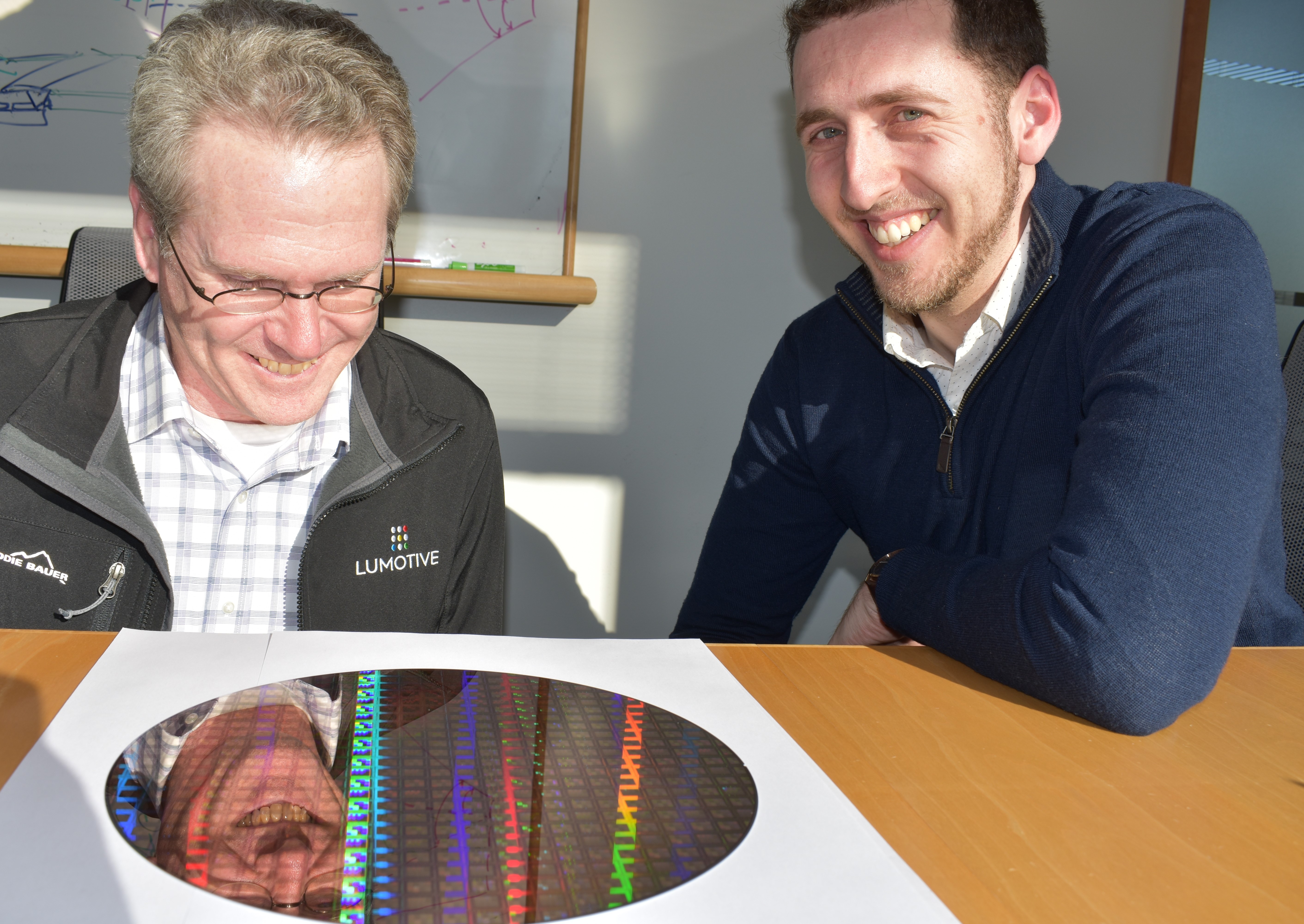
Lumotive emerged from Intellectual Ventures in Bellevue in late 2017; its company announcements date its founding to 2018. Colleran co-founded it with Gleb Akselrod, whose background was in photonics and optoelectronics. Bill Gates provided early funding. The undertaking brought semiconductor business experience and optical research to the same table.
Its early demonstrations concerned lidar, which uses laser light to sense distance and build a picture of nearby objects. Lumotive’s approach used a liquid-crystal metasurface controlled electronically. Steering the light could be done without the spinning assemblies associated with mechanical scanning systems. A chip sat at the center of the idea.
In March 2019, Colleran compared the production of intricate mechanical lidar systems to making a Swiss watch. His description of Lumotive’s intended direction was brisk: “Ours is more like consumer electronics.” The comparison concerned how the device might be manufactured and scaled. It was an argument about the eventual cost and form of a product, expressed in objects a buyer could picture.
“Ours is more like consumer electronics.”
William Colleran, on Lumotive’s approach, 2019
By May 2020, Lumotive was presenting a product plan spanning automotive, industrial and consumer applications. The proposed X20 addressed longer-range automotive requirements; the Z20 addressed industrial sensing. A consumer-oriented M20 was also planned. The announcement laid out different requirements for products built around a shared beam-steering architecture.
Those differences matter. An industrial sensor and an automotive system have different expectations for range, field of view and packaging. The same underlying technology must be made useful in each setting. Lumotive described CMOS manufacturing as a way to address volume and cost, tying its optical idea to established semiconductor production.
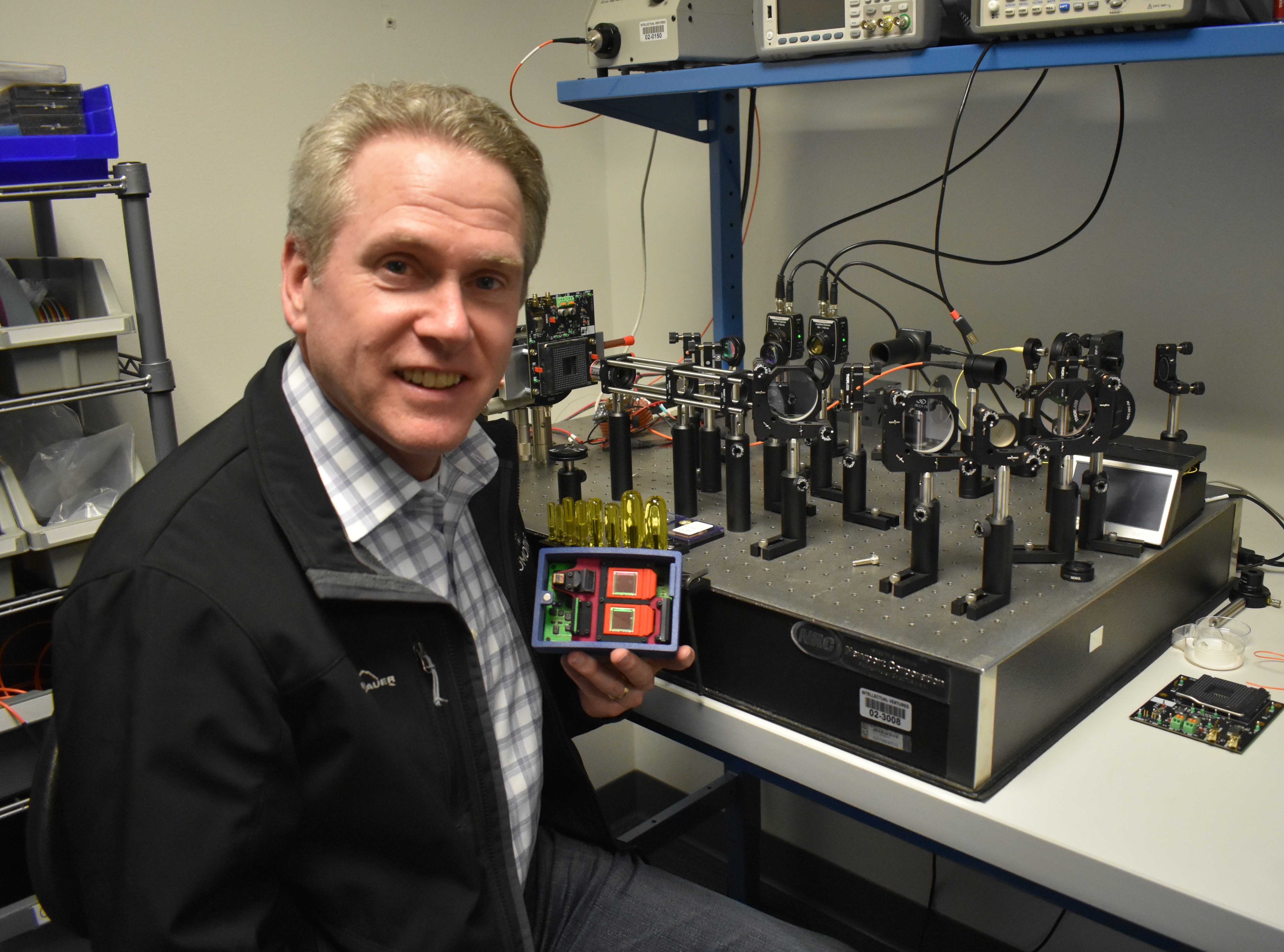
Colleran’s founding-era responsibilities included early technology development, customer engagement and funding. In 2021, he departed. Lumotive announced Sam Heidari’s appointment as CEO in October, describing a planned succession. Akselrod continued as co-founder and CTO. The handoff marked another point at which Colleran’s chapter and a company’s longer history separated.
Lumotive continued to develop after his departure. In 2025, it announced a $45 million funding round, with growth plans that included data-center infrastructure. Its current leadership page names Heidari as CEO. The continuing company is part of Colleran’s legacy as a co-founder, while its later decisions belong to the people running it.
The next system to understand
In July 2026, Adronite appointed Colleran CEO. Founding CEO Edward Rothschild moved to the CTO role. Colleran’s assignment covered business strategy, market expansion and customer growth for a company working on AI-assisted software development.
The new workplace deals with codebases rather than laser beams. Adronite’s Context Engine maps relationships across software, and its Codistry product brings that context into a coding workflow. The company presents this as a way to give developers and AI agents relevant information about the systems they are changing. Its product site now centers on Codistry.
In an August interview, Colleran described the difficulty of making changes inside large, interconnected software systems. Architecture, dependencies and earlier decisions all affect whether a change will fit. He argued for judging AI tools by how well they understand those systems, alongside how quickly they generate code. The ambition is dependable work inside an existing environment.
There is a recognizable rhythm here: a radio must suit a manufacturing process, an RFID application must suit a buyer, help must suit the customer’s page, and generated code must suit the surrounding software. Colleran has worked at several of those boundaries. The details change enough to keep the next appointment interesting. The stubborn work of fitting an invention into the world remains.