The judges were generous. Will Smith was paying. At Euclid’s first hackathon, Lukas Biewald and Yan-David Erlich built Euzak, an app that used Euclid’s API to change a shop’s music when someone walked in. The judges decided that most of the participants deserved to win. Smith suddenly owed rather more iPads than he had expected.
Years later, he would remember the expense as an early installment in a friendship that led to an investment in Weights & Biases. At the time, it was simply an inconvenient bill. Venture capital has elaborate language for discovering promising founders. Occasionally, the discovery comes with a receipt from Apple.
That episode supplies a useful entrance to Smith’s career. He co-founded Euclid, a company built around measuring what people did in physical places. Today he leads Octave and is a venture partner at N47. Between those jobs lies a recurring question: what can you learn by watching closely, before the usual numbers tell you anything?
A family business, with a different instrument
Retail was already part of Smith’s family history. His grandfather worked in shopping-center development. Euclid colleague Ross Chanin recalled Smith telling stories about an old method of estimating how long shoppers stayed: touching cars in a parking lot to judge how warm they were. There is something wonderfully literal about this approach to customer research. The dashboard was the hood.
Smith graduated from Stanford, earning a Bachelor of Arts, and worked as an analyst at Thomas Weisel Partners before Euclid. By 2010, he was helping build a business that brought a different set of instruments to the same broad problem: understanding what happened after people arrived at a place.
His co-founder Scott Crosby had helped create Urchin, the software business Google acquired and turned into Google Analytics. Their backgrounds made a practical combination. A physical retailer could see sales, but a transaction recorded only one part of a visit. The person who looked around and left empty-handed had also done something worth understanding.
Smith’s early argument was that online sellers benefited from faster, richer feedback. A shop could change a display, a promotion or its staffing, then wait to see what the till suggested. Better measurement could shorten that wait. His interest lay in the decisions a retailer could make once browsing became more visible.
Conceptual illustration of the measurement loop. A detected device is a measurement input; interpreting the visit still takes judgment.
The shop acquires a feedback loop
Euclid launched publicly in 2011. Its software used signals from Wi-Fi-enabled phones to produce measures such as visit duration and repeat visits. The idea borrowed a familiar language from websites and asked physical businesses to use it on doors, floors and storefronts.
In January 2013, Euclid introduced Zero, which worked with existing wireless infrastructure rather than requiring another dedicated sensor installation. That was a consequential product choice. Every extra box is another purchase, installation and conversation with someone responsible for a network. Removing one makes the distance between interest and use shorter.
At that launch, Euclid was reported to be analyzing an average of three billion events daily. Events were observations, rather than three billion individual shoppers. The scale was impressive; the more revealing question was what a customer could actually do with the result. A very busy database can still leave a shopkeeper wondering where to put the chairs.
The following month, Euclid raised $17.3 million in a Series B led by Benchmark, with NEA, Harrison Metal and Novel TMT Ventures participating. Smith described plans to expand the team that helped retailers interpret the information. The company needed people who could turn a measurement into a useful conversation about running a store.
The people outside the dashboard
A store visit has a different social meaning from a website visit. People understand that walking through a door makes them visible to the people inside. Whether it should also make their phones available for analysis is another question. Euclid’s commercial argument could not settle that question by itself.
Smith’s account of the company includes the scrutiny of Senator Al Franken over privacy. Building the system meant dealing with the expectations of people who had never signed up as customers. They were shoppers, passersby and owners of devices. Their presence in the dataset gave them a stake in the product.
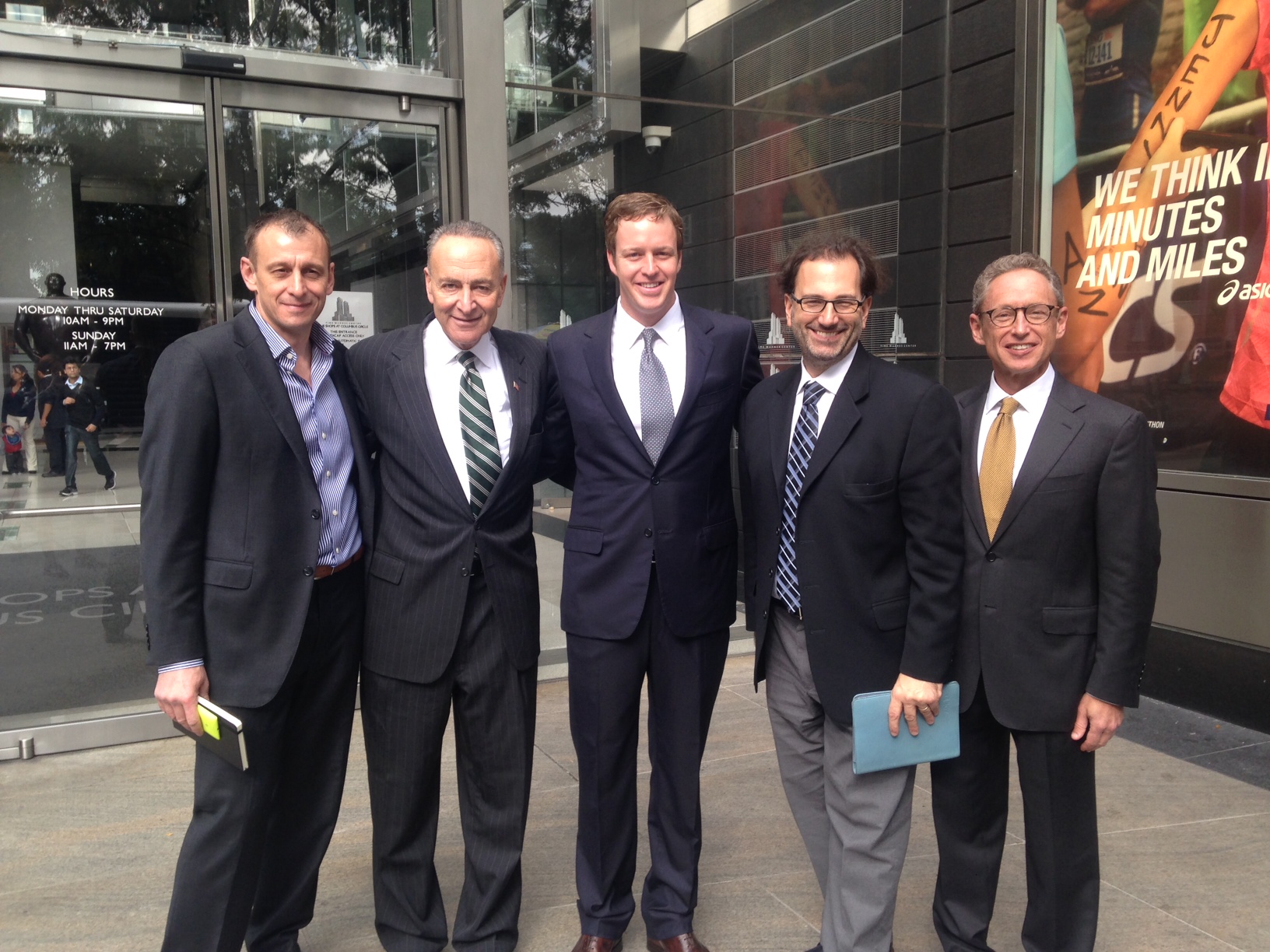
In October 2013, Euclid joined other location analytics companies in a code of conduct developed with the Future of Privacy Forum and Senator Charles Schumer. It called for conspicuous notices in stores, ways to opt out, limits on retention and sharing, and opt-in consent when personal information was collected or consumers would be contacted.
The agreement put consumer choice into the discussion alongside what the technology could measure. For Smith, the privacy debate became part of the work of operating a data company. A useful product still needed an intelligible explanation of its boundaries. The people being observed had questions that a retailer’s dashboard was never designed to answer.
Giving someone else the CEO chair
On November 4, 2014, Euclid announced Brent Franson as its new chief executive. Smith became chief strategy officer and chairman, remaining at the company full time. The announcement said Euclid’s locations had expanded by more than 550 percent that year. The business was growing, and the allocation of work at the top was changing with it.
Smith said bringing in experienced leadership had been part of his goal. His new brief covered long-term strategy and product direction. The change is a useful corrective to the habit of treating a founder’s title as a permanent possession. Founding a company creates the job of building an organization, which may eventually require rearranging your own desk.
Euclid’s technology later found a buyer with a different kind of floor plan. In February 2019, WeWork announced the acquisition. The team and its capabilities would be integrated into workplace insights, helping enterprises understand how their offices were used. Questions that began around shops could also be asked about meeting rooms and shared spaces.
The investor who remembers the awkward bits
Smith began investing in 2017; Octave describes the work becoming full time in 2021 with its first institutional fund. The firm focuses on AI, data infrastructure and privacy, often investing at formation. Its stated first-check range is $500,000 to $1 million. These are stages when a founder’s judgment can be easier to examine than a company’s financial history.
Octave’s name refers to Octave Chanute, the engineer who helped the Wright brothers. It is a revealing choice for an investor’s firm: the person assisting the flight gets the billing. The fund’s premise is that early support includes practical work, informed by Smith’s own years running a company.
His investment in Weights & Biases followed the friendship that began at the hackathon. Later visits to Biewald’s garage exposed him to experiments and, eventually, plans for tools for machine-learning practitioners. Smith invested in the first round and returned for the A and B rounds. His account makes the relationship an essential part of how the opportunity became legible.
At N47, he looks for founders who understand their problem and are making progress, whether or not they have a technical background. That preference gives substance to his interest in people before spreadsheets. He is looking for evidence in the work itself, while the business is still taking shape.
“The most fun I had was in the early days, working with customers and getting the product right.”WILL SMITH
Advice for the morning after the pitch
The writing Smith has co-authored with Lak Ananth concerns the parts of company-building that rarely appear in a launch announcement: disappointing news, lower valuations, hiring someone to mind the finances, and preparing for an acquisition. The subjects make a fairly direct statement about what he thinks founders need help doing.
In their guide to breaking bad news, the emphasis falls on taking responsibility and telling the people affected promptly. A leader who waits for perfect answers can leave colleagues learning the problem elsewhere. Their advice makes room for admitting uncertainty while still owning the work of finding a response.
Their treatment of down rounds asks founders to examine the available paths before reacting to a lower price. Could the company operate toward positive cash flow? If fresh money is needed, can stakeholders work through the terms early? The discussion treats a difficult financing as a business problem with several moving parts.
Likewise, the acquisition guide describes relationships that need cultivation well before an offer arrives. Potential buyers must understand the product and the team. A sale takes time, with approvals and opportunities for a deal to fail along the way. An introduction made when cash is nearly gone has a rather demanding job description.
Even the finance-hiring guide follows this practical grain. As a business grows, founders have less time to maintain accurate numbers just as more people need those numbers. Matching financial expertise to the company’s stage can free attention for customers and product. The investor who looks beyond spreadsheets still wants someone competent looking after them.
Smith’s career keeps returning to that division of attention. Euclid made overlooked behavior measurable. Investing asks him to notice work and judgment before the results are fully recorded. The hackathon bill remains a pleasingly modest emblem of the process: an expense he could count immediately, attached to a relationship whose value took years to understand.