01
He has been the founder
Flannel was his name on the documents, his all-nighters, his exit. He has the muscle memory most investors only describe.
General Partner at Spark Capital. Spent his first day on the job picking a fight in a partner meeting and walked out with his colleagues impressed. The Kolkata kid who helped build Robinhood, sold a startup to Plaid, and now writes checks to engineers who think the unglamorous parts of a stack are where fortunes hide.
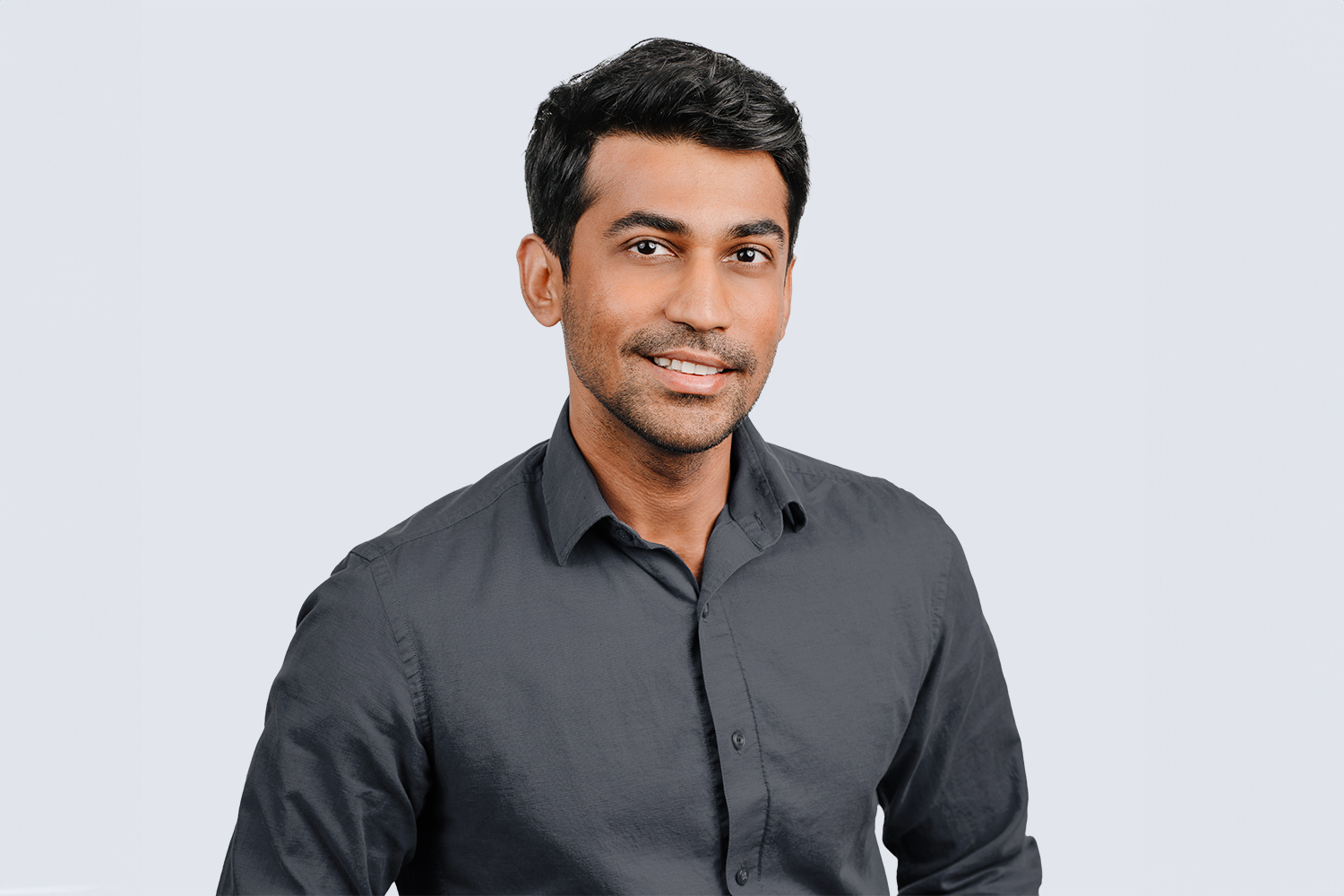
On a Tuesday in November 2024, Arpan Shah walked into 332 Pine Street as a newly minted General Partner at Spark Capital. By all etiquette, the first day is the listening day. The new partner nods, takes notes, asks two questions, leaves early. Arpan, instead, watched a startup pitch and started a debate that the room would later describe as heated. The partnership had been working him for years. Now they had their answer: they had hired the right one.
He invests in AI, fintech, data infrastructure, and developer tools. Those four categories sound like the cover of every venture deck on Sand Hill Road, but Arpan's read is sharper than the brochure. He likes the parts of companies most people skip. The middleware. The migrations. The internal tools the founders haven't told their LPs about. "The really unsexy parts of companies tend to be where there is a ton of opportunity," he has said. He repeats it to founders. He repeats it to journalists. He probably repeats it to himself.
The thesis sits on top of a career that did the unsexy work. Long before Spark Capital, before Pear, before scouting for Sequoia, Arpan was a young engineer joining a brokerage app called Robinhood. He was on the founding team. He helped ship the first version. He led the data team. He stayed long enough to watch a college-dorm idea become a household name with 2,000-plus employees and a fifteen-billion-dollar valuation. He has the war stories that most LP-deck pages only gesture at.
From Robinhood he started a company called Flannel. Flannel was a fintech infrastructure startup. Plaid bought it in 2021. Plaid is a Spark Capital portfolio company. The loop closes neatly in retrospect, but at the time it was just a thing that happened to a founder who shipped well. At Plaid, Arpan ran engineering for infrastructure, developer efficiency, and data. Translation: the plumbing. The on-call rotations. The pages that woke him up at 3am.
That stint is why founders trust him in the room. He has been the person staring at a Datadog dashboard at midnight wondering if it is the database or the deploy. He has been the founder who has to choose between hiring the second backend engineer and the first designer. When he sits across from a Series A team and asks about their build system, the question is not theater.
After Plaid, he made the move that engineers often consider and rarely complete: he stopped writing code and started writing checks. He joined Pear VC as a partner. He scouted for Sequoia. He learned the other side of the table, the one with the diligence memos and the reference calls and the awkward dinners where partners pretend the cap table doesn't matter. The trade was less hands, more bets, more leverage. He liked it. Spark noticed.
Santo Politi, the founder of Spark, wrote the welcome note publicly. He used the phrase "a very meticulous thinker." He talked about Arpan's ability to see "acorns as forests they will soon be." He cited founder references that mentioned empathy and experience and advice, in that order. The order matters. Empathy first is how Arpan tends to be described by the people he has backed.
Spark Capital itself is not a quiet firm. It backed Twitter early. It backed Discord. It backed Coinbase. It backed Plaid, which is how the Flannel arc closes. Spark has roughly forty-five employees, offices in Boston, New York, and San Francisco, and the kind of brand identity, the dog logo and all, that most VC firms try and fail to manufacture. Arpan joins the partnership at a moment when the firm is leaning harder into AI and infrastructure. He is the bet on those bets.
Outside the office, Arpan is a chess player. He likes puzzles in the literal sense, the kind with rules and a clock. People who play chess seriously tend to think in trees of consequences. That habit shows up in his diligence: founders report long conversations about second-order effects, about the third move after the obvious second move. He is, in venture parlance, a multi-step thinker. In chess parlance, he is the guy who calculates a line and then refuses to play it until he has checked the candidate move he almost dismissed.
He is from Kolkata originally. He came west for Stanford, finished a Bachelor of Science in Electrical Engineering and Computer Science, then never really left the Bay Area. The arc from Howrah Bridge to Sand Hill Road is the kind of immigrant story that gets compressed into a single line in a press release. It is worth remembering it took fifteen years.
What is he actually doing now, in the present tense? Writing checks at the seed and Series A stage. Showing up at Slush. Tweeting sparingly. Hosting founders in the Pine Street office. Telling them, again, that the unsexy parts are where the opportunity hides. Reminding them that infrastructure is consumer-grade now, that developer tools deserve the same craft as a B2C app, that the customer who matters is sometimes another engineer with a stack trace.
The Spark website lists his title as General Partner, Early. The "Early" is the part to underline. He is not the late-stage growth guy waiting for the obvious winner. He is the partner who wants to be in the room when there are three people, a Notion doc, and a question about whether the first hire should be a generalist or a specialist. Most venture firms talk about being early. Arpan staffed for it.
Ask him about his portfolio and he gets specific quickly. Ask him about himself and he tends to deflect to the founders. That balance is rare in venture, where the loudest voice in the room is often the one without skin in the build. Arpan had skin. Flannel was his name on the founding documents. Plaid was his Slack avatar at 2am during a migration. Robinhood was his desk in the original office. He earned the right to be quiet about himself.
The fun fact, the one his colleagues like to share at dinners: his startup was acquired by Plaid, which Spark had backed years earlier. He then joined the firm that backed the company that bought his company. Venture loves a loop. Arpan's loop closes with him on the other side of the table, deciding which engineers get the funding he once raised. There is a kind of justice in it, the meritocratic flavor that the Valley still believes in on its better days.
He is in his late thirties, give or take. He lives in San Francisco. He has not given the kind of long-form podcast interview yet that would let strangers triangulate his personality at length. The available evidence, the founder references, the welcome notes, the occasional quote, paints a consistent picture: empathetic, technical, willing to argue, allergic to hype. That last trait, in a venture market that runs on hype, is the differentiator.
Watch the next few funds. The bets Arpan makes at Spark over the next three years will tell you whether the unsexy thesis holds. If it does, expect more checks into the parts of the stack that LPs find boring. Expect more founders who come from infrastructure backgrounds. Expect the dog logo to show up on the seed pages of companies most of us have not heard of yet. That is the bet Spark is making on him. He is the bet he is making on himself.
For now, he is still the new partner. Still the one who started a debate on day one. Still the engineer who became an investor without losing the engineer. Catch him at Slush, at South Park, at the corner of Pine and Montgomery. He will probably ask you about your stack before he asks you about your TAM.
An unofficial read of where Arpan's attention sits, based on public commentary.
The really unsexy parts of companies tend to be where there is a ton of opportunity.
- Spark Capital profileTechnical people who build for other technical people have a second-order level of impact.
- Spark Capital profileI've gotten to know the amazing team at Spark over the last few years and was constantly blown away by the thoughtfulness of their approach.
- @Arpan_Shah_ on XHe is a very meticulous thinker who sees acorns as the forests they will soon be.
- Santo Politi, founder of Spark CapitalFlannel was his name on the documents, his all-nighters, his exit. He has the muscle memory most investors only describe.
Robinhood data team. Plaid infrastructure. He has watched dashboards turn red at 3am and lived to write checks about it.
Multi-step thinker. Will follow your reasoning to the third move and ask about the fourth.
Migrations, middleware, internal tools. He reads the parts of the deck you almost cut.
It was a heated debate after a startup pitch. The partners loved it. He has not stopped since.
Stanford got the rest of him at 18. The Bay Area got the rest of him at 22.
Plays for fun. Solves puzzles. Treats diligence like a tournament problem.
His startup was acquired by Plaid, a Spark portfolio company. Years later, Spark hired him as GP.
His first Spark partner meeting included an argument. It was a feature, not a bug.
References mention empathy first, experience second, advice third. The order matters.
Talks about migrations and on-call before he talks about TAM.
Spark Capital's brand identity is iconic in VC. He now wears it.