Will Saville once worked as a chef. He had studied hospitality, then discovered a different aptitude: “I was better at software than I was at cooking.” It is an unusually economical explanation for a career change. No childhood prophecy, no revelation over a circuit board. Just a comparison of two things he had actually tried.
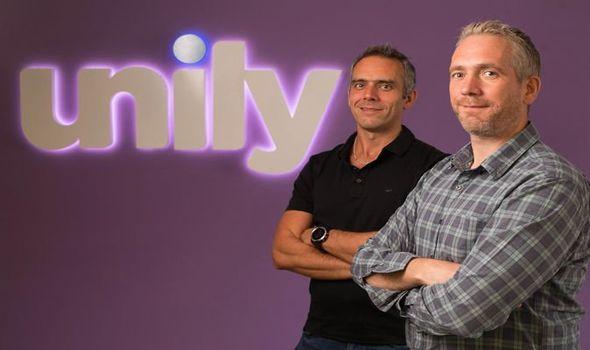
The software career eventually produced Unily, the employee experience company he co-founded with Richard Paterson. Its territory is the corporate intranet: that necessary corner of working life where a useful answer can acquire three menus, an obsolete attachment and a password request before reaching its intended reader. Saville has spent much of his career trying to shorten that journey.
Then, in 2023, he made another adjustment. Chris Ciauri succeeded him as chief executive. Saville stayed on the board and involved in product vision. The founder who had helped turn a consultancy into a software business could continue working on what the software should become. His story has a recurring question: when something works, which part should you keep, and which part should you change?
The kitchen was an opening chapter
Before Unily, Saville was chief technology officer at Saville Consulting, a talent analytics business. His professional life already crossed the boundary between people and technology. Later, his work would focus on how employees find information, communicate and use the systems their employers give them.
BrightStarr, the business behind Unily, began in the mid-2000s. The company dates its origins to 2005. Saville and Paterson built around Microsoft collaboration technology, helping organisations put tools such as SharePoint to work. Consultancy meant dealing with particular customers and particular problems, rather than imagining an average employee from a comfortable distance.
By 2009, the pair appeared in the Growing Business Young Guns class. BrightStarr had customers including Pepsi and Mulberry, and had landed its first Fortune 500 deal as it pushed into the United States. The business was projecting £1.5 million in turnover for that year. These were forecasts, rather than a retrospective victory lap: the company was still making its case.
That early distinction matters more than a decorative award in a biography. It places Saville and Paterson at a recognisable stage of entrepreneurship: a small services business learning that its work might travel. A project completed for one organisation could introduce the next customer. The harder question was whether the knowledge accumulated in those projects could travel without being rebuilt each time.
When the repeat order became the business
Unily launched as a product in 2014. BrightStarr packaged its experience into a cloud intranet built on Office 365 and Windows Azure, bringing together capabilities from SharePoint and Yammer. The proposition gave customers a product they could subscribe to, backed by support and continued development.
The launch itself had an appropriately physical address for a cloud business: the Soho Hotel in London, where Saville spoke in September 2014. Selling software still involved gathering people in a room and explaining why their working day might improve. The product promised familiar intranet functions with less of the delay and expense associated with a bespoke implementation.
There was a practical decision underneath the branding. If customers repeatedly needed similar features, the company could build those features into a shared product. Bespoke work has its pleasures, including the satisfaction of a very particular answer. It also has a habit of sending the next customer back to the beginning.
The new arrangement changed what progress could look like. Improvements to a shared platform could become available across its customer base. The team would still need to understand individual organisations, but its development work could accumulate in one place. A consultancy had found something it could keep improving between commissions.
An early customer example made the idea tangible. DORMA’s intranet appeared in the 2016 Intranet Design Annual from Nielsen Norman Group, which described a transformation completed in 60 days. Saville was listed among the BrightStarr team, alongside Paterson and colleagues in consulting, architecture, support and customer service. The record is a reminder of how many kinds of work sit underneath a product launch. Someone has to make the software fit an organisation, and someone has to help people start using it.
In May 2018, BrightStarr renamed itself Unily. The product had passed one million global users, and the company wanted a single identity for its platform and its business. Customers included Hershey’s, Microsoft and Shell. The name on the software had become the name above the door.
The audience inside the company
Saville’s view of intranets includes a challenge to the people commissioning them. Employees need to be treated with the care a company gives its customers. Publishing something internally does not guarantee that anyone will read it. A company can require attendance at a meeting; attention is a more elusive contractual provision.
He has argued that internal teams need to market information to employees, rather than assume that a page or a document will find its audience. The point reaches beyond interface design. It concerns the language, format and effort involved in making a useful message land.
“I think you’ve got to treat employees the way you treat customers.”
Will Saville, The EX Conversation
That helps explain why his business moved through several descriptions of its work: SharePoint projects, a cloud intranet, an employee experience platform. Each description enlarges the problem a little. A functioning page is one achievement. Helping someone understand an announcement, find a colleague or complete a task asks more of the product.
His interest in that wider problem predates the recent wave of generative AI. In 2019, he wrote about organisations preparing for automation through learning, collaboration and a culture that supports creative work. He also contributed to Unily’s Future of the Workplace 2030+ research, alongside contributors including Seth Godin. The recurring concern was what people would need as technology changed around them.
Growth arrived with other names on the board
In 2019, Unily secured a $68 million growth investment from Silversmith Capital Partners and Farview Equity Partners. At the time, the company had about 120 employees across the UK, America and the Far East. Its customers included British Airways, Mars and Cathay Pacific.
The investment was in the company. It should not be confused with a personal payday or a measure of Saville’s wealth. Its stated purpose was to support expansion and investment in technology. For a founder, bringing in investors also makes the business a shared undertaking in a more formal sense.
By December 2021, when Unily announced a majority investment from CVC Growth, it reported 250 employees and roughly 3.5 million employees using its platform across more than 300 enterprises. The transaction followed in 2022. Those figures mark a change in scale from the consultancy that had once been announcing its first American Fortune 500 customer.
Scale creates a new set of jobs. Product decisions sit alongside sales organisation, customer support and the work of running a larger company. In June 2023, Unily announced Ciauri, previously president of Google Cloud EMEA, as Saville’s successor. Saville remained a board director, with a continuing brief around technology and innovation.
There is a useful distinction between founding a business and occupying every important job in it forever. Saville’s continuing product involvement gave that distinction a concrete form. The company could change its chief executive while retaining a founder’s attention to what it was making.
Back to the awkward document
By Unite 25, Saville was appearing with chief executive Lokdeep Singh and chief technology officer Sam Hassani to discuss Unily Futures and the platform’s AI direction. The cast had changed again. The founder remained in the conversation about the product’s next version.
In a subsequent company interview, he described running Unily’s labs team and researching AI models. Asked about his proudest moment, he chose the day he started the business. It is a pleasingly unpolished answer. After all the milestones available to him, he returned to the moment when the undertaking became real.
His latest interests include knowledge trapped in documents and the possibility of making it available in formats people prefer: video, audio, diagrams and other explanations. The object is recognisable even when the technology changes. Somewhere in an organisation, someone needs an answer, and the answer is currently enjoying a quiet retirement inside a long file.
His April 2026 conversation with Kaz Hassan also addressed building AI into the core product, improving outputs through iteration, and making existing information usable in several formats. These remain product intentions and design arguments. Their practical test is what employees can understand and accomplish with the tools.
A different kind of court appointment
Outside Unily, Saville chairs Squash Squared, a charity combining squash with additional academic tuition for children from disadvantaged backgrounds. He plays squash and padel, and has competed for Oxshott Squash Club in the Surrey Cup competition. Here, at least, the word platform can give way to a court.
His community work also includes revitalising Sandown Sports in Surrey. These commitments put a local dimension beside a business serving international employers. A club needs people to turn up. A tutoring programme needs time, organisation and continuity. The scale is different, and the work has its own demands.
It would be convenient to claim that the chef, the software founder and the squash chairman were always following one grand plan. Saville’s own account offers something more believable: he tried one profession, found an aptitude elsewhere, built a company with a partner, and later changed his place within it. The next chapter still involves making things easier for other people to use. There are worse ways to spend the years after handing over the CEO’s chair.
Follow the next chapter
- Unily · company website ↗
- Will Saville · LinkedIn ↗
- Will Saville · historical Twitter profile ↗
- Watch · The EX Conversation with Will Saville ↗
- Watch · Unily Futures at Unite 25 ↗
- Read · Will Saville on the workplace and AI (2019) ↗
- Read · the 2014 Unily launch ↗
- Read · the June 2023 CEO transition ↗
- Read · BrightStarr in the 2009 Young Guns class ↗
- Read · Unily’s 2018 name change ↗
- Read · the 2019 growth investment ↗
- Read · CVC Growth’s investment announcement ↗
- Explore · Squash Squared ↗
- Founder photograph · public image record ↗