The call that changed Honest Dollar’s future ended at an airport Chili’s. In November 2015, William Hurley and his colleague Anthony Bunnell were heading home after meetings at Goldman Sachs in New York. They had been discussing funding. Then Hurley returned a message and learned that the bank was interested in buying the company. At Dallas Love Field, the two ordered strawberry margaritas and tried to take that in.
“We were shell-shocked,” he recalled. The setting has a certain democratic charm. An acquisition can begin in a financial institution’s headquarters and become real beside a laminated menu. Even for someone whose career includes a mind-controlled skateboard, this was an unexpected turn.
Hurley, known professionally as whurley, has accumulated enough turns to make a conventional biography awkward. Apple and IBM. Open source and mobile apps. Retirement savings and quantum computing. Alongside the companies are developer gatherings, books for beginners, and work to broaden participation in technology. Read as a sequence of industries, the career looks restless. Read as a succession of entrances into complicated worlds, it becomes easier to follow.
A username escapes the terminal
Before it became the name on a conference programme, whurley was a Unix username: an economical compression of William Hurley. Lowercase suited its original surroundings. It also makes an entertaining companion to such subsequent titles as IBM Master Inventor and managing director at Goldman Sachs. Corporate rank acquired a handle.
Born in Manassas, Virginia, he eventually made Austin his professional base. His early career took him through Apple’s research and development work and then IBM. Those were substantial institutions in which to learn how technology gets built. He later worked in security and systems management, including Symbiot, Qlusters, and BMC Software, where he became chief architect of open source.
The open source years matter to the story. They put collaboration, shared tools, and developer participation close to the center of his working life. In Austin, he also helped establish BarCamp and became a co-founder of iPhoneDevCamp. A new device could be an occasion to gather people and start making things, without waiting for every use to be prescribed.
That combination of engineering and invitation would keep reappearing. So would a willingness to make the invitation entertaining.
A skateboard with a public-relations department
In 2010, whurley co-founded Chaotic Moon Studios with Ben Lamm and Mike Erwin. The company built mobile software, including work on The Daily, the early iPad newspaper. Its laboratory also produced inventions that were considerably harder to overlook than another rectangle of icons.
There was the Board of Awesomeness, a skateboard controlled through Microsoft’s Kinect. Then came the Board of Imagination, controlled using a headset that read brain activity. The Smarter Cart followed a shopper. The Helmet of Justice carried seven cameras. Whoever named these objects understood that an engineering demonstration ought to arrive with something better than a model number.
These projects made abstract capabilities visible. Gesture recognition could move a board. Sensors could change a shopping trip. A person encountering the prototype could grasp the proposition before learning the architecture. The joke in the name helped open a conversation that the technical specification might never have started.
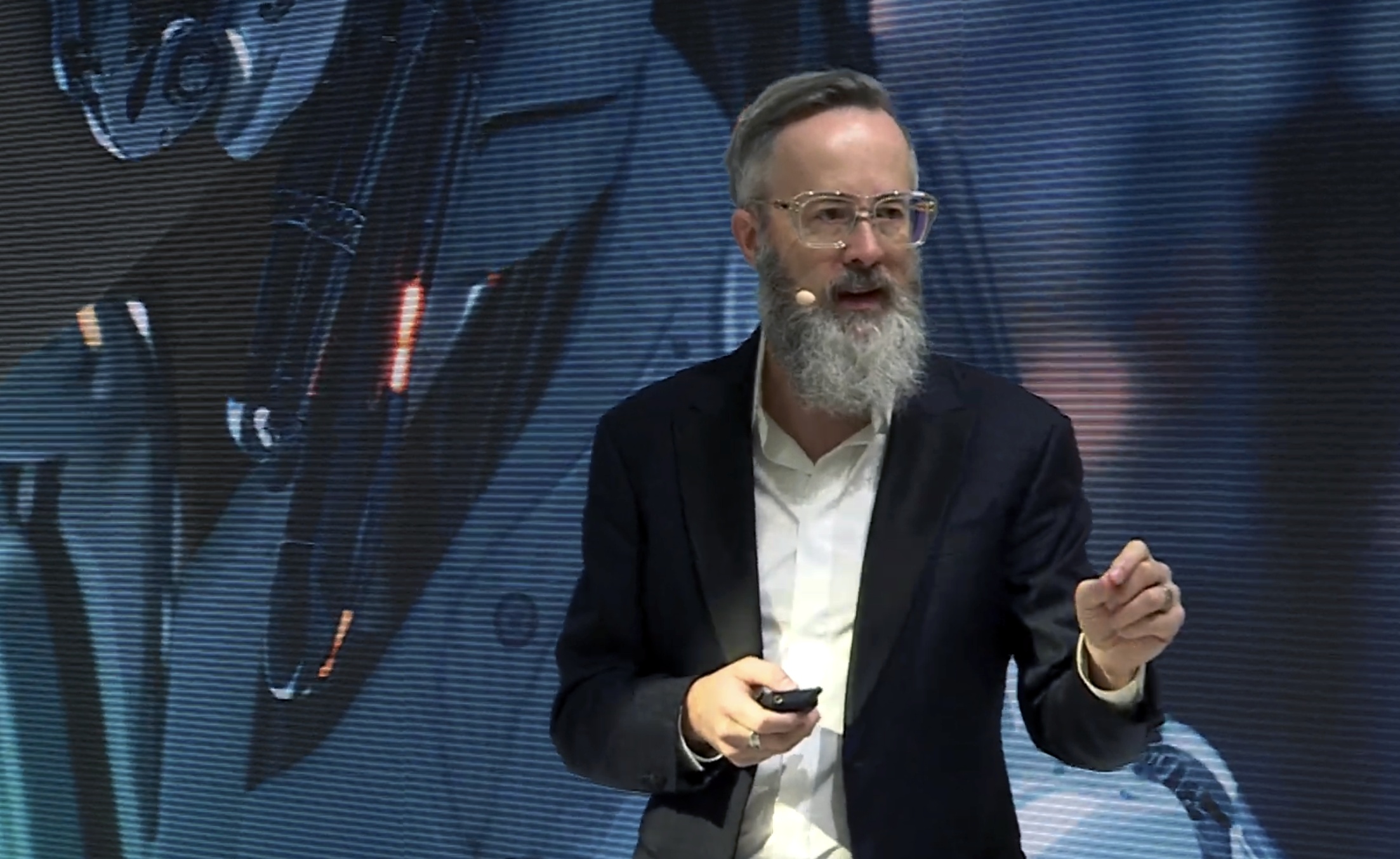
There is a temptation to remember only the spectacle. Chaotic Moon also had a commercial software business, and in July 2015 Accenture acquired it. The same enterprise could accommodate client work and a skateboard with theatrical ambitions. For whurley, playfulness and business had already proved capable of sharing an office.
The unlikely customer was a saver
His next venture addressed a quieter problem. Honest Dollar, co-founded with Henry Yoshida, helped smaller employers and people working for themselves establish retirement savings accounts. Its subject came with more paperwork than a skateboard, and the consequences extended rather further into the customer’s future.
The product used individual retirement accounts to reach people who lacked a workplace retirement plan. When Goldman Sachs announced its agreement to acquire Honest Dollar on March 14, 2016, it described a potential audience of approximately 45 million Americans without access to employer-sponsored plans.
Americans lacked access to an employer-sponsored retirement plan when Goldman Sachs announced its Honest Dollar agreement.
That number gives the airport story its substance. The margaritas were memorable because the outcome was surprising; the business mattered because getting started with saving was unnecessarily difficult for a large group of people. Whurley subsequently became a managing director at Goldman Sachs. The founder with the Unix name had entered a very different institution from the developer camps.
He could have continued telling that story. Instead, he began spending time on a subject whose commercial future was much less settled.
First, build somewhere to begin
Quantum computing offered whurley the attraction of an unfinished field. He acquired quantumcomputing.com and started Superposition, a blog built around conversations with people working in it. Before there was a Strangeworks product to sell, there was learning to do and a community to assemble.
He also founded the IEEE Quantum Computing Standards Working Group. Its work included terminology and performance benchmarking initiatives. This is an unexpectedly sober occupation for someone associated with the Board of Awesomeness. Yet common definitions serve a practical purpose: people attempting to build together need to know whether their words describe the same thing.
Strangeworks made its public debut at SXSW in 2018. The company approached quantum computing through software and access to computing resources. Developers needed ways to experiment, collaborate, and reach hardware. Whurley had found another doorway to build, this time into a field that could make even experienced programmers feel like beginners.
- 2010Chaotic Moon
Mobile software + experiments - 2016Honest Dollar acquisition
Goldman Sachs agreement - 2018Strangeworks debuts
Quantum software + access - 2025Quantagonia joins
Optimization + applied AI
The educational work ran alongside the company. With physicist Chris Ferrie, he co-authored Quantum Computing for Babies, published in April 2018. The board book introduces bits and qubits. It is an unusually literal interpretation of getting people started early.
In 2023 came Quantum Computing For Dummies, co-authored with Floyd Earl Smith. Across its 400 pages are chapters on hardware choices, programming, cloud access, and myths. The two books serve very different readers, but both make room for the person arriving without the expected vocabulary.
“That means you have to keep learning, just to keep up.”
whurley, on working in technology
Who gets through the door?
Access has also meant asking who gets to participate at all. In September 2016, the International Telecommunication Union and UN Women launched EQUALS, working with whurley on engagement and outreach. The partnership concentrated on women’s access to digital technologies, skills, and leadership opportunities.
The initiative makes his interest in technology more specific. Giving someone a tool requires attention to the circumstances in which they can use it. Training, opportunity, and a place in the industry belong in the discussion alongside the device or software. His work as a co-founder of EQUALS puts that concern into an organization with an international remit.
At CERN, he supported the first Entrepreneurship Student Programme in 2018 and became the CERN & Society Foundation’s first official ambassador. The programme connects scientific knowledge with the work of building ventures. It offers another route across the gap between people doing research and people who might turn that research into something usable.
These activities also complicate the familiar picture of the solitary founder. Whurley’s career is crowded with collaborators: engineers, other founders, authors, international organizations, and students. His contribution often involves assembling a setting in which those people can meet and work. The gathering is part of the invention.
The future acquires a present tense
Strangeworks has had to learn as it built. In March 2023, it announced a $24 million Series A led by Hitachi Ventures, with IBM and Raytheon Technologies among the investors. The company was widening its offering to include high-performance computing, quantum-inspired approaches, and artificial intelligence.
In August 2025, it acquired Germany’s Quantagonia, adding optimization expertise and solver orchestration technology. The practical questions include scheduling workers, allocating resources, and planning routes. They require a choice among available computational methods. The company’s quantum ambition now sits beside the work of getting useful decisions out of computers available today.
By July 2026, that approach had a further expression in Aura, the company’s system for turning operational problems into optimization systems. Its announcement carried an unusually candid premise: an expiring press release credit. The corporate voice had retained something of the laboratory’s taste for mischief.
“AI made it easier to generate answers,” whurley said at the launch. Aura’s proposed job goes further into the customer’s operation: expressing constraints, choosing resources, and maintaining a working decision process as conditions change. It gives his current work a concrete test. A plausible answer on a screen still has to survive a working day.
Two August 2026 announcements extended that test. With Nauticus Robotics, Strangeworks proposed exploring how to plan underwater fiber-optic sensing networks. With Davidson, it announced a collaboration to examine optimization for defense mission planning. Both were announced as work to explore and test, with results still to be established.
The distance from a skateboard to an underwater sensing network is considerable. The recurring question is recognizable: how does an unfamiliar capability become something another person can actually use? Whurley has tried prototypes, software, books, gatherings, and institutions. He keeps changing the equipment. Somewhere, a new user is still waiting for a place to start.
Keep following the thread
Making quantum computing accessible to allWATCH THE AUSTIN NEXT CONVERSATION ↗Read further: the Honest Dollar airport story · Goldman Sachs’ acquisition announcement · the 2018 invention interview · the launch of EQUALS · CERN’s ambassador announcement · Quantum Computing for Babies · Quantum Computing For Dummies · Aura’s unconventional introduction · the Quantagonia acquisition · the Davidson collaboration · the Nauticus collaboration.