Mike McNeil has put instructions for disagreeing with Mike McNeil on the internet. The Fleet Device Management CEO’s public leadership notes describe habits he wants colleagues to challenge: rushing, talking his way through an idea, specifying a solution before giving someone the problem. Executive biographies generally arrive freshly polished. This one comes with a small troubleshooting guide.
The gesture suits a career spent making software that other people can examine. McNeil created Sails.js, the JavaScript web framework, before co-founding Fleet with Zach Wasserman in 2020. He has built for developers and now sells to the people responsible for whole populations of computers. The recurring interest is the machinery underneath everyday work, and how to make it less forbidding.
There is a useful distinction between declaring yourself approachable and giving someone a procedure for approaching you. The latter can be tested. McNeil’s notes invite interruptions and correction. Whether a colleague uses that invitation is another matter, but the invitation is there in writing, where the boss cannot conveniently misremember it.
A flyer, some client work, and a framework
His entrepreneurial beginning had an appropriately modest interface: a strip of paper. Working in a computer lab at the University of Texas at Austin, McNeil took a tear-off slip advertising Three Day Startup. He went, met people and began trying business ideas. One was Blinktop, a social television app. Client work eventually offered a more immediate way to earn money.
He recalls websites for lawyers, a prospective private-cloud project and the awkward cash timing of a young services business. There was no clean procession of increasingly impressive job titles. There were customers, bills and attempts to find something that worked. The experience supplies a less ceremonial explanation for becoming a founder: sometimes you already have a job to deliver before the career description catches up.
At Balderdash, his Austin development and design studio, the work produced a tool. McNeil developed Sails.js to help his team build Node.js projects for startup and enterprise clients. Released as open source in 2012, it gave developers a reusable structure for web applications. An answer to the team’s own recurring problems became something other teams could use.
That practical origin helps explain the attraction. A framework takes care of common arrangements so developers can concentrate on what their particular application needs to do. The repetition does not vanish by magic. Someone has done the work once, organized it and made it available. McNeil’s contribution was partly architectural and partly an invitation to stop starting from scratch.
Teaching the computer to do the tedious part
By 2015, he was exploring another way to spare developers the repetitive bits. Treeline, part of Y Combinator’s Winter 2015 class, let people assemble backend behavior from components. A demonstration on Twitter’s developer blog showed how to build Twitter sign-in by connecting the relevant pieces. The generated application still had logic underneath it; the editor changed how a person put that logic together.
At PlatziConf Mexico that year, McNeil explained software through the analogy of creating little universes. The talk moved through frameworks and toward reusable functions and visual assembly. It is an appealingly ambitious analogy for a profession that can also spend an afternoon arguing about a login form. His subject was how to preserve the pleasure of designing something while reducing the chores required to make it run.
He also did the less glamorous work of explaining a tool at length. With Irl Nathan, he wrote Sails.js in Action, published by Manning in January 2017. Its 488 pages cover building application backends, real-time communication, user management and integrations. A framework asks for adoption; a book has to accompany the reader through the consequences.
Writing that kind of guide means returning to assumptions an experienced programmer may no longer notice. The reader needs to understand the next step before the author can proceed to the clever part. That makes the book a revealing companion to the software: both try to make a complicated activity more navigable, using rather different amounts of paper.
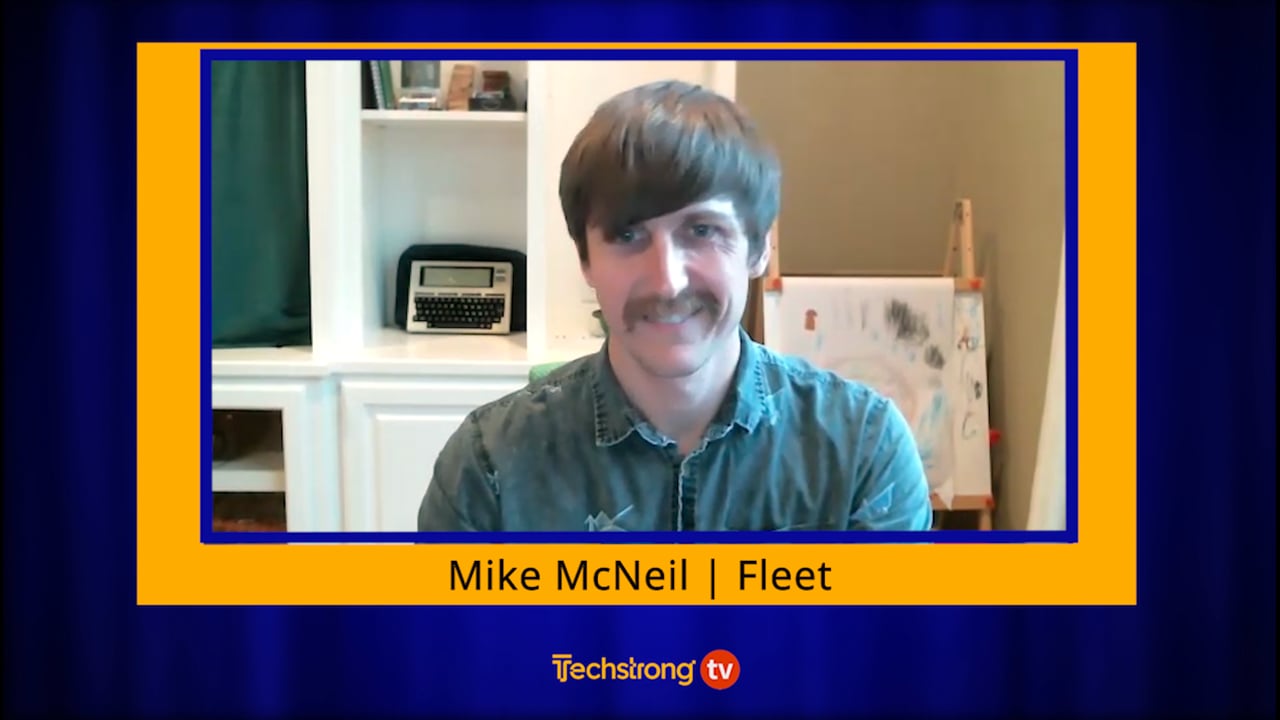
The company came after the code
Y Combinator also introduced McNeil to GitLab co-founder Sid Sijbrandij. McNeil’s recollection includes an office-furniture sale between their companies, a pleasingly literal instance of one startup supporting another. Their connection continued beyond the batch. In a 2022 interview, McNeil described Sijbrandij’s help in bringing together the people and business thinking behind Fleet.
The distinction between the company and its software matters here. Fleet’s history begins with osquery, created at Facebook in 2014 by a team including Wasserman and Mike Arpaia. It allowed people to ask structured questions about computers. Fleet then emerged at Kolide as a way to make osquery more useful in enterprise settings. A community was already using and maintaining the project before McNeil arrived as a company co-founder.
Wasserman and McNeil incorporated Fleet Device Management in 2020. The sequence gives the business a particular character: it inherited working software and people with opinions about it. Its job included supporting that existing usefulness while creating a commercial organization around it. A community project does not become a business simply because someone supplies a corporate name and a bank account.
Fleet’s later expansion took it beyond asking questions about machines and further into managing them. Its history records the addition of scripting and management capabilities across macOS, Windows and Linux in 2023. For McNeil, the audience now included administrators who needed changes to work consistently across different kinds of devices. The old concern with reusable arrangements had acquired a rather larger inventory.
An open door still needs hinges
Open-source commitments have to survive ordinary commercial questions. Who pays for development? Who handles the support request? Where does the software run? McNeil had already spent years around those questions when Fleet announced its $27 million Series B in June 2025, led by Ten Eleven Ventures. The company reported sixfold revenue growth over the previous two years and total funding of $52.3 million.
The announcement also emphasized hosting choice. Customers could operate Fleet themselves or use managed hosting. That is a tangible expression of openness: a decision a buyer can actually make. It also imposes work on the supplier, which has to support customers whose circumstances and infrastructure differ. Freedom acquires a support queue.
Series B led by Ten Eleven Ventures
Fleet also runs as an all-remote company, with its handbook describing more than 70 team members across four continents and nine time zones. Written procedures become useful when a colleague’s working day begins after yours ends. The public handbook extends that habit beyond engineering, covering how the organization communicates and allocates responsibility. Readers can see much of the apparatus that usually stays behind the company’s reception desk.
McNeil’s speaking archive shows that explaining work has remained an interest alongside doing it. It includes talks about APIs, software itself and teaching someone from a barista background to code. The titles suggest a willingness to question who gets admitted to technical work. His record supplies several ways in: a framework, a course, a book and a presentation that starts before the audience is expected to know the vocabulary.
“All software will be open source eventually.”
Mike McNeil, Speaker Deck profile
The next thing on the laptop
His current ambitions run into a changing workplace. In April 2026, McNeil discussed with Computerworld how device management would need to accommodate AI while continuing to work with customers’ existing systems. Fleet had also launched a partner program, bringing resellers and service providers into its sales model. The operating question was widening from managing machines to helping other businesses deliver that management.
On October 15, 2026, Fleet announced AI governance capabilities. Its premise was that agents, extensions and other AI tools were arriving on employee computers faster than organizations could account for them. The announcement included free AI inventory and described a mixture of new and upcoming controls. McNeil’s position was to address that work through the device-management system customers already used.
The laptop is a concrete place to begin an otherwise sprawling discussion. Someone installs a tool. It gets a version number, permissions and access to information. An administrator needs to understand those particulars. McNeil is applying a familiar preference for inspectable systems to software whose behavior can be difficult to explain. The aspiration now has to contend with a new set of moving parts.
Meanwhile, his earlier work has continued through other people. Kelvin Omereshone became lead maintainer of Sails in 2023. In January 2026, introducing the Shipwright asset pipeline, Omereshone thanked McNeil for trusting him with its evolution. That is another measure of a founder’s work: whether someone else can understand it well enough to change it.
McNeil’s career contains the larger events expected in a technology profile: an accelerator, a framework, funding rounds and an enterprise company. The smaller details make it intelligible. A paper slip. A client project. A book long enough to prop open a door. Instructions for interrupting the CEO. Each gives another person somewhere to begin.
Read, watch, explore
Continue with McNeil’s work and conversations.
- Personal website and leadership notes
- LinkedIn · Twitter / X · GitHub · Talks on Speaker Deck
- Fleet Device Management · Sails.js
- Watch: Fleet’s funding and device-management plans
- Watch: Open-source device management with Alan Shimel
- Read the Software Spotlight conversation
- YouTube: McNeil’s Platzi interview · Computer America conversation
- Sails interview and video archive