Scott Collison has a useful warning for anyone hoping to sell him software: an invitation to a Formula 1 race will not do the work of a good demonstration. Golf is unlikely to help, either. In a 2021 conversation about buying technology, the Personify chief executive made his preference plain. Prepare. Understand the business. Explain what the product does. The hospitality can wait until there is a relationship worth celebrating.
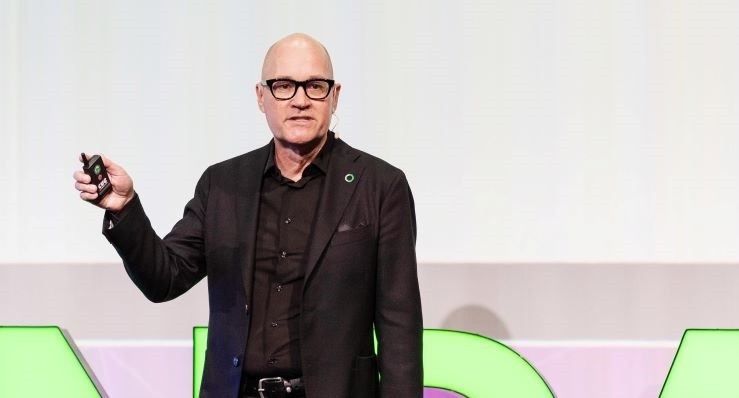
It is a pleasingly awkward position for a software executive now running a hospitality technology company. In March 2026, Collison became CEO of Fourth, following five years at Personify and its acquisition by Momentive Software. His professional territory has changed repeatedly. The question running through it has remained remarkably practical: what happens when the software meets the person expected to use it?
There is an unusual qualification behind that question. Collison holds a doctorate in Cultural Anthropology and German from the University of California, Berkeley. His career has taken him through Microsoft, Salesforce, VMware and Anaconda. The degree belongs near the beginning of this story because people, with all their inconvenient habits, keep appearing in the middle of his technology work.
A doctorate with a day job
Before the chief executive titles came a Bachelor of Arts with special honors at the University of Texas at Austin and a Fulbright scholarship. By 2020, his introduction to Personify’s podcast audience also included a more ordinary pastime: cycling the Texas Hill Country on weekends and spending time with his family. A bicycle is a rather efficient antidote to a calendar full of software meetings. It requires no product roadmap, although the hills remain stubborn about deadlines.
His corporate chronology offers firmer dates. From April 2001 to June 2004, he was Microsoft’s senior director of platform strategy. He then co-founded Ohloh and served as its CEO until June 2009, when its acquisition brought him into Geeknet as vice president of strategy and business development. He later led Geeknet’s media business, resigning from that role in March 2011.
Ohloh was a directory of open-source software and the people behind it. Its subject was the sprawling, collaborative world of developers, where understanding a project means understanding more than its name. Code has authors, activity, dependencies and communities. A directory makes those relationships easier to inspect. For an executive interested in how groups work, it was unusually appropriate terrain.
Even the name had a human detour. Collison explained that Ohloh was inspired by “Olo,” a long Hawaiian surfboard associated with warriors of high rank. Software naming committees have done considerably worse. By the time Black Duck bought the directory from Geeknet in 2010, it had a community of 110,000 developers and software consumers. The useful thing was the directory; the memorable thing was the surfboard.
Python leaves the laboratory
In 2017, Collison became CEO of Continuum Analytics, the company subsequently known as Anaconda. He arrived after leading Nitrous, which made developer tools, and after executive roles at VMware and Salesforce. The assignment put him inside a growing Python data-science community, with a commercial question attached: how could work done by specialists become useful across a business?
Anaconda Enterprise 5 supplied a concrete answer. Data scientists could send dashboards to executives, data and charts to analysts using Excel, and interfaces to developers. Each audience had a different way of working. The product accommodated those differences instead of requiring everyone to become a data scientist before benefiting from one. Collison emphasized collaboration through tools people already used.
In September 2017, Anaconda announced a partnership with Microsoft to bring its Python capabilities into Azure Machine Learning, Visual Studio and SQL Server. Running Python inside the database reduced the need to move data elsewhere for processing. For Collison, the career connection was neat: his former employer became a partner in making open-source analytics fit into established enterprise systems.
The same practical concern appeared in Anaconda’s support for NVIDIA’s RAPIDS in 2018. Collison described bringing the new GPU-accelerated capabilities to Anaconda’s distribution community and enterprise offering. Faster computation matters, but distribution matters too. A capability becomes useful when somebody can actually obtain it, deploy it and incorporate it into existing work.
When co-founder Peter Wang took over as CEO in 2019, he credited Collison with helping Anaconda move from an open-source consultancy to a product company, assembling a leadership team and launching its enterprise machine-learning platform. It was a specific account of the work left behind. The next chapter would trade data scientists for membership organizations, while keeping the problem of useful software close at hand.
The membership business has moving parts
Personify appointed Collison president and CEO in 2020. He succeeded interim chief executive Norbert Orth, who moved into a board advisory role. Collison joined an existing company with existing customers and a broad portfolio. Associations and nonprofits needed systems for membership, events, finances and community engagement. The chief executive’s job began with that inherited complexity.
A membership organization has a relationship to maintain over time. An event has a deadline that will arrive whether its software is ready or not. Putting those activities in a portfolio creates opportunities to connect them, alongside a demanding question about how much work the customer must do between products. A neatly arranged corporate chart cannot answer that question on its own.
In December 2020, Personify acquired MemberClicks, extending its coverage of small and midsize associations and local chambers. MemberClicks brought more than 3,000 clients. Its CEO, Mark Sedgley, took responsibility for sales and marketing in the combined company, reporting to Collison. The transaction expanded both the customer base and the group of people responsible for serving it.
In 2022, the acquisition of GTR Event Technology added registration, badge printing, lead retrieval and attendance tracking. Those are wonderfully unglamorous nouns. At a conference entrance, however, a badge printer enjoys a brief period of absolute authority. The acquisition addressed particular steps in the event experience, giving Personify a broader offering for organizers rather than merely another company name to put on a slide.
- 2020Collison appointed CEO; MemberClicks joins the portfolio
- 2022GTR adds registration and on-site event tools
- 2024Data Insights brings AI reporting to MC Trade
- 2026Momentive announces its acquisition of Personify
Four quarters of a working day
Collison described his ideal allocation of time as four equal shares: operations, people, strategy and governance. He also preferred clear responsibilities and face-to-face virtual meetings to endless explanatory emails. These choices suggest an executive trying to keep attention spread across the business. A full inbox is an excellent impersonation of productivity.
People mattered in the integration work, too. Personify appeared on Built In’s 2022 list of 100 best midsize companies to work for in Austin, its third consecutive appearance. Collison connected the recognition to the effort to integrate teams across locations after an acquisition. The award used company information about compensation, benefits and workplace programs. It offered one external marker of a task that could easily disappear behind transaction announcements.
The data is already there
By 2024, Personify was introducing Data Insights for MemberClicks Trade. Powered by Amazon QuickSight, the reporting engine included dashboards, an AI data analyst, predictive analytics and an AI assistant. Collison’s explanation focused on associations having substantial data without always having the tools to interpret it. The value lay in helping organizations make decisions about members, revenue and their future.
He also joined marketing vice president Erin Sullivan for a webinar on practical AI uses for association professionals. Reporting and reducing routine work were central topics. That pairing of product release and customer explanation matters. A feature can be available and still feel remote to the person who must find a reason to use it on Tuesday morning.
“I want to thank my colleagues at Personify for a great five years!”
Scott Collison, announcing the acquisition on LinkedIn
A sale, then another field assignment
On January 6, 2026, Momentive Software announced its acquisition of Personify. At the announcement, Personify’s suite served more than 17,000 organizations. The combined business described a worldwide base exceeding 37,000 organizations. Those figures belong to the businesses; they help establish the scale of the operation Collison had been leading.
His public response included thanks to his colleagues for five years together. The distinction matters in a personal story about an acquisition. Personify was a company he had joined and led. Its products, customer relationships and employees predated his arrival, and the work of his tenure extended through a team. A chief executive can be consequential without turning every company into an origin story about himself.
Fourth announced his appointment on March 12. Its workforce and inventory software served more than 15,000 customers across over 100,000 locations worldwide. The new job moved him into restaurants and hospitality, with labor planning and inventory decisions at the center. A forecast would have to prove useful to an operator whose shift was already underway.
Collison has connected his anthropology training to studying how people make decisions under pressure. He says that understanding actual customer workflows helped reshape Personify’s strategy. At Fourth, he committed to quarterly reports describing customer feedback, what the company built in response and the work ahead. It is a promise with a calendar attached, which makes it more interesting than a general declaration about listening.
There is a through-line here, from an open-source directory to enterprise Python to association systems and restaurant operations. Each puts sophisticated technology beside people with work to finish. Collison’s career keeps returning to that meeting. The software has to earn a place in the day. Even an excellent dinner invitation cannot arrange that for it.