A telephone conversation is a remarkably severe test of technology. Nobody thanks the network when a call works. Let a reply arrive late, however, and two reasonably civil people begin interrupting each other like rival uncles at a wedding. David Casem has built much of his working life around what happens between one voice and another. His answer, developed over years at Telnyx, is to take responsibility for more of the journey.
Casem is the co-founder and CEO of a business that began in 2009 with call-center system installations. Today it operates its own private IP network and brings together voice, messaging, wireless connectivity and AI. The distance between those descriptions is considerable. The instinct connecting them is easier to grasp: when the thing underneath your product determines whether it works, learn how to build that thing.
An economics graduate gets his hands on the switchboard
His academic credential is a Bachelor of Arts in economics from Swarthmore College. The engineering came through teaching himself. Before Telnyx, he founded Slingshot Consulting Group, working with Cisco technology and open-source telephony software including Asterisk, SER and FreeSWITCH. These are practical beginnings: businesses needed their calls connected, and software offered a way to do the job.
There is something pleasing about an economics graduate entering telecommunications through the machinery. Economics asks who pays, who controls access, and where value accumulates. A phone system supplies unusually concrete answers. Someone supplies the number. Someone carries the voice. Someone sends the invoice. A working call conceals a surprisingly crowded dinner party.
Casem and co-founder Ian Reither began with installations, then moved into reselling voice minutes between 2010 and 2013. Recurring usage offered a different business from a succession of installation jobs. Along the way, Telnyx became a licensed telecommunications carrier. In 2013, it incorporated as Telnyx LLC and began routing calls through its own software.
By September 2014, Casem was appearing on Bootstrapping in America to discuss the company. That early appearance catches the project before the present vocabulary of agents and inference. The subject was already software-delivered telephony and the economics of competing with established providers. AI would arrive later. The interest in what a call costs was there already.
A carrier with the controls left exposed
Telnyx went through Techstars in 2014. From 2015, the company built out a global IP communications network. Its Mission Control Portal and API followed in 2016, alongside a second headquarters in Dublin. These developments gave customers direct software controls over communications that could otherwise require substantial specialist work.
In an August 2016 conversation with Don Witt, Casem described the company around the proposition “Be your own carrier.” The customer would handle the first level of support; Telnyx would take responsibility beyond it. He also discussed network structure, WebRTC, and giving clients the API and SDK tools to build with newer communications technology.
It is an inviting proposition for a developer: access to a carrier's capabilities without personally acquiring a carrier's entire collection of obligations. The elegance lies in the controls. A customer should be able to configure a service, observe what it is doing, and change it. Behind that apparent simplicity sits the less photogenic work of interconnection.
Casem's later AI arguments grow out of that arrangement. Owning infrastructure creates work, expense and responsibility. It also gives the operator choices about how a service runs. His wager has consistently favored accepting those responsibilities in exchange for greater control. The telephone may be old technology; the question of who controls it has aged rather well.
The committee room is part of the network
The engineering biography has a bureaucratic companion. Casem has represented Telnyx as a voting member of the North American Numbering Council. His industry work has included number portability and call authentication, subjects that rarely acquire celebrity guests yet affect the ordinary experience of using a telephone.
Telnyx's 2023 nomination of Casem for an ATIS board seat described his involvement in the ATIS/SIP Forum IP-NNI Joint Task Force and earlier work with numbering and routing groups. The nomination also credited him with building the company's initial network using open-source software. Here the circuit diagram and the committee agenda belong to the same career.
In 2017, he was already pressing the access question in the proposed CenturyLink-Level 3 merger. Telnyx sought continued availability of wholesale services for providers with their own telephone numbers. Casem publicly disputed Level 3's account of its willingness to supply services. The episode offers a concrete illustration of what independence requires: software, certainly, but also a route into the wider system.
A founder can build an elegant interface and still need to argue about the terms on which a call leaves the building. Casem's work in these forums makes his preference for ownership easier to understand. Independence in telecommunications comes with meetings. There appears to be no API for avoiding them.
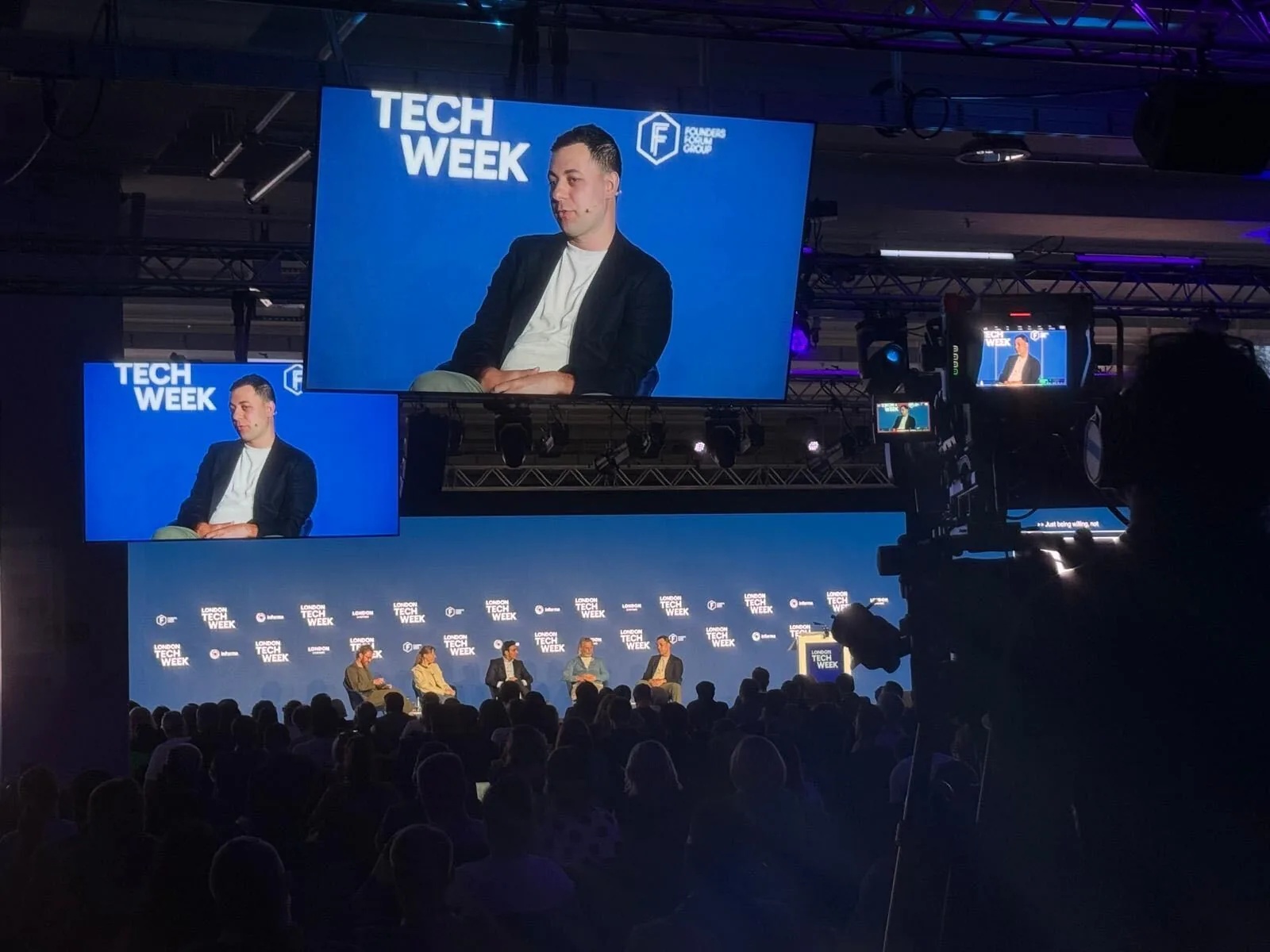
His June 2026 London Tech Week schedule spanned AI infrastructure, customer experience and the possibility of smaller models tailored to particular business needs. The range is revealing. Each topic meets a different part of the same commercial question: what does an organization need in order to put AI to work? Casem approaches that question with a carrier's collection of concerns, from the location of the computing to the quality of the conversation.
Three internet trips can spoil a conversation
When Casem discusses voice AI, he keeps returning to the journey. In a Channel Partners interview, he described systems that send separate requests to a speech-to-text provider, a language model, and a text-to-speech provider. Each trip introduces opportunities for delay, uneven delivery or lost data. A caller experiences the combined result.
His case for Telnyx is that bringing the pieces together makes both performance and accountability easier to manage. As he put it, “there's one party responsible for delivering the end-to-end solution.” A single point of responsibility is a distinctly practical attraction when several vendors could otherwise spend an afternoon forwarding the same complaint.
Every handoff is part of the caller's wait.
His test of usefulness is equally grounded. In a May 2025 discussion with Susie Harrison, he argued that customers would accept an imperfect-sounding AI voice if it solved their problem. Remembering previous interactions and connecting to business systems mattered. So did carrying context across channels, rather than asking someone to begin again whenever they moved from speech to text.
Consider the etiquette of a useful assistant. It remembers the request, finds the relevant information and does something with it. A lovely voice is welcome, as a lovely waiting room is welcome. Neither settles the business that brought the visitor in. Casem's emphasis puts the customer's unfinished task at the center of the product.
“Being multimodal is going to be critical to avoid disjointed conversations.”
A founder's optimism, delivered by car
In March 2026, Casem told a Washington audience about an Uber driver with whom he had exchanged numbers. Two weeks later, he said, the driver sent him a working product built with AI while also driving. According to Casem's account, the driver was launching it and had started a consultancy helping businesses implement AI.
He also described colleagues who could now build tools despite previously lacking the engineering resources to get their ideas prioritized. The enthusiasm in that story is about permission becoming less scarce. Someone with a useful idea can try it before winning a place in another team's queue.
This is his expressed optimism about AI's effect on work. It is a founder's account of possibilities he sees around him, rather than a guarantee about every occupation. The personal detail matters: his chosen example begins with a conversation in a car and ends with someone making something. For a self-taught builder, the appeal is easy to see.
There is an earlier institutional expression of widening access. In September 2020, Telnyx launched Telnyx.org, offering eligible nonprofits and social enterprises communications discounts and an initial $500 platform credit. Casem framed the initiative around helping organizations put communications technology to work on their missions. The offer translated a broad ambition into a modest, usable starting balance.
From answering a call to finishing the errand
Another car conversation, this time on Bluejay's Skywatch podcast in March 2026, gave his current ambitions a different shape. The discussion centered on AI missions: assistants carrying out sequences of tasks over hours or days, including scheduling, following up and gathering quotes. Success would mean completing the assignment, rather than merely handling an individual call.
The same episode came with a less comfortable piece of company history. Casem recounted a DDoS attack during which he sent attackers Bitcoin at six-minute intervals. The podcast's account includes references to Dune. It is an unusual supporting anecdote for an infrastructure business, and a reminder that the work occasionally supplies its own unwelcome adventure.
Meanwhile, his preference for open-weight AI models gives customers another kind of room to maneuver. Telnyx's model-serving offering lets developers change the model named in a request. In an October 2026 article, Casem offered a short assessment of the rapidly changing contest: “No loyalty in AI land.” The dry humor fits a market in which yesterday's favored model can quickly acquire competition.
Casem now lives in Austin, and his company's work reaches across borders, networks and increasingly capable software. The ambitions have expanded well beyond the installation job. Yet a recognizable standard survives: somebody needs a useful result, and the machinery has to carry it through. An assistant may eventually spend days arranging an errand. At the end, it will still be judged by whether the errand got done.