Before Pangram could teach a computer to recognize machine-written prose, its three-person team had to keep a cluster working. GPU quota requests meant waiting. A network file system broke, lagged and disrupted the training pipeline. The researchers had acquired a second occupation: looking after the machinery. Lightning AI’s September 2026 customer account describes the switch that followed. Pangram’s CTO, Bradley Emi, already knew PyTorch Lightning. He tried the company’s cloud development environment.
- Free training software brought Lightning into developers’ working lives.
- Paid cloud tools sell back time spent configuring and coordinating.
- A GPU merger expanded the offer. A credential incident now tests its reliability.
By that account, Pangram subsequently grew to 25 people without hiring a dedicated infrastructure team. Emi estimates two to three engineer-years saved, plus 50–60% lower compute costs for heavy training moved onto dedicated capacity rather than equivalent AWS resources. Those are customer estimates. They are also a useful way into this company: count the hours between having an idea and being able to test it.
“That was just super unwieldy to manage.”
Bradley Emi, Pangram CTO, on the team’s previous cluster
A framework grows a cloud
William Falcon started developing the work behind Lightning at Columbia in 2015. He open-sourced PyTorch Lightning in 2019 while pursuing his doctorate at NYU and Facebook AI Research. That year, he and Luis Capelo founded Grid.ai. The initial insight was practical: researchers were repeatedly writing engineering code around their scientific work. A framework could take care of recurring training chores while leaving the model itself in the researcher’s hands.
PyTorch Lightning organizes training code. Fabric gives developers more control over custom training loops. LitGPT supplies language-model training and fine-tuning recipes; LitServe helps turn models into inference services. These open-source tools can run independently of the commercial cloud. Expertise in distributed training, serving and developer workflows supplies the connective tissue.
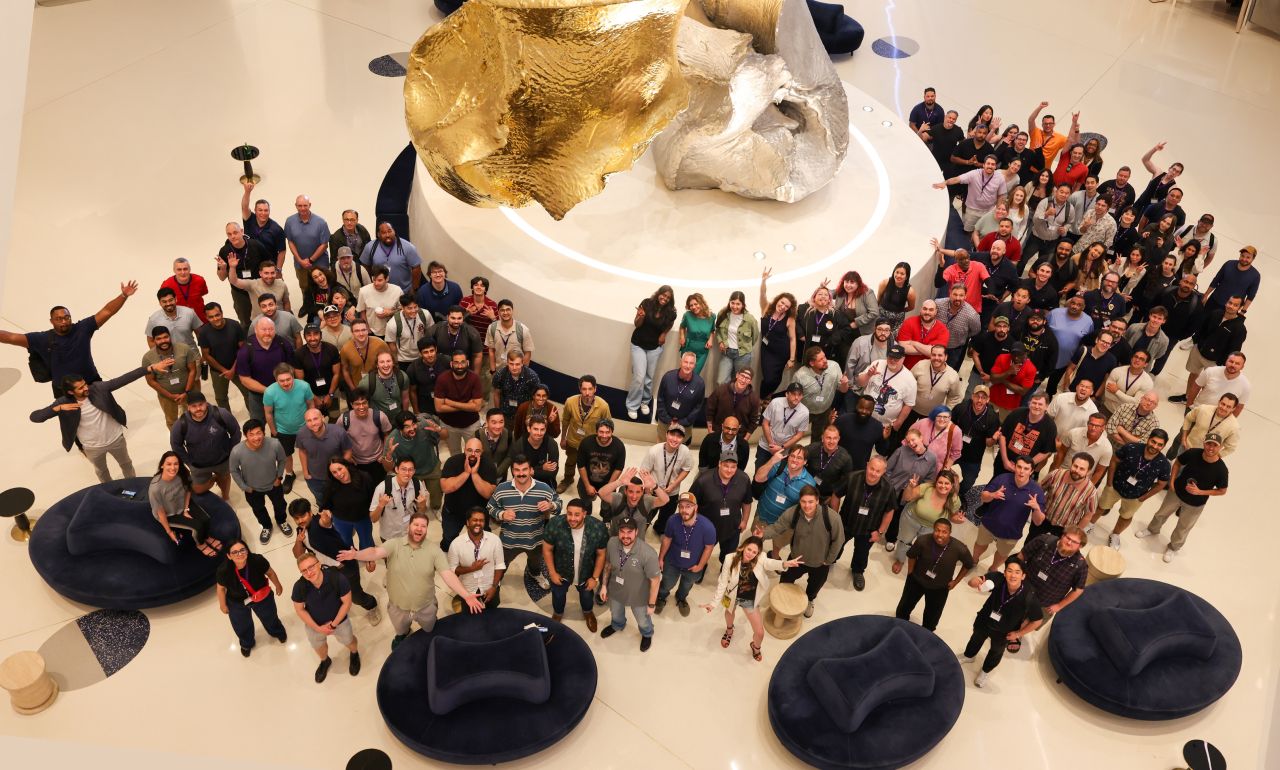
Grid became Lightning AI in 2022. Studios followed in December 2023: persistent cloud workspaces where developers could code, share environments and change machines without rebuilding their working lives each time. At launch, the company described the problem as developers stringing together roughly 20 platforms. The browser became a doorway to the equipment and collaboration a laptop could not supply.
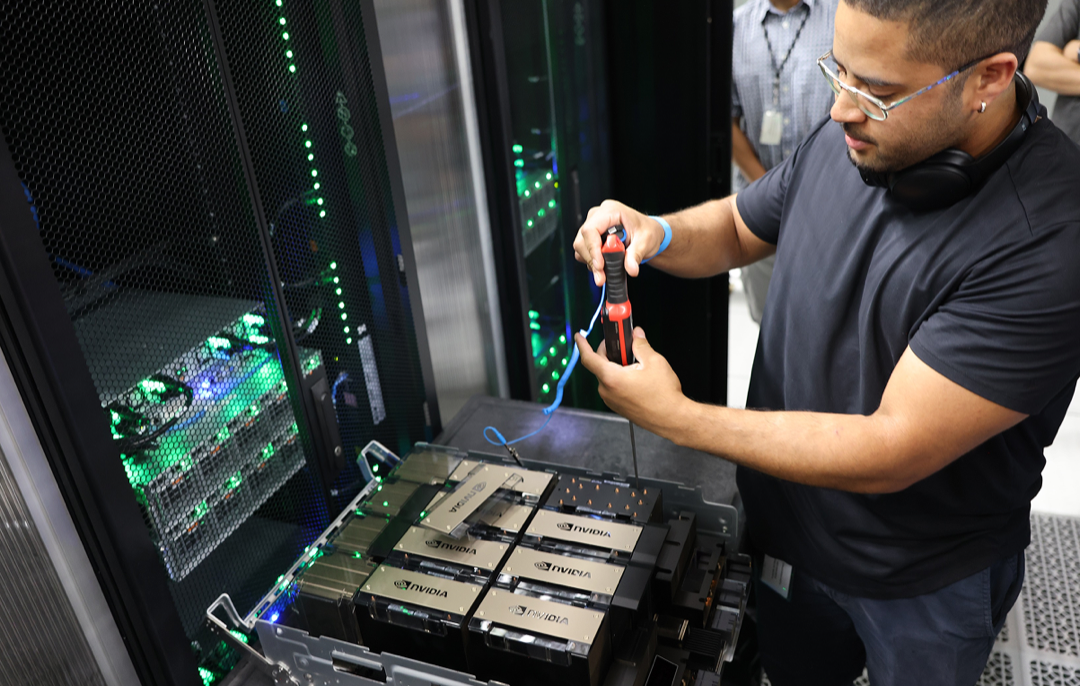
Then the company moved further down the stack. In January 2026, Lightning merged with Voltage Park, bringing software together with a reported fleet of more than 36,000 owned GPUs. The merger announcement put combined annual recurring revenue above $500 million, up from $18 million in 2024. That is a reported run rate for the combined business, not audited annual sales or a measure of software-only growth.
Big machines, tiny models
Infineon offers a nicely counterintuitive example. Its team wanted language models for devices with severe memory and power limits. Bigger was hardly the point. The resulting model family ran with under 32 MB of memory. But making something small still required substantial training resources, and the internal GPU cluster was difficult to access.
In Lightning’s account, the team used on-demand GPUs, checkpointing and experiment tracking to iterate through its designs. It developed three model sizes, from eight million to 25 million parameters. Researchers could inspect GPU utilization and memory use, then adjust experiments. Infineon estimated that four or five months of work replaced a development path that might otherwise have taken 18–24 months. The comparison is an estimate, not a controlled experiment.
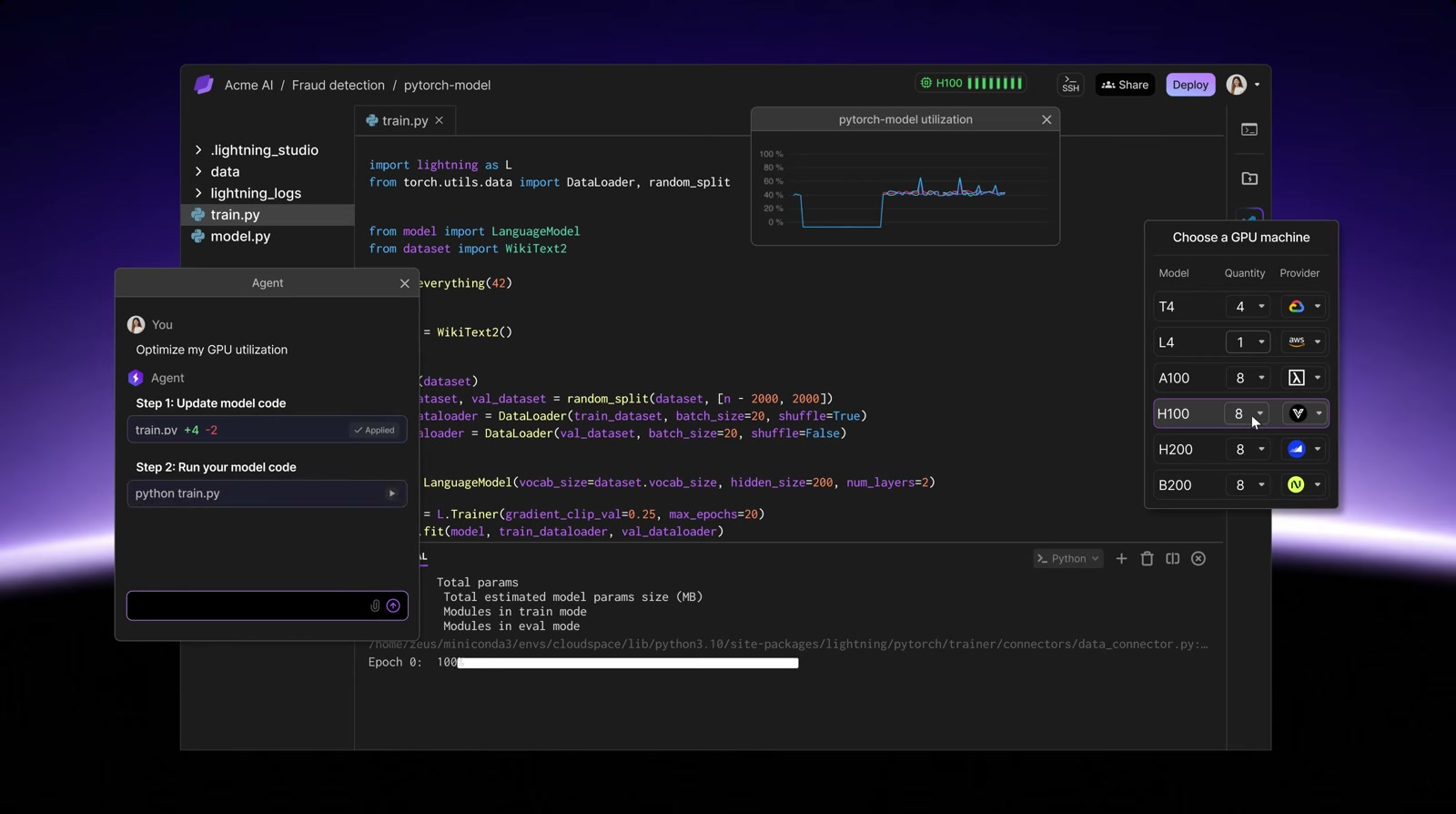
The repeatable lesson is concrete. Test the data pipeline on modest hardware. Save checkpoints so interrupted work can resume. Watch whether the expensive accelerator is actually busy before renting more of them. Lightning packages those habits into a shared environment. The habits remain useful wherever a team chooses to work.
The meter is still running
Lightning makes money from subscriptions, compute consumption and enterprise arrangements. Free libraries supply an introduction; cloud workspaces supply a reason to stay. An announced $50 million equity investment in November 2024 included NVIDIA, Cisco Investments, J.P. Morgan and K5 Global. Nscale’s 2025 partnership added another route for pairing Lightning software with GPU infrastructure.
At the pricing checked for this profile, Pro lists at $50 monthly, or $20 per month billed annually. H200 access starts at $4.50 per GPU-hour. Eight GPUs at that starting rate for 24 hours mean $864 in compute alone. Subscription fees, storage and workload choices still matter. The free tier has restrictions, including four-hour Studio restarts; the advertised free GPU hours depend on credits and machine pricing.
8 H200 GPUs × 24 hours × $4.50
Illustrative compute-only cost at the advertised starting rate, checked October 25, 2026. Additional charges may apply.The market stretches from hyperscaler ML platforms to GPU clouds and developer services. Lightning competes for the work of coordinating those pieces. Its integration is attractive when configuration and capacity queues consume valuable engineering time. A team with steady workloads, owned hardware and effective infrastructure staff should compare the total cost carefully. A managed workspace cannot supply missing data or decide what a useful model should do.
Pangram’s arrangement also shows that an integrated platform need not swallow the whole company. Its September account describes Studios handling data preparation and overflow work, with heavier training on dedicated capacity and finished detectors running on Pangram’s own serving infrastructure. The buyer can divide the job. The sensible unit of comparison is a working pipeline, including the people needed to maintain it, rather than a GPU specification viewed in isolation.
One place also means one dependency
On October 16, 2026, Lightning disclosed unauthorized credential access detected the previous night. It revoked platform access while investigating with an external cybersecurity firm. The notice covers Studio platform services, including deployments, pipelines and Drive, while excluding GPU cluster rentals and managed Kubernetes and Slurm services from its stated scope. As checked October 25, the notice still describes an active investigation and inaccessible platform.
That interruption belongs beside the productivity gains. Putting development in one place reduces coordination work and concentrates dependencies. For a buyer, the useful questions concern recovery, credentials, portable code and copies of essential data. Lightning’s proposition depends on making experimentation easier. Its customers also need to be able to keep working when the place they experiment goes quiet.