At The Alotian Club, the old tee sheet came with an invisible cord. Staff could arrange the day, but their tools kept pulling them back toward the shop. In a testimonial published by Whoosh, head golf professional Matt Fraser described the switch from paper and server-based software: “It was like going from a rotary phone to a smartphone.” The revealing part was mobility. A booking could follow the employee out the door.
- The job: connect reservations, staff communication, access rules and operational reporting.
- The buyers: clubs, courses, simulator venues and other businesses selling access to activities.
- The wager: fewer administrative handoffs leave more time for hospitality.
This is a useful way into Whoosh, Inc. Golf technology often invites us to look at the swing. Whoosh asks us to look at the person arranging the round. That person must know who is playing, who brought a guest, which caddie is assigned and what happens when the weather interrupts everything. The golfer sees leisure. The staff sees a small logistics exercise wearing a polo shirt.
The courtesy hidden inside the booking
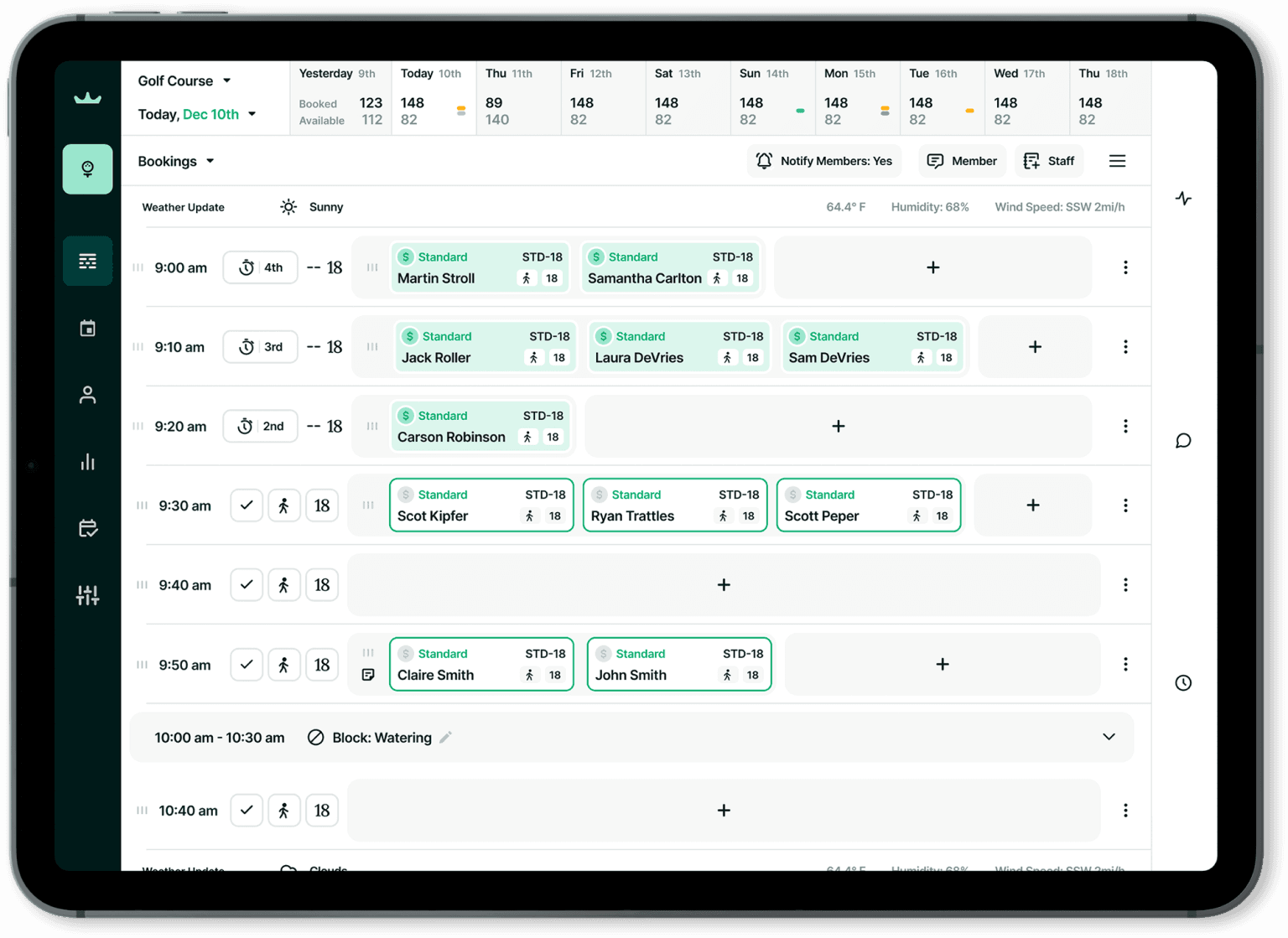
Whoosh’s cloud-based software puts those tasks on a tablet-friendly interface. Its private-golf tools accommodate fixed tee times and walk-up play. A club can run a waitlist, let members book for themselves, apply access restrictions and communicate with staff. The distinction matters: an open-play tradition is part of a club’s identity. Buying software should not require buying a different social contract.
Some features are deliciously specific. A member can identify who will pay for a guest during booking. That moves a potentially awkward conversation out of the golf shop. Caddies can be assigned and messaged from the tee sheet. Member photos and notes give seasonal staff a little institutional memory. These are ordinary details, but hospitality is largely the art of remembering ordinary details before someone has to ask.
A club that wanted less friction
Lost Rail, a private club in Gretna, Nebraska, supplies a concrete example. It opened in 2022; Whoosh’s case study describes membership exceeding 200 golfers and annual play passing 12,000 rounds. Members wanted clearer access to tee times and billing. Staff wanted to preserve the personal contact that made the club feel intimate. The challenge was choosing where digital convenience belonged.
“We wanted technology that supports service, not replaces it.”Blake Schroeder, head golf professional, Lost Rail
The club combined Whoosh’s scheduling and operational reporting with Lightspeed’s point of sale and billing tools. The case study reports simpler daily operations, easier training and better communication during disruptions. These are customer-reported outcomes, rather than independently measured performance results. Still, the design choice is instructive: connect the administrative work while keeping staff involved in the member experience.
Build around the people doing the work
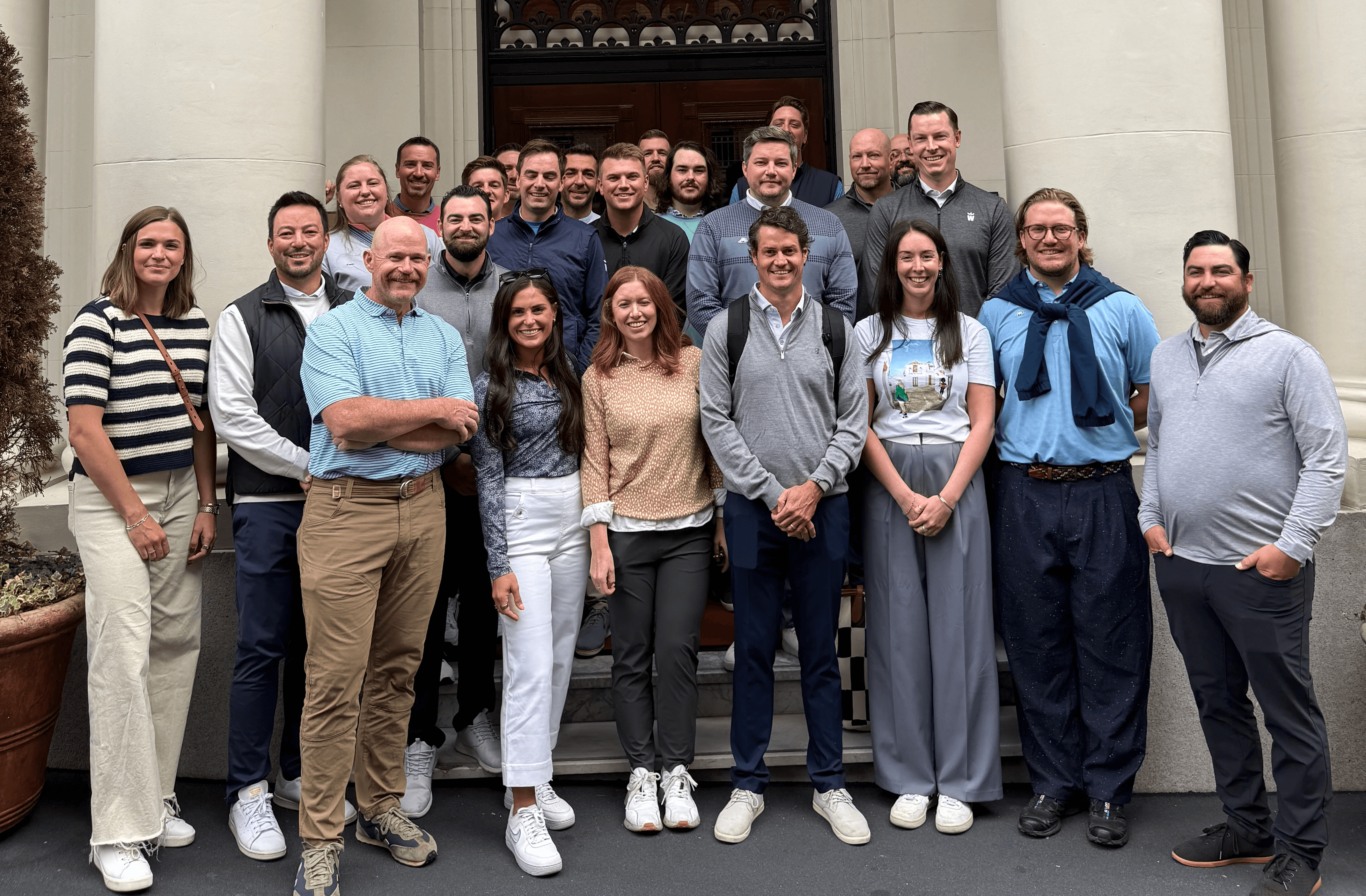
Co-founders Colin Read and Scott Peper bring the company’s argument back to the course. Read is CEO; Peper is CTO. Whoosh’s team includes PGA professionals in product, customer success and sales. That gives the company access to people who understand why an apparently simple scheduling change can become a delicate conversation.
In a Golf Course Technology Reviews interview, Read said the fully remote company holds offsites at customer facilities so engineers can experience both sides of the service encounter. His account of the origin begins with joining a club and finding its mobile app dated and frustrating. The practical lesson is to let software builders watch the work where it happens. A polished demonstration cannot reproduce every interruption at the first tee.
The booking has a financial afterlife
Whoosh occupies the operations layer of a crowded club-software market. Jonas and Clubessential are among the established alternatives; paper, spreadsheets and disconnected systems are alternatives too. Whoosh’s pitch emphasizes portable tools, facility-specific rules and integrations. A buyer should compare the actual workflow, including existing accounting and membership requirements, rather than assume every product replaces the same collection of systems.
For public courses, Whoosh works with Square to connect reservations, checkout and customer spending. For private clubs, the Lightspeed partnership announced in June 2025 connects scheduling with commerce and member billing. In February 2026, the companies announced joint demonstrations at the CMAA conference. A tee time has consequences beyond the calendar: fees must reach the appropriate account, and someone must reconcile the day.
A January 2026 announcement with Textron’s Pace Technology extends that logic onto the course. Tee-sheet data helps assign golf carts; pace-of-play data comes back into Whoosh. The announcement described testing with select facilities and planned wider availability in early 2026. Its appeal is practical: give an operator useful information in the screen already used to manage the day.
What the wider wager costs
Whoosh sells business software through a demo-led process. Facility operators are the customers; players use the booking experience. Pricing needs a facility-specific conversation. Buyers should count migration, training, devices and payment arrangements alongside the software bill. Whoosh says it handles data migration and staff training, with most facilities launching in two to four weeks. That is its stated timetable, not a promise for every installation.
Craft Ventures led the 2022 funding; AlleyCorp led the 2024 Series A. The later round supported development, hiring and expansion into public golf, resorts and activity management. In November 2024, Whoosh announced broader activity-management capabilities. Simulator bays, racquet courts and fitness sessions share an economic nuisance: once an unused hour has passed, nobody can sell it tomorrow.
The lesson readers can copy is modest and useful. Map the handoffs before shopping for features. Test a guest charge, a weather interruption and a busy waitlist with the people who actually handle them. The approach depends on accurate records, properly configured rules and staff adoption; a tidy interface cannot supply those by itself. Whoosh’s appeal rests on what happens after the screen is closed: the employee can remain beside the member, with the next detail already taken care of.
Continue around the course
Whoosh website · Company news · LinkedIn · X · Facebook
Lost Rail’s customer account · 2024 funding announcement · Pace integration announcement
WATCH & LISTEN
Colin Read on Chicago Golf Report · Golf Course Technology Reviews interview · Where golf’s smart money is going next