Wes Cummins chose a place for the future that could make a technology investor look twice: Ellendale, North Dakota. The attraction was practical. There was electricity, fiber connectivity and cold air. For a building intended to house machines that produce extraordinary amounts of heat, the weather had finally found a way to make itself useful.
Applied Digital began developing its AI campus before it had secured the tenant that would make the project’s economics tangible. Cummins had spent years assessing other people’s companies. Now the assumptions came with a construction bill. He was asking investors to believe that demand would arrive at the address he was preparing for it.
That is the tension running through his career: the distance between recognizing a change and accepting responsibility for it. An investor can have an opinion about tomorrow. A builder must decide what to order today.
A wager with an address
The Dallas-based co-founder, chairman and CEO of Applied Digital came to infrastructure through technology finance. His company’s route ran through blockchain hosting before turning toward high-performance computing and AI. The customers changed. Electricity, land and the ability to organize a large project remained central to the business.
In 2023, Cummins worked with NVIDIA’s data-center design team on facilities built around its hardware. The scale he wanted had changed. Small GPU projects had exposed the company to demand that suggested a much larger opportunity. He pushed the development team toward buildings measured in hundreds of megawatts.
He later described the Ellendale decision with a detail that punctured the usual corporate solemnity: a speculative billion-dollar development in a town without a McDonald’s. For once, the absence of a familiar roadside sign was part of the investment story.
The first major lease announcement arrived in June 2025. CoreWeave agreed to take 250 megawatts of capacity, with an option for another 150. The initial agreements carried an anticipated value of roughly $7 billion over 15 years. The building had acquired a customer; the thesis had acquired a counterparty.
“Zero to one is the hardest.”
Wes Cummins, July 2025
The contract also exposed a less comfortable fact about infrastructure: a promising adjacent business can complicate the main one. Applied Digital offered cloud computing services as well as space for other companies’ computing equipment. Potential tenants could see a supplier and a competitor on the same side of the negotiating table.
The investor learns a different clock
Cummins grew up on a potato farm in Idaho. Moving to St. Louis for college was a considerable change of scene. He played football at Washington University, tried electrical engineering coursework, and found that business classes held his attention. An investment internship during the dot-com years put him close to technology’s excitement and its reversal.
His professional apprenticeship became a long one. He joined B. Riley in 2002 as an equity research analyst covering technology hardware, then moved into research leadership and eventually the presidency. At Nokomis Capital, he spent years examining technology, media and telecommunications businesses, including special situations and activist investments. He founded 272 Capital in 2020; B. Riley acquired it in 2021.
That history matters because his instinct for AI infrastructure was the instinct of someone accustomed to comparing shortages. A semiconductor bottleneck could attract enormous effort and eventually ease. Permits, electrical equipment, cooling systems and new buildings followed another timetable. Money could accelerate parts of the process. It could not abolish the calendar.
He has said that the company began building for hundreds of megawatts 19 months before signing its first customer. His explanation rested on a distinction between the supply of chips and the supply of suitable places to operate them. He expected the former to catch up sooner. The latter was his opening.
Buildings have a lead time.
Cummins’s investment case depended on the gap between the two.
Operating a company changed his own timetable, too. He has described moving from investment decisions framed around a year to CEO decisions reaching three to five years ahead. His favorite analogy comes from football: the investor as fan, the chief executive as head coach. Choosing the players and developing the strategy make the result considerably more personal.
A customer can also be a competitor
The cloud business presented an awkward choice. Selling computing services could capture another part of AI demand. It could also make an infrastructure customer wonder whether its landlord intended to compete for the same workloads. Cummins acknowledged that feedback in discussing plans to separate the business.
There was a financial distinction as well. A data-center building could support a long lease. Computing equipment faced shorter replacement cycles and the possibility of technological obsolescence. Combining the two gave investors different kinds of exposure inside one company. Separating them offered a clearer view of what they were financing.
By May 2026, Cummins was describing three distinct propositions: Applied Digital’s infrastructure, ChronoScale’s compute business, and Base Electron’s power-generation opportunity. The ambition had spread along the supply chain. The organizational question was how to keep each business understandable while addressing the constraints that connected them.
It is a revealing development in his thinking. Finding a shortage had helped start the business. Growing it required decisions about which shortages to solve inside the company, which to address with partners, and which risks should sit in a separate structure.
The team has to travel
Applied Digital’s growth also changed the co-founders’ jobs. In January 2026, Jason Zhang became president, formalizing a role in strategy and development that he had already been performing. Cummins remained chairman and CEO. The announcement made explicit a working partnership dating to the company’s founding in 2021.
The head-coach comparison becomes more useful as projects multiply. A founder can recognize an opportunity alone. Several construction sites need people who can make thousands of connected decisions without waiting for the founder to make each one. Zhang’s appointment belonged to that broader task of spreading responsibility.
Cummins has described a repeatable campus organization: the same set of 20 positions at individual sites, supported by central development, operations and construction groups. The promise is that experience can move from one campus to another. Every project should have fewer opportunities to relearn an expensive lesson.
Equipment is part of the same effort. Applied Digital has used mechanical and electrical assemblies prepared off-site, reducing some of the work that must happen amid the complications of a construction project. Cummins’s analogy is LEGO. The toys have become more costly; the appeal of fitting prepared pieces together survives.
Cold weather, warm negotiations
In January 2026, Cummins sat down with leaders from Minnkota Power Cooperative and Cass County Electric Cooperative to discuss development in Harwood, North Dakota. The setting was a useful corrective to the idea that AI infrastructure is chiefly a conversation among technology companies. Electric cooperatives and the people they serve have their own balance sheets and obligations.
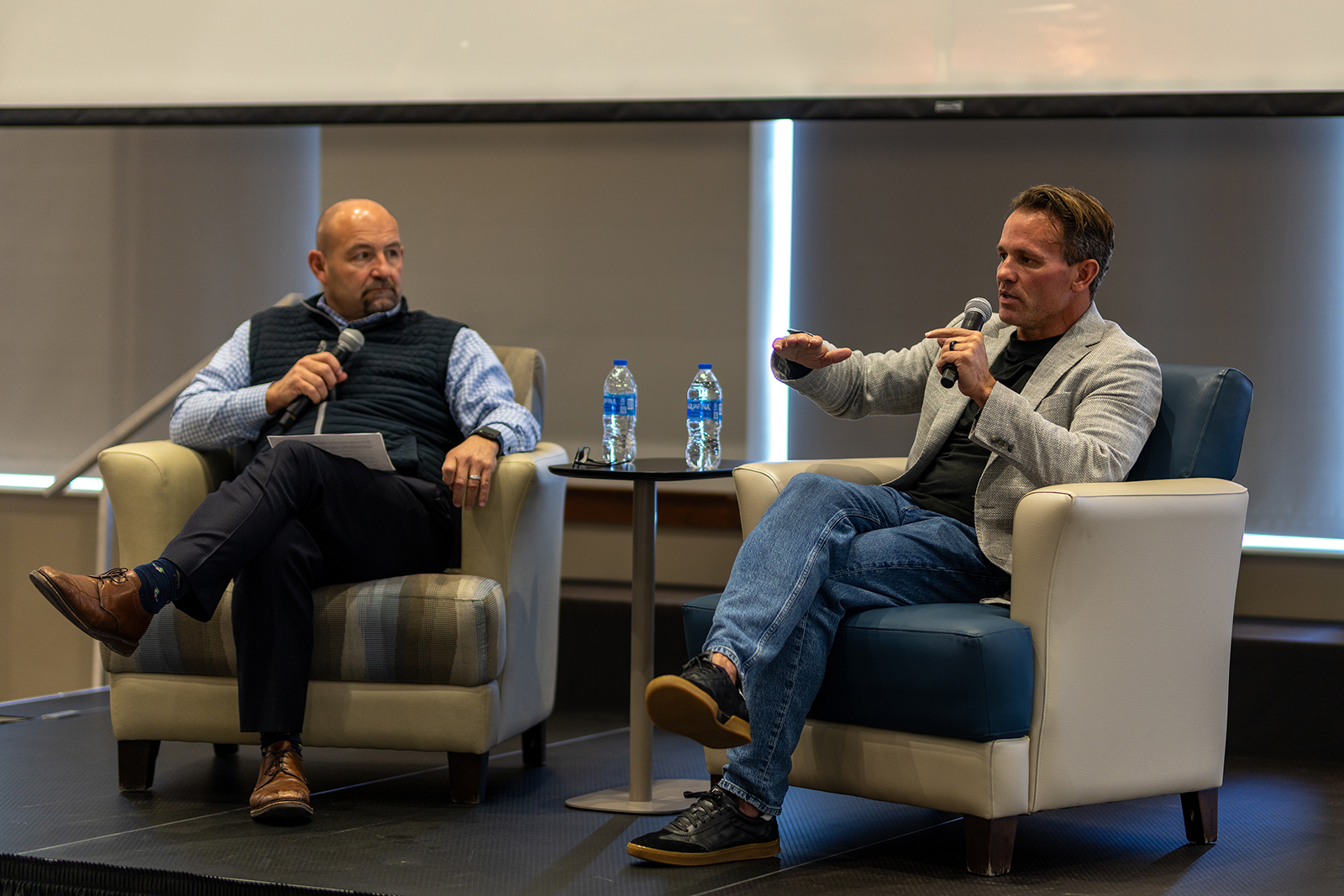
Cummins argued that large customers could make better use of existing electricity infrastructure and help spread its fixed costs. Minnkota’s chief executive, Mac McLennan, emphasized the protection of existing members. Applied Digital would pay for the infrastructure and resources its project required, including development needed specifically for it.
Those two positions must coexist for a project to last. A developer wants reliable power at a workable price. A cooperative has to explain what a new industrial customer means for farms, schools, households and businesses already on the system. Local acceptance has a practical vocabulary: cost, reliability, employment and who pays.
What the next building must prove
The results reported on October 7, 2026 put some numbers around the transformation. Applied Digital recorded $341.9 million in quarterly revenue, up 322 percent from the comparable period. It also reported a $221 million net loss attributable to common stockholders. Expansion and profitability were still different entries in the ledger.
The same release reported $3.7 billion in cash, cash equivalents and restricted cash against $6.4 billion in debt at August 31. It recorded 175 megawatts of live capacity at Polaris Forge 1 following a July delivery. These are useful distinctions in a business where contracted capacity, construction activity and operating facilities can otherwise blur together.
Fiscal Q1 2027, ended August 31, 2026. Company-reported GAAP figures.
A day before the results, Applied Digital announced an agreement providing access to up to one gigawatt of potential power capacity in Finland. It was the company’s first development opportunity outside the United States. Initial power availability was anticipated in 2028; customers, commercial milestones and regulatory requirements would shape what happened next.
Cummins pointed to qualities familiar from North Dakota: climate, energy, connectivity and room to develop. The map had widened. The test remained whether a favorable site could become dependable capacity for a paying tenant.
His next chapter will be judged in that conversion. Years of technology investing taught him to identify a constraint. Building has attached his name to the delivery date. Somewhere between the two sits the work he now describes as coaching: choosing people, setting a direction, and remaining responsible when the waiting ends.