The people making the show were not wearing the merchandise. For a company in the merchandise business, this is an awkward observation. Warren James noticed it among the creative team behind Helluva Boss, the animated series from SpindleHorse. So it invited the people drawing and directing that world to design the clothes and accessories they wanted. An ordinary wardrobe problem became a product brief.
- Build products around what a community already loves.
- Handle the store, manufacturing, and delivery behind the creator.
- Give fans something to do with a story: wear it, read it, play it.
That small reversal explains Warren James rather well. Its customers have audiences. What they need is a way to turn that relationship into physical goods without becoming experts in fabrics, online checkouts, or freight. The company supplies the people and operations between a creator’s idea and a fan opening a package.
A fan is a very particular customer
Kevin Ramsey and Ben Wiedner started Warren James in 2019. Their proposition occupied an interesting gap. A creator could already put a graphic on a T-shirt. Developing a product around an audience’s tastes required more judgment. By 2020, a Finding Founders interview described Ramsey’s business as bringing custom merchandise, previously associated with larger companies, to online personalities.
A fan does not arrive as a blank consumer. They carry references, loyalties, and expectations. Consider Hasan Piker’s Himbo Fitness collection, launched with Warren James in 2022. The joke involved his muscular public persona. The clothes were union-made, fitting his politics. Launch prices ranged from $35 to $65. Both the joke and the manufacturing choice belonged to the same person.
Or consider Brittany Broski’s “moo moos,” described in 2025 coverage as inspired by her grandmother’s vintage nightgown. A generic product brief might have asked for another sweatshirt. A detail from somebody’s life suggested something more particular. The useful lesson is to listen for the object already hiding inside the story.
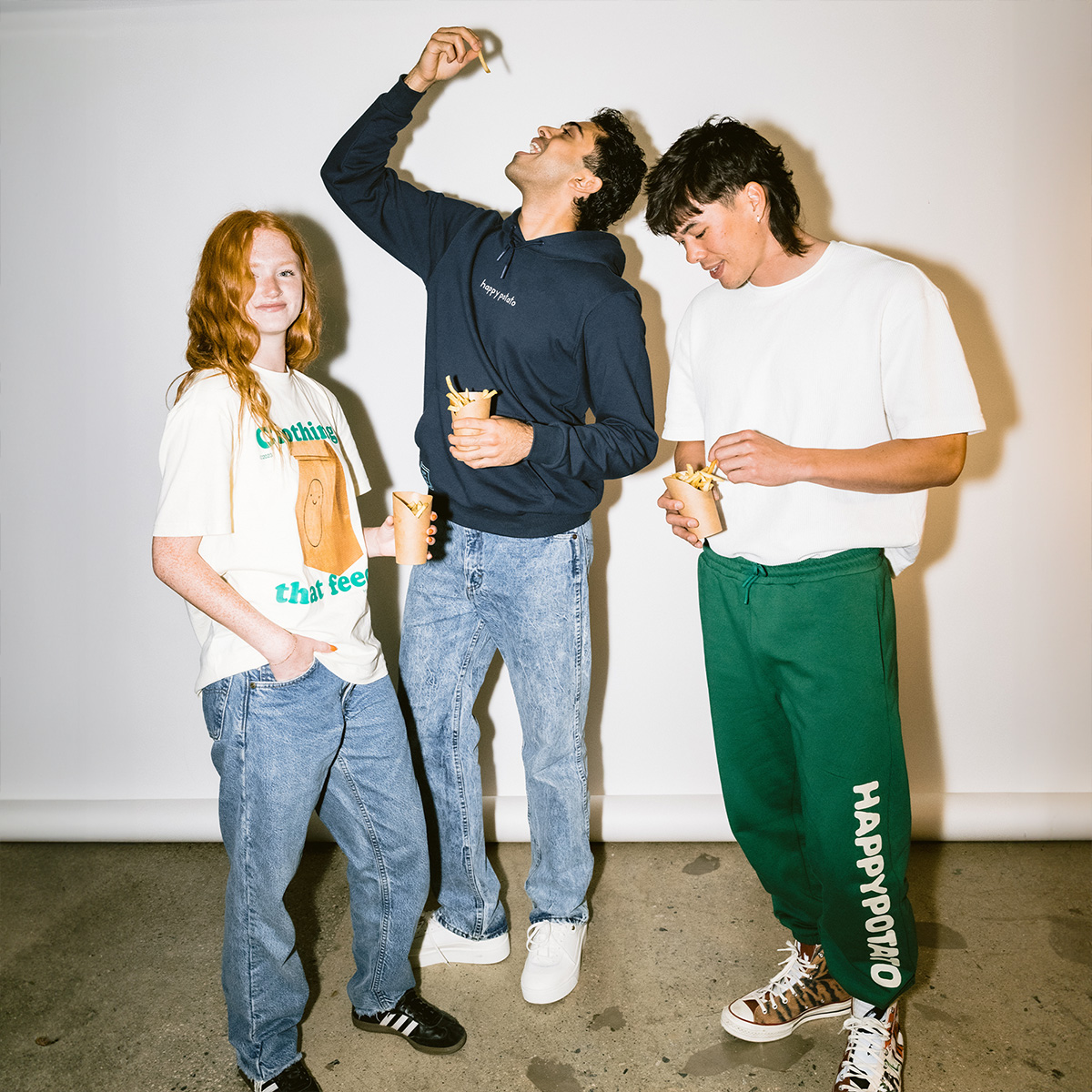
The company behind the checkout
Warren James operates largely behind its partners’ brands. Its capabilities span design, product development, ecommerce, marketing, publishing, and logistics. The roster includes KREW, Dropout, Dude Perfect, and Helluva Boss. These are established communities with different reasons to buy. Treating them as interchangeable audiences would miss the point of the business.
Its commercial model includes sharing in product sales: Licensing International documented a revenue-sharing arrangement with the creator behind Tucker Budzyn, a golden retriever with an internet following. The same reporting described Warren James operating creators’ websites and supplying apparel through Guangzhou. Even a very photogenic dog needs somebody to manage the shop.
- 01ListenFind the shared reference.
- 02DevelopDesign for the product.
- 03LaunchConnect story and store.
- 04DeliverFinish the fan experience.
For a creator choosing a route, the distinction is how much product work needs doing. Fourthwall offers branded shops and a catalog of merchandise with no upfront costs. Warren James presents a managed development partnership across categories. A straightforward printed shirt and an original comic book pose different problems. The sensible choice starts with the object, then the operating help it needs.
The scale question also changes with the sales channel. In 2021, Ramsey told Licensing International that a fan base too small to support a major retailer could still sustain a meaningful direct-to-consumer business. Warren James was then supplying 30 to 35 creators. That is a useful distinction for anyone tempted to treat retail shelves as the inevitable destination. The audience, the assortment, and the route to purchase have to fit one another.
The company’s job is partly translation: preserve the detail that makes a community distinctive while doing the ordinary commercial work a customer expects. Being a fan may explain the purchase. It does not make the wrong size fit.
Six million dollars buys room to experiment
In September 2022, Warren James announced a $6 million Series A led by Crossbeam Venture Partners, with FJ Labs participating. The expansion ambitions included food and beverages. One example of its broader approach was an 11-page webcomic for esports player TenZ, paired with apparel. The product could add to the creator’s fiction as well as advertise it.
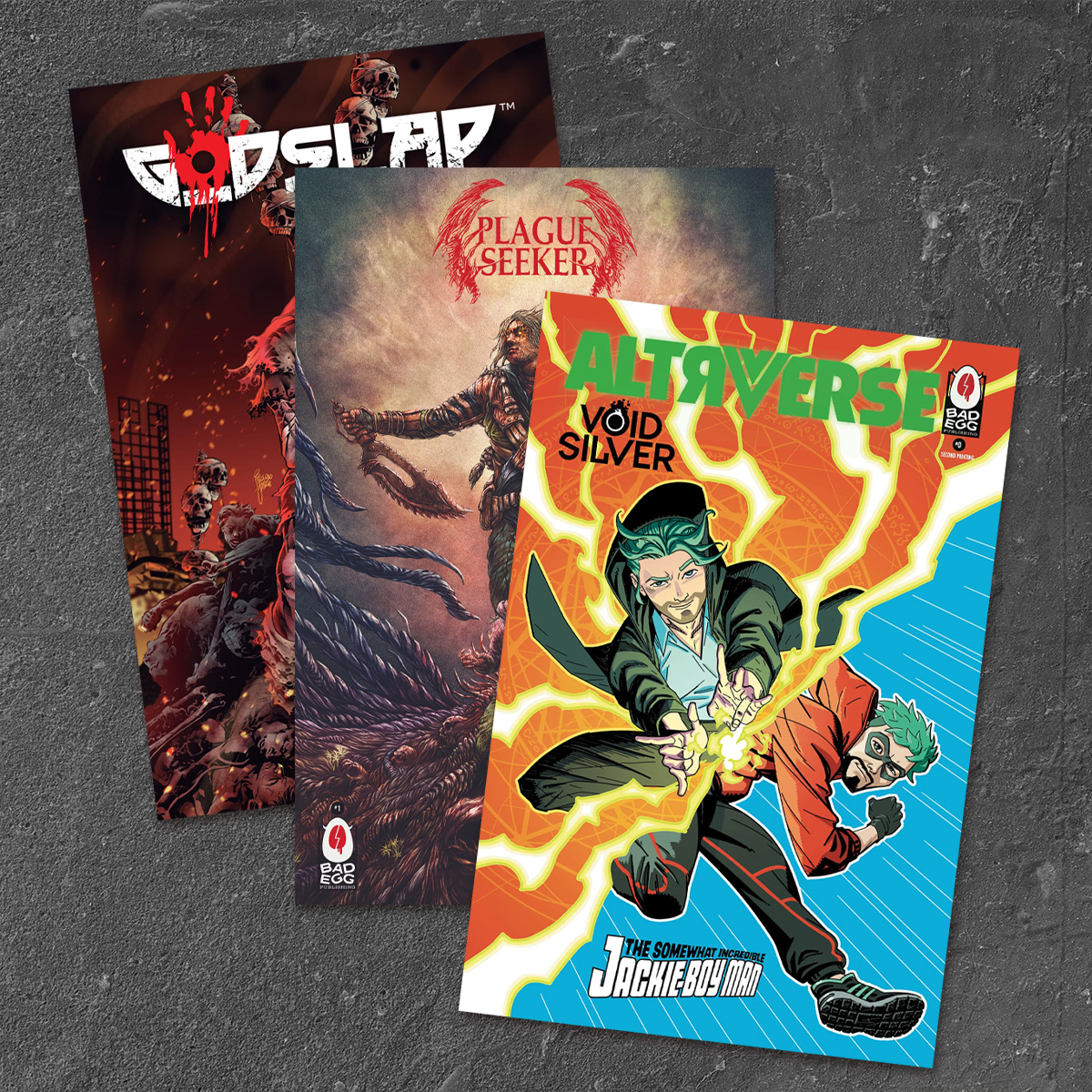
That November, Warren James, Mana Talent Group, and MoistCr1TiKaL announced Bad Egg, a publishing venture. Its mandate covered comics, graphic novels, and related creative work. Publishing requires writers, artists, editing, and production. It is a useful example of the expertise a creator partnership has to acquire when it moves into a new format.
Now the audience gets a turn
The tabletop expansion makes that principle unusually clear. For Dropout’s Game Changer: Home Edition, Sam Reich and game designer Joshua Balvin adapted three formats: Bingo, Name a Number, and Sam Says. Two teams of two to four players compete. Fans can move from watching other people contend with the show’s surprises to trying a version themselves.
The base game is listed at $39 on Gamefound, with shipping charged separately and delivery estimated for March 2027. Those details matter. A pledge buys a future product, with a production and fulfillment journey attached. An impressive campaign total measures commitments; it does not tell you the company’s profit.
“It’s so important to focus not just on the funding aspect, but on the crowd aspect.”
Ben Wiedner / October 2026
Wiedner described the move into games as following successful crowdfunding launches for established properties, then hiring experienced designers. Game Changer helped validate the approach used for Space King. By October 9, 2026, GamesBeat reported the latter campaign near $10 million. The investment in category specialists is the part another business can copy; a famous audience cannot supply game design by itself.
The next brief comes from the people who care
On October 8, Warren James Games announced Helluva Boss: The Seven Sigils with SpindleHorse. Its cooperative puzzle uses a physical tower and Sin Shards; completing one objective makes neighboring objectives harder. A screen-based world is becoming a system people can manipulate together. The creative partnership now reaches well beyond the wardrobe.
There are limits to the logic. A large following does not guarantee willing buyers. A familiar character does not make a game enjoyable. Manufacturing and delivery still have to work. For creators, the practical starting point is smaller: ask what the people closest to the work would actually use, then test whether fans agree. Warren James’s most revealing product brief began with clothes left unworn.