A factory has a memory problem. It can record a great deal and still ask its people to reconstruct the same explanation, one document at a time. Somewhere in that gap between keeping evidence and understanding it sits the working life of Vivek Gera, co-founder and CEO of Leucine.
His subject is pharmaceutical manufacturing, but the frustration is recognisable far beyond it. The information exists. Someone entered it. Someone reviewed it. Now another person needs it, and the search begins again. Gera has built his career around processes that have to work and records that have to explain them.
There is an appealing lack of glamour to the starting point. Enterprise software has room for extravagant promises; a factory still needs the next procedure to be usable. Gera’s route into that business went through engineering and consulting, occupations in which a persuasive explanation eventually has to survive contact with the equipment.
The engineer before the founder
Gera studied chemical engineering at the Indian Institute of Technology Kanpur, completing a combined bachelor’s and master’s programme between 2007 and 2012. An exchange at the Norwegian University of Science and Technology in 2010 took him into chemical process control. His early work also included Schlumberger and process engineering roles at Rio Tinto.
Process control offers a useful lens on the career that followed. Its concern is the relationship between what a system is supposed to do and what it is actually doing. A measurement has to lead somewhere. An adjustment has to have a reason. The system is judged in operation, with all the inconvenient detail that operation supplies.
At Rio Tinto, his experience included process control work and a self-optimising pH control strategy. Later, as an independent compliance consultant, he worked with large companies on their procedures and obligations. That put him close to an unusual software opportunity: businesses with substantial technical expertise could still find everyday documentation painfully cumbersome.
The customer had to trust the supplier
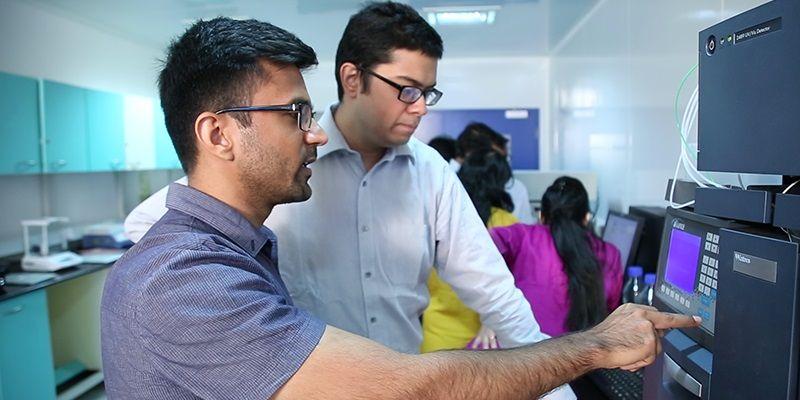
Early LeucineTech coverage describes a consultancy becoming a software business, with Gera working alongside Abhishek Jha. Their acquaintance went back to 2009. The problem they pursued was narrower than the company’s present range: automating compliance work, including the documentation surrounding equipment cleaning and validation.
Knowing the problem did not immediately make them an easy supplier to choose. Early customers were being asked to trust a young business with consequential workflows. The Bangalore Bioinnovation Centre provided incubation and, in the founders’ account, helped open doors that had previously stayed closed. Institutional credibility had practical value.
Their early selling experience is a useful corrective to the idea that technical merit travels unaccompanied. A customer also evaluates the people behind the software, the effort of introducing it and the consequences of relying on it. In this market, a good answer to “does it work?” still leaves several questions on the table.
Gera’s consulting background helped him understand those conversations. He knew that different clients could interpret requirements differently, and that vendor audits and IT evaluations demanded work from the buyer. The purchase was already an implementation problem. A founder who understood that burden had something useful to discuss before opening a demonstration.
A career sequence, rather than a claim that any one job explains every later decision.
Funding arrives; the work remains specific
By 2019, Leucine was in the first Techstars Bengaluru accelerator cohort. The company’s current co-founder pairing is Gera and product leader Mustaq Singh Bijral. The combination places manufacturing experience alongside product development, two kinds of knowledge that must negotiate with each other every time an intricate procedure becomes a screen.
In October 2023, Leucine announced a $7 million Series A led by Ecolab, with participation from Pravega Ventures, Axilor Ventures, Techstars and angel investors. At that point the company reported deployments across more than 300 manufacturing facilities in 10 countries. Those figures describe the business at that moment, rather than a permanent scorecard.
Gera’s stated priorities were concrete: strengthen the commercial operation, expand AI capabilities and grow the team. The company served customers in India and the United States, with offices in Bengaluru and Jersey City. His public professional profile places him in Jersey City, across the river from the much more frequently advertised New York startup address.
Money made expansion possible. It did not remove the underlying requirement to understand a particular factory’s work. Software for these teams has to fit the sequence of a procedure, the responsibilities of reviewers and the evidence a business keeps. A funding announcement takes a day; becoming useful inside those routines takes considerably longer.
October 2023
at that announcement
at that announcement
A microphone on the shop floor
Gera has another public role that makes the founder easier to understand: he hosts the Leucine Podcast. The format gives experienced manufacturing and quality leaders room to describe the problems behind the product vocabulary. The conversations are worth attending to because the guests sometimes make the work sound harder than a software brochure would prefer.
In a November 2023 episode, former Lupin quality leader Rajiv Desai discussed recurring inspection observations and the limitations of corrective action that stays local. An organisation may fix the immediate instance while leaving a wider pattern untouched. That distinction gives the record a different job: it must help the next team recognise a familiar problem.
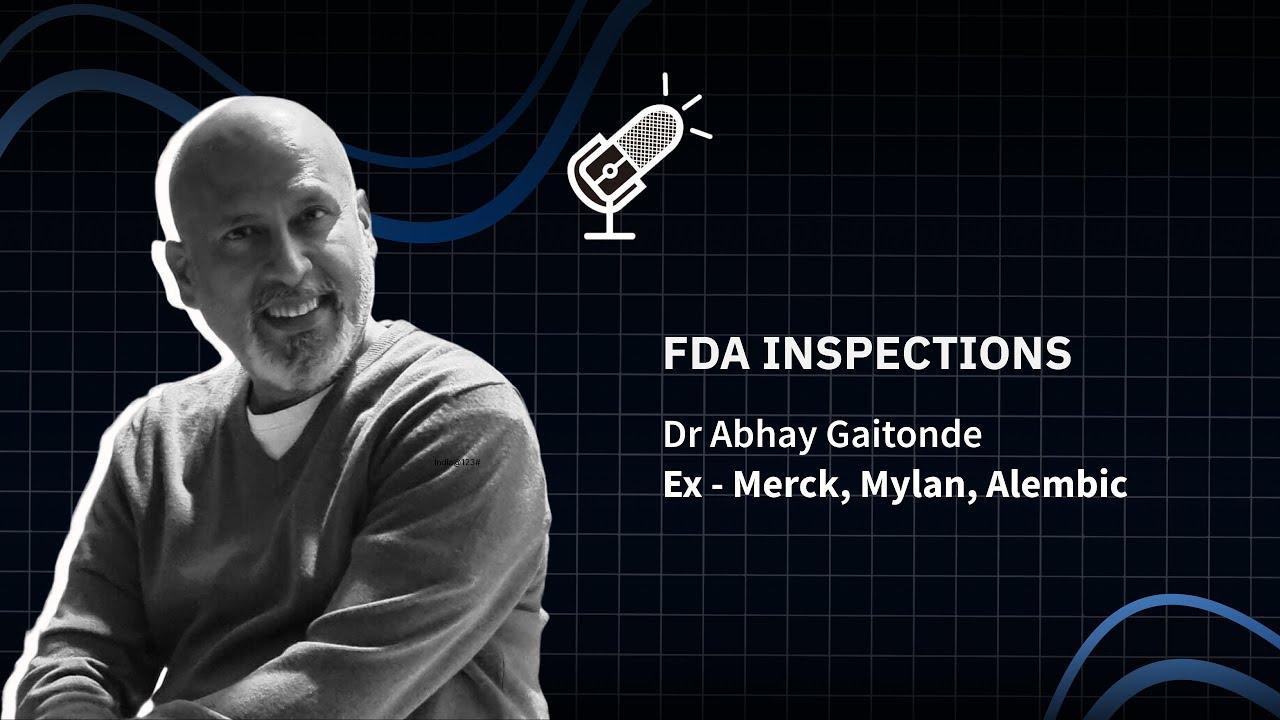
A February 2024 conversation with Abhay Gaitonde examined everyday audit readiness and the difficulty of validating AI that changes over time. It is a substantial question for a founder selling into controlled environments. Learning is part of the appeal of AI; a changing system also asks new questions about how its behaviour will be checked.
 Watch the conversation ↗
With Ganadhish Kamat, formerly a quality leader at Dr. Reddy’s and Lupin, the discussion turned to investigations and interacting variables. Kamat described an example involving humidity that a simpler interpretation of the data had missed. The attraction of analysis here lies in following relationships that can disappear when each measurement is considered alone.
These are the guests’ arguments, and the distinction matters. Hosting a conversation does not make every view in it Gera’s own. His role is nevertheless revealing in a public, observable way: he spends time asking practitioners to explain their decisions, the evidence they use and the limitations of familiar answers.
The software still needs a thinking person
In March 2024, Gera’s guest was Prashant Sharma, CTO at Zydus. Their discussion included AI agents and the people operating manufacturing processes. One concern was the temptation to accept generated output without enough thought. A report that reads smoothly still needs a reader willing to interrogate it.
The following month, Qualtivate CEO Harsh Thakkar brought the conversation to knowledge management and the precision of questions. Connecting documents can make information easier to retrieve. Asking something vague can still produce an unhelpful answer. The interface may become more conversational while the intellectual work of framing the problem remains demanding.
In May, Syngene operational excellence leader Gresh Kumar discussed the difference between tracking activity and improving performance. His criticism of investigations that end with another instruction to retrain the operator has particular force. A system can count an event very efficiently while leaving the people involved no wiser about why it keeps returning.
A record earns its keep when it helps the next person make a better decision.
THE WORK / RECORDS, KNOWLEDGE & JUDGMENT
Together, these conversations draw a boundary around the useful promise of factory AI. Retrieval, interpretation and judgment each require attention. A founder can make the first easier and support the second; the person making the decision still has responsibilities. That is a more interesting design problem than simply producing another document faster.
A factory that remembers
Leucine’s February 2026 roadmap, written by Bijral, describes a shared architecture connecting manufacturing records, investigations and regulatory signals. It sets out plans for AI agents working across those relationships. The ambition belongs to the company’s published direction; it is a plan to assess through implementation, rather than a result to assume.
More prosaic updates show where the software meets customers: in May 2026, Leucine announced electronic batch packaging records going live at Amneal’s Brookhaven facility. A deployment has a specificity that an AI forecast lacks. It names a place, a workflow and a change in how a team records its work.
The personal detail that best lightens this rather document-heavy career comes from an earlier interview. Gera’s favourite book was The Hitchhiker’s Guide to the Galaxy. His difficult-day response was running: “There’s nothing a six-mile run can’t solve.” His admired entrepreneurs included Naveen Tewari and Sridhar Vembu.
There is no need to turn a reading preference into a management theory, or a run into a metaphor for every company milestone. It is enough to allow the founder some life beyond the workflow. The software can take care of the records. The person building it is allowed an absurd novel and a stretch of road.
Follow the conversation
Explore Gera’s work, public profiles and interviews.