An online shopping mall is an instructive place to discover how many things can go wrong between an idea and a customer. Vijay Shah built one. Then he spent the next chapter of his career helping other people build what they had promised. IndiaPlaza.com was his early venture; V2Solutions, founded in 2003, became the longer undertaking. The change of position is the interesting part. A founder who had bought the ingredients for a business began supplying some of them.
Software services can sound bloodless in a company description. Someone needs a product, someone else assembles a team, and an agreement acquires several appendices. Shah’s route into that business gives it a more personal logic. He had experienced the demands of an e-commerce startup. Helping another founder bring a product to market meant working on a problem he had already met from the customer’s chair.
A shopping mall before the service company
In 1999, Shah was founder, president and chief executive of the U.S.-based IndiaPlaza.com. By August 2000, the San Jose business was marketing more than 50,000 products to Indians around the world. The ambition had a geographical shape: a website could gather customers who shared an interest but lived far apart. The storefront no longer needed everyone to walk down the same street.
Satyam Infoway moved to acquire the company that year. A July agreement and a December completion appear in the transaction’s financial record. Contemporary coverage described a share-based deal, with its dollar value moving alongside the buyer’s share price. It was an early internet business in an early internet market, when even the price of an exit could refuse to sit still.
There is a temptation to treat an acquisition as the last page of a founder’s story. For Shah, the more consequential question was what came afterward. He had been responsible for a business that needed technology to reach a scattered audience. His later work would repeatedly return to the practical difficulty of making an idea function across distance.
Founder & CEO
Founded
Five-year agreement
The useful education between ventures
Shah’s preparation included electrical and computer engineering at the University of California, Santa Barbara, where he earned both a bachelor’s and a master’s degree. He worked at Accenture as a senior technology consultant before IndiaPlaza. Consulting put him inside other organizations’ decisions about technology; founding a marketplace put him directly in charge of the consequences.
After IndiaPlaza, he served as chief strategy officer and chief technology officer at New Manzil. His work there included offshore development needs and planning for remote data backup and recovery. He then became vice president of product management at YellowPages.com. The succession of roles moved through advice, ownership, technical planning and product responsibility. Each involved a different answer to the same awkward question: who will make this work?
That background matters when considering V2Solutions. A service provider has to understand the specification. Someone with product-management experience also knows that the specification sits inside a business. A delayed feature can change a launch. A technical decision can become a customer’s problem. Shah had occupied enough of those positions to recognize their connection.
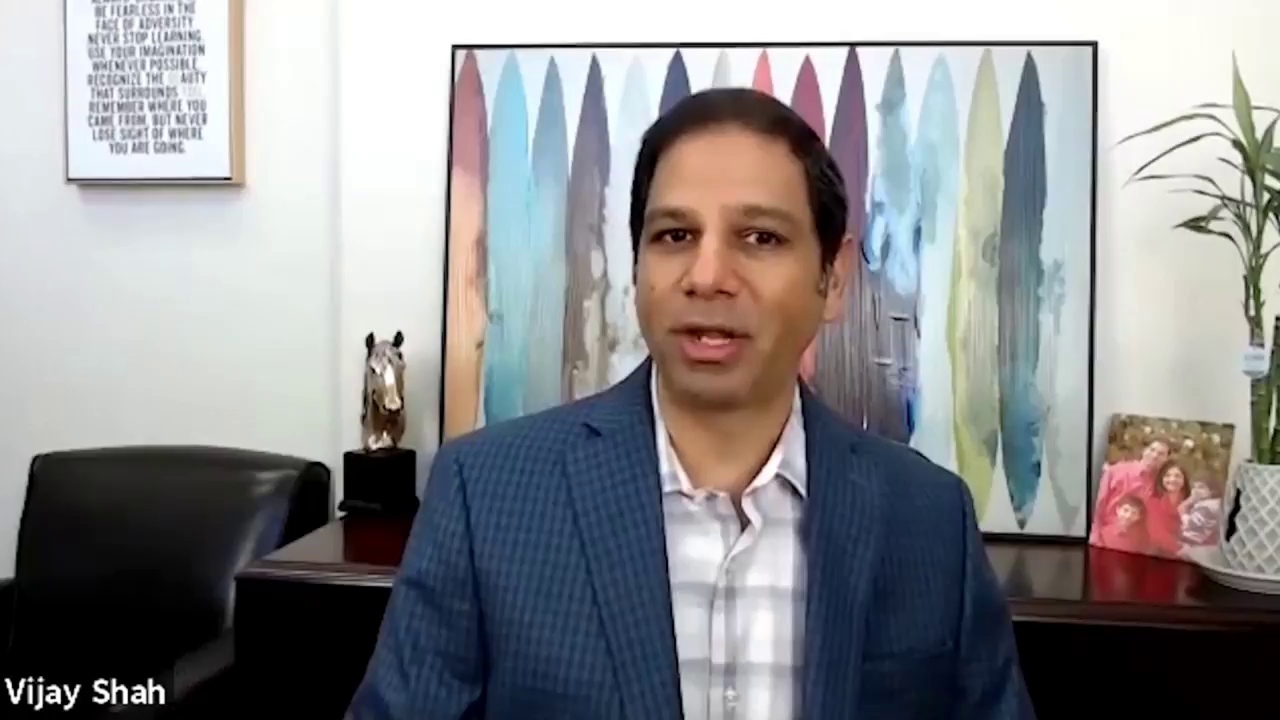
Making somebody else’s launch possible
V2Solutions began in 2003. Its founding purpose was tied to Shah’s experience of startup difficulties: help founders develop products, get them into the market and continue working alongside them. The customer relationship was meant to survive the first assignment. In a business where a project can be treated as a transaction, that is a meaningful choice of emphasis.
The company’s work broadened into digital engineering, data, artificial intelligence and Salesforce services. Its current offerings include application development, cloud platforms, quality engineering and experience design. Those are separate disciplines on an organizational chart. For a customer trying to launch or improve a product, they have to behave as parts of one job.
The company’s published values put open communication beside accountability and learning. The pairing makes sense for the work it sells. Customers need to know what is happening; engineers need room to learn what the problem actually requires. Neither side benefits when a pleasant update conceals an unresolved decision. The usefulness of a technology partner is tested in those exchanges, long before a finished product provides a more visible verdict.
By 2022, V2Solutions was describing growth from 500 to more than 700 professionals over two years. Its company profile later described a team of more than 900 and delivery centers in Mumbai, Bangalore, Vadodara and Udaipur. These are dated company descriptions, rather than a running headcount. They do show how far the organization had travelled from the scale implied by an individual founder’s first few customer conversations.
Even its vocabulary contains a small clue to its preferred culture: employees are called “Vibrants.” The word is cheerful enough to make a spreadsheet blush. The harder work is giving that language substance through communication, responsibility and the way people are treated while a deadline approaches.
The people outside the meeting
At a 2021 discussion about hybrid work, Shah described a Family Satisfaction survey. Family members were invited to provide feedback about employees’ experience. A company normally asks the person on its payroll how work is going. This approach gave people outside the organization a place in the conversation.
It is an unusually domestic detail in a technology executive’s career. The calendar on a laptop also organizes life around that laptop. The people sharing a household see aspects of the working day that a manager may miss. Asking them introduces another viewpoint into a discussion usually conducted entirely inside the company.
Shah also observed that changes in working arrangements had brought different people forward. “Passive individuals have become remarkable leaders,” he said. The observation is revealing because it gives credit to a change in conditions. A person’s contribution can look different when the room, and the rules for speaking in it, change.
“Passive individuals have become remarkable leaders.”
Vijay Shah · Zinnov Confluence, 2021
His public recommendations for former colleagues offer another view of what he notices. In writing about Rahul Nimbargi, he connects engineering work to customer needs and business outcomes. In a recommendation for Darshan Soni, he values curiosity, dependable effort and questions about why an assignment matters. These are ordinary virtues, which is precisely why they are useful. A services business depends on people practicing them when the founder is elsewhere.
Another border, another operating problem
Shah’s work also extends to Spherex, where he is co-founder and chief operating officer alongside CEO and co-founder Teresa Phillips. The business addresses how film and television content travels between markets. It combines human expertise with AI and machine learning to help entertainment companies assess and adapt content for different audiences.
A digital file travels easily. Its meaning encounters more resistance. Cultural expectations and market requirements do not become identical because a distribution system can reach them all. Spherex works inside that difference. Shah’s operating responsibility includes building the engineering and technical teams behind the work.
Placed next to IndiaPlaza and V2Solutions, this chapter has a recognizable connection. The products differ, and so do the customers. But each business deals with the work required to reach beyond an immediate location: shoppers across geography, teams across delivery centers, stories across cultures.
A five-year agreement with a longer preface
In August 2025, V2Force, the Salesforce practice within V2Solutions, formalized a five-year partnership with Entelect. The announcement described more than 150 certified Salesforce professionals at V2Force and a partner with an established engineering organization. Together, the businesses intended to provide Salesforce strategy, architecture, implementation, integration and managed services across a wider international footprint.
Shah’s statement emphasized the teams’ previous collaboration. “We’re thrilled to formalise this partnership with Entelect,” he said. Entelect CEO Shashi Hansjee supplied a more personal detail: “I’ve known Vijay personally for over five years.” The agreement followed a relationship and work already done together. The press announcement was arriving partway through the story.
V2Force × Entelect
For a founder whose business depends on collaboration, that sequence is worth attention. Teams can learn a great deal about each other before a formal partnership. They discover whether communication holds up and whether their ways of delivering work fit. A longer commitment becomes easier to understand when there is an existing working relationship behind it.
The partnership also makes the next aspiration concrete: serve a broader customer base by combining complementary capabilities. It extends the business through another organization’s presence and experience. Expansion, in this case, has the shape of people learning to work together before promising to do more of it.
Shah’s career has accumulated several titles, but its movement is easier to follow through the work. Build a marketplace. Learn the demands of products and delivery. Establish a company that helps other businesses execute. Take on the operating questions behind content that crosses cultures. Keep finding ways to make a working relationship useful enough to continue.
There is something pleasingly practical about that ambition. The early founder needed help getting a business into the world. The later founder made helping part of his own business. More than two decades after V2Solutions began, the question still has a customer at its center: what needs to work next?