In March 2004, a Japanese mobile phone had an embarrassing habit. Ask it to save certain images or files and it could restart. NTT DoCoMo had sold more than 160,000 of the affected NEC FOMA N900i handsets. A defect on that scale usually threatens a long queue of annoyed customers. This time, owners could download a software patch. The repair travelled to the phone.
Luosheng Peng was chief executive and co-founder of DoOnGo Technologies, the company behind the repair technology. His assessment was brief: “It was very successful.” There is a pleasing lack of ceremony in that sentence. A troublesome object had become useful again without its owner making a return trip. The machinery of the fix could remain out of sight.
A decade later, Peng was talking about another kind of update. At Gagein, which he co-founded and led as president and CEO, the changing object was a business. Its news might tell a salesperson that a conversation was suddenly worth having. Across the two companies, a practical question keeps recurring: what has changed, and how can someone use that knowledge?
A repair without the return trip
DoOnGo was already working with Japanese handset manufacturers before the 2004 repair. In December 2002, Matsushita licensed its provisioning technology for Panasonic FOMA phones. Peng, then described as president and chief technology officer, was building a business in which software could be maintained after the hardware had left the factory. The phone’s journey through a shop did not have to determine the software’s entire future.
The engineering behind such updates asks an economical question. If most of a file remains the same, why send it all again? Peng and Jinsheng Gu are named inventors on a patent for byte-level file differencing and updating algorithms. Granted in April 2012, with an original assignee of InnoPath Software, it describes comparing old and new files, finding common portions and encoding the differences.
The date of a patent grant is different from the date a commercial product begins working. Still, the document gives the earlier business story some technical substance. Peng’s connection to mobile software extended into the details of how a changed file could reach a device. A grand promise about wireless convenience eventually has to survive the less glamorous business of moving bytes.
Why send what hasn’t changed?
Conceptual illustration of file differencing. The letters are illustrative, not patent data.
Before the phone, the problem of keeping up
Peng’s earlier career included Mitsubishi Space Software and Fonte System, where his work involved mechanical computer-aided design and manufacturing software. At MERL Cambridge Systems, he was principal technical staff, working on mobile data replication and synchronization. The underlying problem was easy to recognize: several devices could hold information that ought to agree, while their connections came and went.
A 1999 research project description under his name explored mobile computing that could support working across unreliable or interrupted connections. A 2000 project summary listed Peng and David Wong as contacts and described a completed alpha version of synchronization middleware. The diagram placed a central server above a network of proxies, with portable devices below. Information had to make its way through the arrangement and remain consistent.
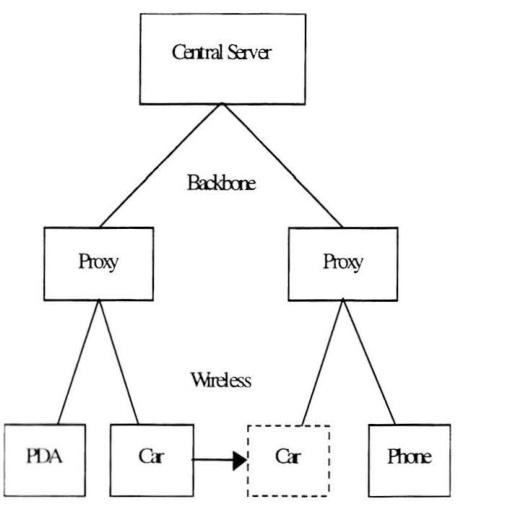
These are engineering concerns with human consequences. A travelling employee wants the right version of a document. A phone owner wants the device to work. Neither needs to admire the synchronization protocol over breakfast. The visible benefit is often a small absence: no repeated download, no manual reconciliation, no unnecessary journey. This is one useful way to read the career Peng went on to build.
An experienced founder in the comments
By January 2010, Peng was running Gagein. He appeared beneath a Venture Hacks interview about bringing a product to market, replying to fellow entrepreneur Jae Chung. Peng congratulated him, asked about his business and suggested meeting if he was in Silicon Valley. They could exchange practices. Peng also identified himself as a former InnoPath founder and CEO.
The invitation is a modest but revealing episode. Here was an experienced founder using a comments section to look for another working conversation. It gives the chronology a person-sized moment: one entrepreneur asking another what he was doing and whether they might compare notes. No conference badge was required. The meeting invitation fitted neatly beneath somebody else’s interview.
Gagein’s co-founders included Jeff Xi and Ryan Wu. In June 2010, the company announced funding to support beta trials, team expansion and marketing. Shao-Qing Sun, CEO of C&C Reservoirs, joined its board. Peng described the purpose in terms of helping people engage with businesses proactively. At this stage, the ambition covered a broad range of business information and relationships.
The news acquired a deadline
In a 2011 demonstration, Peng showed a service for following companies and sharing information. Users could adjust the importance of the people they followed and choose among press releases, blogs, white papers, presentations, earnings and events. They could save searches and keep items to read later. The controls suggest a familiar struggle: the web was producing more material than a working person could sensibly consume.
Peng’s question was what happened before someone had built a network of useful connections. Gagein offered information about companies and people from the outset. It also let employees see what colleagues were following. A business network could begin with something worth discussing, rather than waiting for every useful acquaintance to arrive first.
By March 2014, the proposition had become more specific. Gagein for Salesforce delivered business news and background into Salesforce accounts. The application could create accounts, leads and contacts, and put news into the user’s Chatter feed. Its SmartTRACK technology searched for events that could make a prospect relevant at a particular moment. Peng’s language had acquired the urgency of the sales floor.
“Sales success is all about timing.”
Luosheng Peng · Salesforce launch, March 2014
Consider a hypothetical company opening an office. The announcement could matter to a connectivity provider or an equipment supplier. Its usefulness depends on the offer, the contact and the state of the purchase. Gagein’s job was to bring the event and its context close enough to the account that a seller could judge the next step. An alert, on its own, still leaves somebody to do the thinking.
- 01Notice the eventFind a change in a company’s circumstances.
- 02Add contextConnect the news with the account and its people.
- 03Choose the momentGive the seller a reason to consider a conversation.
Editorial explanation of the historical workflow.
The October 2014 release added predictive scoring, a revised interface and management reporting. It took account of the declining real-time value of information. That detail matters: a useful event has a shelf life. A prospect list can sit quietly in a database while the reason for contacting someone grows stale. Peng’s product was trying to make that passage of time part of the software’s judgment.
An award, then a harder question
During 2014, Gagein announced a $6.4 million funding round from private investors. The company said the money would support its staff and expansion. In May, Gagein for Salesforce won the SIIA Software CODiE Award for Best Customer Relationship Management Solution. The judging process combined outside product evaluations with a vote by association members.
Gagein for Salesforce
CODiE Award · Best Customer Relationship Management Solution
An award is a particular kind of verdict. It recognizes a product at a moment in its development. Sustaining a company asks further questions about customers, revenue and continued demand. Gagein later closed. Its public history includes both the recognition and that ending. Treating the trophy as the final sentence would leave the business story unfinished.
For Peng, the documented achievement remains concrete. He led a company that moved from a broad information-sharing proposition toward a sales application with a defined place in a working day. The individual releases show that movement without requiring a tidy account of every internal decision. They also show how much of building software involves narrowing the question until a customer can recognize it.
Knowing when to wait
Peng’s public professional description has since moved to fintech and investments. His X biography identifies him as an engineer, startup founder, entrepreneur and investor. In July 2025, his public posts discussed technology-company earnings and Figma’s stock-market debut. The vocabulary changed again, but companies and the meaning of new information remained close to hand.
A January 2021 investing thread concentrated on due diligence, patience and psychology. Peng wrote about the difficulty of separating facts from opinions and tolerating the time a position may take to develop. These are his stated concerns, rather than evidence of any particular investing return. They add an interesting qualification to the earlier sales pitch: sometimes recognizing the moment means resisting the urge to act immediately.
There is a tension here that makes the chronology worth following. The engineer wants the necessary update delivered efficiently. The seller wants to reach a prospect while the news matters. The investor has to consider whether a new piece of information deserves a response at all. Speed serves a different purpose in each setting.
Peng’s career can be read through those differences. A patch repairs a phone. A company announcement opens a possible conversation. An earnings report invites scrutiny. Each begins with a change, but the change needs a reader, a context and a decision. Even a very well-timed notification has to wait for someone to decide what it means.