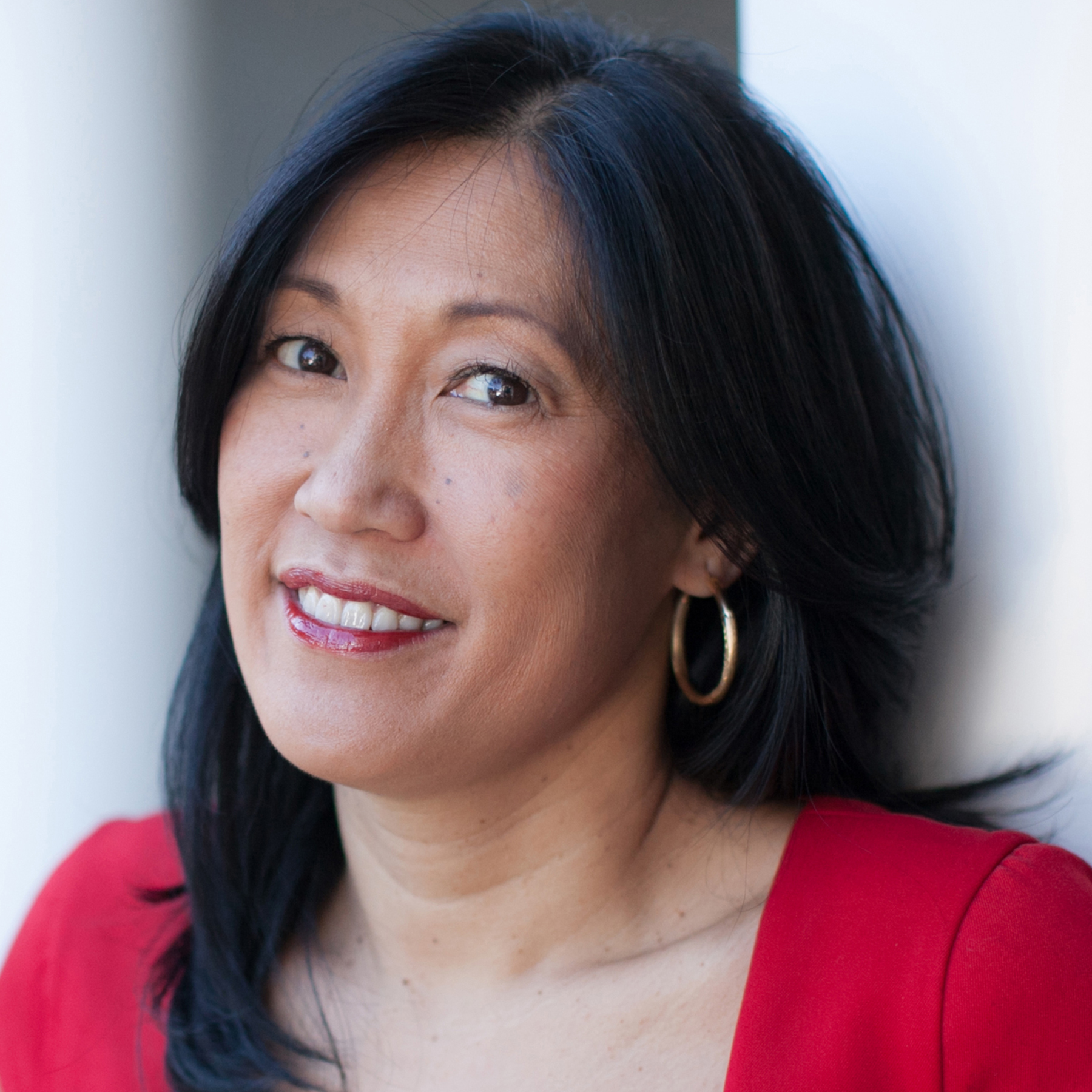
She fled Jakarta at age three. She backed Facebook before it was open to the public. She's now the first female billionaire in American venture capital history.
Most billionaires have a founding myth. Theresia Gouw's is unusual: her father washed dishes while relearning how to be a dentist. Her mother waitressed. They had fled Indonesia when she was three - one of thousands of ethnic Chinese families who escaped Suharto's authoritarian crackdowns and landed in upstate New York with credentials that wouldn't transfer and a country that didn't owe them anything.
What happened next is a matter of record. Brown University, engineering, magna cum laude. A GM internship where she noticed the interesting jobs didn't belong to engineers. Bain. Stanford MBA. Silicon Graphics. A chance encounter with a venture capitalist who invited her to "the dark side." Fifteen years at Accel Partners, where she became the firm's first female investing partner in 2003 - and one of the few people in the room when Jim Breyer decided to write a $12.7 million check for a college social network called Facebook.
The Facebook bet is the famous part. What gets less attention: she repeated the trick with Trulia, Imperva, HotelTonight, Kosmix, and Exabeam. Then she left Accel, spent time with her kids, returned to ice-skating, and started her own firm. Then another one. By 2025, Forbes was calling her the first female billionaire venture capitalist in American history - not as a footnote, but as the headline.
"The most exciting opportunities come from the places others overlook."
- Theresia GouwAcrew Capital, the firm she co-founded in 2019 with four partners, now manages roughly $1.7 billion. Its workforce is 85% women or BIPOC. Fifty percent are immigrants or first-generation workers. The Acrew Diversify Capital Fund was built specifically to give diverse individual LPs access to the cap tables that have historically been gated communities. None of this is accidental. Gouw has said plainly that only 1.1% of the $71 trillion in U.S. private assets is managed by women or people of color - and she treats that number as a problem to solve, not a headline to deploy.
Her handle on X is @tgr. Three letters. No subtitle needed.
Three firms. Three distinct chapters. One consistent eye for what others missed.
"I have to add more value beyond just the dollars, and it has to be with a group that wants that. I have to believe that I can be helpful and not just write checks."
"You don't have to look like everyone else at the table to lead the room."
"Venture isn't just about capital - it's about belief."
"There are still so many things that are harder for women to access when it comes to finance and the financial markets."
"This is more than an investment - it's a commitment to elevating women in sports and creating a team that reflects the energy and innovation of Northern California."
"I have four co-founders in Acrew Capital - five of us - and we all have equal say in investment decisions. That's my management style."
Her family fled Indonesia when she was three - part of the wave of ethnic Chinese families escaping Suharto's authoritarian violence. Her father, a licensed dentist in Jakarta, arrived in the U.S. and washed dishes. Her mother waited tables. Both rebuilt their careers from scratch near Buffalo, New York. She grew up watching her father become a dentist again.
At a GM summer internship as a Brown engineering student, she noticed that the people with the interesting jobs weren't the line engineers. They were product managers who could move between technical and business worlds. That observation sent her to Stanford for an MBA and set the template for a 30-year career.
In 2005, Facebook was a college-network platform - not open to the general public. Gouw and Jim Breyer decided to write a $12.7 million check at a $98 million valuation. Seven years later, Facebook went public. Accel became its largest external shareholder. Gouw held approximately 8 million shares.
After closing a major cybersecurity deal, she discovered male competitors were spreading rumors that she had flirted her way to it. The reality: she had spent years developing deep cybersecurity expertise, was the most technically informed person in the room, and was married and pregnant at the time. She used the incident to argue publicly for structural change, not personal grievance.
After her 2013 divorce, she asked Accel for a sabbatical to care for her kids. The firm offered "family leave" instead. She found the distinction telling. She took it, returned to ice-skating (a childhood hobby she'd abandoned during her career), volunteered at school, cooked for her children, and used the reflection period to decide she was done being the only woman at a table she didn't own.
Her family grew up near Buffalo as lifelong Bills fans - one of those formative loyalties that get filed under "before everything changed." When she joined the consortium to take a minority stake in the Bills in 2024, it wasn't just a sports investment. It was a Chinese-Indonesian immigrant's daughter buying into the team her parents had cheered for when they were starting over.
She invests in overlooked opportunities. Women's sports. Minority ownership positions in major franchises. The same pattern, different arena.
NFL / Minority Owner / 2024
NBA / Minority Owner
NWSL / Minority Owner
Major League Volleyball / Lead Investor & Executive Chair / Debut 2027
Pro Beach Volleyball Platform / Owner
Gouw doesn't moralize about diversity. She cites McKinsey research. Gender-diverse management teams outperform on return on equity by 25%. Ethnically diverse teams add another 10 percentage points. These are the numbers she brings to LP conversations.
"$71 trillion in private assets are managed in the U.S. Only 1.1% is managed by women or people of color." - Theresia Gouw
The Acrew Diversify Capital Fund was built around a specific insight: wealth compounds fastest for those who already have it, because access to the best cap tables is gated. The DCF opens those gates. Diverse individual LPs get into the same rounds as institutional money. The returns flow to different people than they would have otherwise.
She also co-founded All Raise - a nonprofit that works to increase the proportion of female and minority founders and funders in tech. She donated $1 million personally to Fisk University, a historically Black college, to give students access to venture fund investments.
None of this is charity. It's the argument that the market has a structural error, and the people who identify and correct structural errors in markets make money while doing so.
In the late 1960s and early 1970s, Indonesia's ethnic Chinese minority faced systematic persecution under President Suharto. Businesses were seized. Movement was restricted. Violence was real. Theresia Gouw's parents - a dentist and a nurse in Jakarta - made the decision to leave.
They landed near Buffalo, New York. Her father, whose dental qualifications didn't transfer, took work as a dishwasher while navigating the process of relicensing in the United States. Her mother waited tables. Eventually her father reestablished his practice. Both children grew up in Western New York as American kids who also happened to know exactly what it cost to start over.
Gouw has said this origin story connects directly to her advocacy for immigrant founders and her belief that the people most motivated to build tend to come from the places least expected.
ScB in Engineering • Class of 1990 • Magna cum laude
Now: Fellow and Treasurer, Brown Corporation Board (since 2007)
MBA • Class of 1996
Now: Advisory Council member; Co-teaches VC course; DAPER investment fund
Engineering Internships • 1988-1990
The internships where she noticed product managers had the interesting jobs
Management Consultant • Boston • Pre-MBA
Where she developed the analytical frameworks she still uses in due diligence
Her X/Twitter handle is @tgr - three letters. She's been on the platform long enough to have a handle that short. That's its own kind of status.
During her post-divorce sabbatical in 2013, she returned to ice-skating - a childhood hobby she'd abandoned when her career took over. The rink was where she decided what came next.
She co-teaches a venture capital course at Stanford GSB - the same school where she discovered VC in the late 1990s. Her students are now founding companies she might invest in.
The Acrew "Long Term View" fund name isn't just branding. She held positions at Accel for 15 years. The name describes how she actually operates.
Her 2024 stake in the Buffalo Bills wasn't just a portfolio move. She grew up near Buffalo as a Bills fan. Her family cheered for them while her father was learning to be a dentist again.
She describes herself in her Twitter bio as "VC with @AcrewCapital, former engineer & entrepreneur, fashion & sports fan." The fashion part is not a throwaway - she's been photographed at runway shows.
She entered VC without knowing what it was. A venture capitalist at Stanford invited her to "the dark side." She graduated from Brown in 1990 with no idea the industry existed.
The Carnegie Corporation named her to its 2019 Great Immigrants Award - an annual July 4th tribute to distinguished immigrants. Her family's story made the national honors list.
Forbes declared her America's first female billionaire venture capitalist, estimating her net worth at approximately $1.2 billion - a milestone with no precedent in the industry's history.
Named Lead Investor and Executive Chair of the new Major League Volleyball NorCal franchise, debuting in 2027. Territory covers San Jose, San Francisco, and Sacramento. Described as "female-led, female-first."
Acrew Capital raised an additional $700 million, bringing total assets under management to approximately $1.5-1.7 billion across its Long Term View and Diversify Capital Fund vehicles.
Scheduled to speak at Sportico's Invest West event at the Presidio Golf Course & Clubhouse, San Francisco - discussing the convergence of sports investment and venture capital.