The blind is a confession. Someone paid for a window, someone else admired the view, and then the afternoon sun arrived. Down came a sheet of fabric. The building had acquired a transparent wall and immediately found a reason to cover it. For View, that ordinary little defeat was a business opportunity.
- View sells glass that automatically changes tint, plus the controls that tell it when.
- Its buyers include building owners, airports and healthcare organizations.
- Manufacturing costs and a costly warranty problem complicated the invention.
- A 2024 restructuring took View private; its former cloud business became Neeve.
The company’s premise is wonderfully legible: keep the view, lose the squint. Its history is less tidy. A window can be a clever piece of materials science and an awkward piece of business at the same time. The interesting question is how much of the surrounding building a company must understand before it can sell a better pane of glass.
The blind is a confession
View began in 2007 with Paul Nguyen and Mike Scobey. Before it became View, it was eChromics, then Soladigm. Rao Mulpuri, who joined as CEO in December 2008, brought a background in materials and manufacturing engineering. This was a company whose innovation needed to leave the laboratory as a construction product.
In his ten-year retrospective, Mulpuri described the journey from a postage-stamp-size electrochromic device in 2008 to installations across millions of square feet of buildings. There is a useful distinction hidden in that comparison. Making a small surface change color is a demonstration. Making large, specified windows arrive at construction sites and work together is a business.
View’s expertise sits across those jobs: thin coatings, insulating glass, electronics, predictive controls and manufacturing. Its mission, printed on its company page, is “Transforming buildings to improve human health and address climate change.” The ambition puts two benefits into the same object: people should feel better beside the glass, and buildings should spend less energy managing the sun.
A window with a working day
Electrochromic glass responds to a small electrical charge that changes its tint. View combines that material with sensors, controllers and software. Its Intelligence system considers the sun’s position, heat, cloud cover and nearby reflections. Windows can be organized into zones, rather than forcing an entire building to behave as one enormous pair of sunglasses.
The predictive part matters. A person pulling a blind reacts to discomfort. A system that knows the sun’s path can anticipate it. Occupants can also use an app to request an override. The everyday benefit is deliberately untheatrical: a room that remains usable while the weather changes outside.
Schematic of the control process. Actual programming depends on the building.
That makes View a supplier of a system, with a physical product at its center. The glass needs electrical connections; the controls need programming; the room needs commissioning. A customer buys the resulting environment, but the contractors still need drawings and a bill of materials.
“We wanted to make it so easy to install, that it was just like Lego blocks”Rao Mulpuri, on View’s complete-product approach
View’s account of that approach explains its pre-terminated, connector-based wiring and its decision to work with existing low-voltage electricians. This is a practical kind of innovation. A product that asks a construction team to invent another trade has given itself an additional obstacle before the first pane arrives.
Selling the seat beside the glass
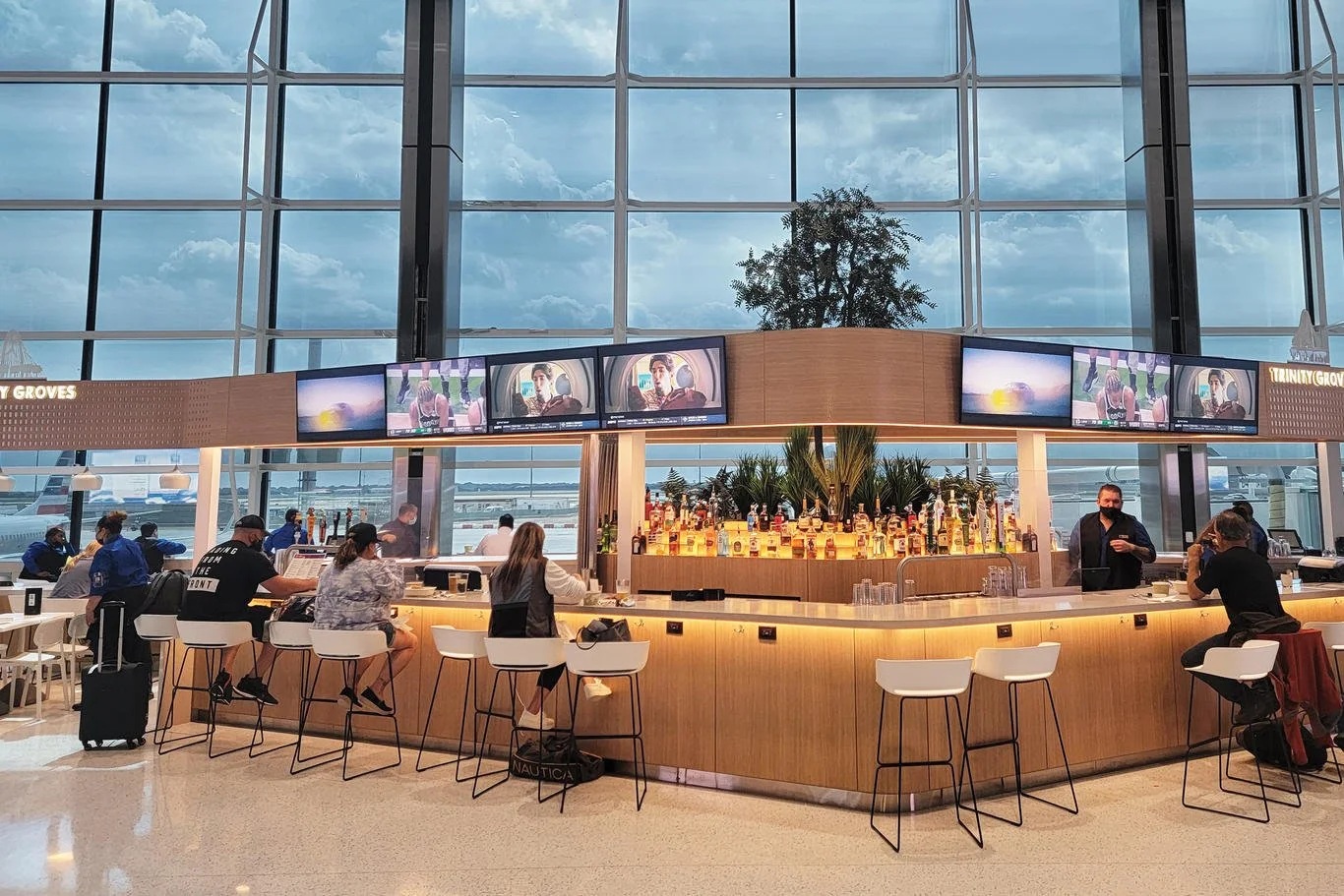
At Dallas Fort Worth International Airport, the appeal is easy to picture. A terminal has people waiting, working and looking outside. Its glass is part of the passenger experience. DFW’s project testimonial describes its relationship with View in terms of passenger comfort, efficient energy use and a smaller carbon footprint.
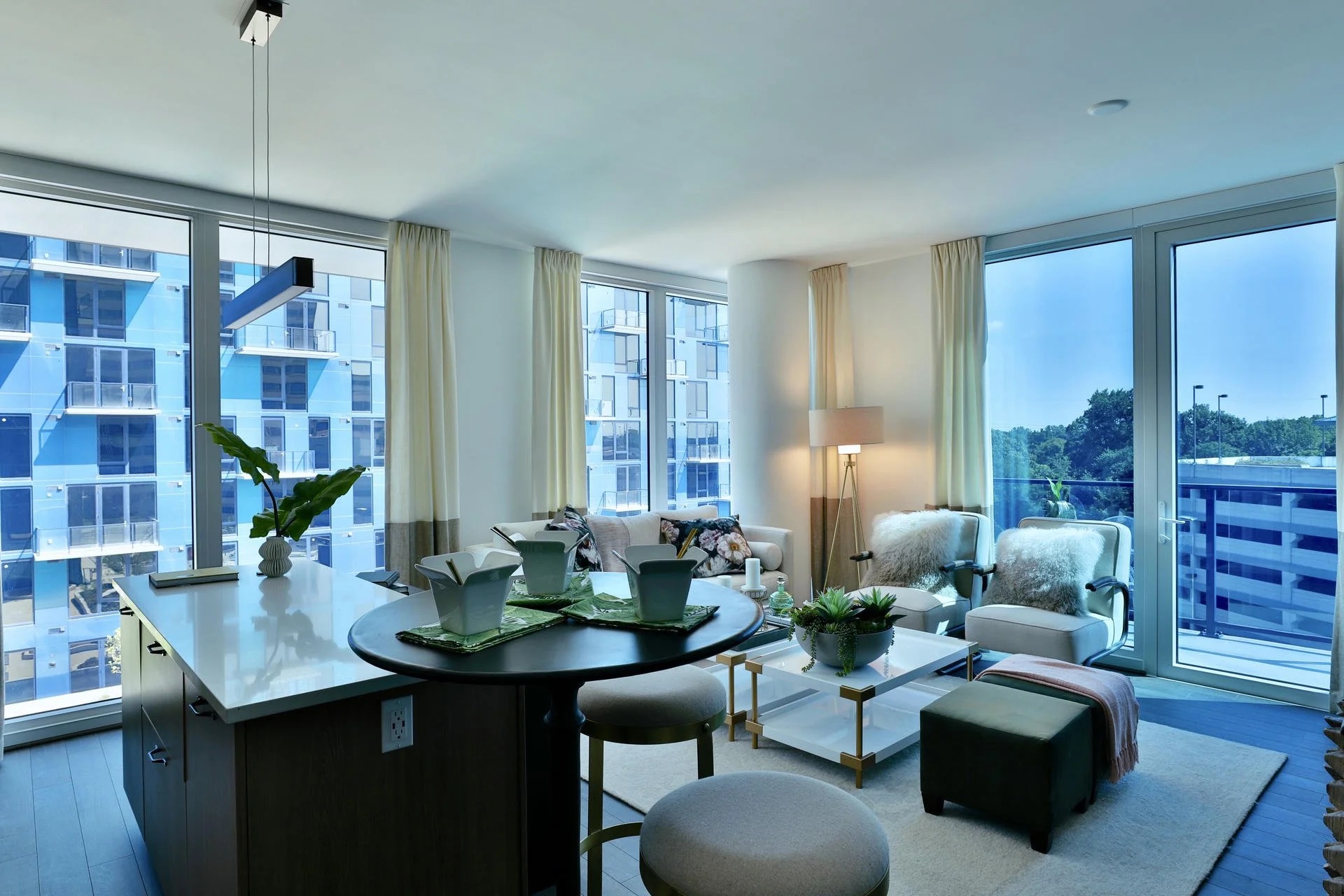
The same product enters different purchasing conversations elsewhere. A hospital wants comfortable patient rooms and workspaces. A laboratory needs glare control around equipment. An apartment developer wants an amenity residents encounter every day. View’s portfolio includes Exo Apartments and Civica Cherry Creek, where the published customer account connects the window choice to sustainability and tenant appeal.
The buyer and the beneficiary are often different people. A developer pays for the façade; a tenant later sits beside it. View has to translate comfort into the owner’s language of usable space, operating expenses and leasing. That is why the company’s sales pitch extends beyond a glass specification.
Its energy page advertises savings of up to 18% annually and peak cooling-load reductions of up to 23%. These are company-stated upper bounds. They are a reason to model a particular building, not a figure to paste into every budget. View offers project-specific energy analysis, which is where the argument should become concrete.
The wellness pitch also needs proportion. View promotes studies of sleep, eyestrain and cognitive performance under different daylight conditions. A study result is not a promise that every new window will produce the same improvement. The sensible purchasing question concerns the room people actually occupy: its daylight, glare, seating and operating hours.
The ladder belongs in the budget
One of View’s revealing difficulties began with a supplier material used in certain insulating glass units. The company identified a quality issue in 2019 and stopped using the affected material. Its filings describe replacement obligations continuing over the warranty period. A finished building does not make those obligations disappear.
Then came an accounting problem. In July 2023, the SEC announced settled charges against View for failing to disclose $28 million in projected warranty-related liabilities. View’s estimates included manufacturing replacement windows but omitted additional shipping and installation expenses it had decided to cover.
That omission is almost an instruction manual for hardware founders. The replacement part is only part of the replacement. Someone must take it to the building, reach the opening and install it. The SEC imposed no civil penalty on the company because of its self-reporting, remediation and cooperation. View settled without admitting or denying the findings.
For the buyer, the implication is just as practical. Ask who carries each repair expense, how service will be delivered and what support remains available over the building’s life. A façade cannot be judged only by the moment it looks splendid in a photograph.
The numbers that tint could not fix
View’s 2022 accounts put the challenge plainly. Revenue reached $101.3 million; cost of revenue was $203.2 million. Before research, selling expenses and other costs, delivering the business’s output already cost about twice its sales. An expanding market could not, by itself, settle that arithmetic.
Historical reported figures. Cost of revenue is not total operating expense.
This was a heavily financed undertaking. SoftBank’s Vision Fund announced a $1.1 billion investment in 2018. View later entered public markets through a SPAC combination in 2021. Large financing rounds bought room to build; they did not establish profitable production.
Management’s April 2024 account gives the response: adapt the product to multifamily housing, reduce fixed cash burn and leave the public markets. It blamed both the office-market slowdown and tighter capital conditions. The same account put factory investment above $400 million. That is the scale behind the apparently simple act of letting a window darken.
In April 2024, View announced a prepackaged Chapter 11 restructuring supported by Cantor Fitzgerald and RXR. The plan exchanged creditor claims for ownership and cancelled existing equity. Its effective date was May 22. The business continued as a private company, a consequential distinction for anyone confusing an operating product with the old stock.
The product family also changed. In September 2024, the former View Smart Building Cloud operation introduced Neeve as a separate company. Its secure connectivity and edge-cloud work had grown beyond the original smart-window application. Describing everything under the old View umbrella now blurs two businesses. View’s current company page lists Joshua Spellman and Andrew Min as co-CEOs.
What to borrow from View
The useful idea to copy is View’s attention to the whole installation. Sell the comfort, then solve the wiring. Make the product fit the trades that already exist. Count commissioning and future repairs as part of the design problem. Those principles travel beyond windows.
View also has serious competition. Saint-Gobain’s SageGlass offers electrochromic windows, including Harmony glass with gradient tinting. Automatic tint alone is therefore insufficient as a distinction. A buyer should compare visual quality, zone control, integration, project references and long-term support. Conventional glass with shading belongs in that comparison, too.
The economics will be less persuasive where glare and solar heat are minor problems, or where a retrofit makes wiring and glass replacement unusually expensive. These are project judgments, not verdicts on the technology. Put both designs into the same model, including the shades, controls, installation and maintenance each requires.
View’s contribution is to make the window something architects can program rather than merely specify. Its history supplies the accompanying discipline: the experience beside the glass and the economics behind it deserve equal attention. The sun arrives every afternoon. Sooner or later, the repair bill arrives as well.