At the Mercedes-AMG PETRONAS Formula One Team’s machine shop, a radiator component took three hours and fifteen minutes to make. It was small, intricate and required about thirty tools. The engineers already had a program that worked. Vericut offered them a more interesting question: how much of that time did the metal actually need?
- Vericut rehearses CNC programs before they reach expensive machinery.
- Its Force module adjusts feed rates to suit changing cutting conditions.
- A Mercedes trial saved 48 minutes on one component; results depend on the job.
The team tried Force, Vericut’s physics-based optimization module. Four roughing tools were optimized. The cycle fell to two hours and twenty-seven minutes. The reported reduction was approximately 25%. In a sport preoccupied with fractions of a second, the workshop had found forty-eight whole minutes.
The rehearsal is a product
Vericut’s business begins with an awkward manufacturing fact: a sensible design and a plausible toolpath do not guarantee a sensible machine movement. Computer-aided manufacturing software prepares the cutting strategy. A post-processor translates that strategy into instructions for a particular machine. The machine then obeys those instructions with considerable enthusiasm.
Vericut checks that final NC program against a virtual machine. It simulates material removal and machine motion, looking for collisions, near misses, gouges and other errors. Fixtures, tooling and moving machine components matter alongside the workpiece. A cutter clearing the part is little consolation if another component meets a clamp.
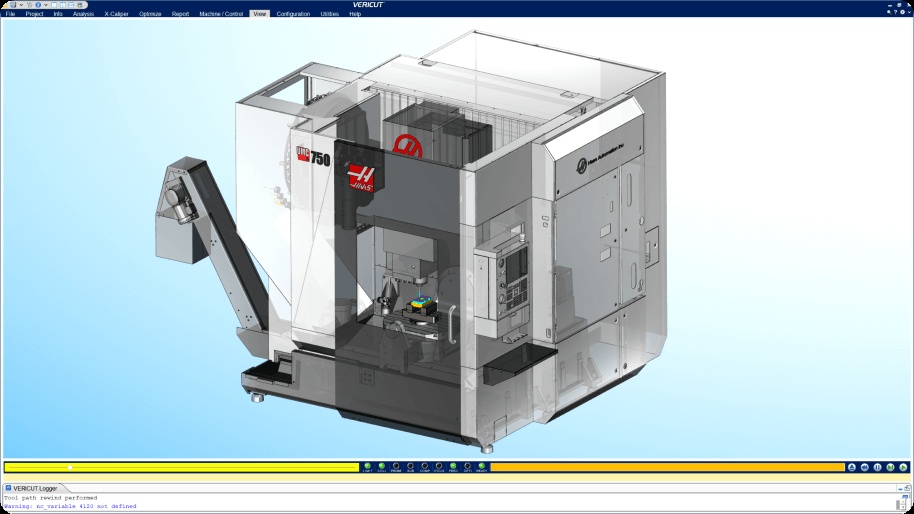
Jon Prun founded CGTech in 1988. The founding problem was practical: testing NC programs consumed machine time that could otherwise produce parts. The company built its expertise around moving that discovery onto a computer. It adopted the Vericut brand in September 2024, borrowing the name of the product customers already recognized.
Where forty-eight minutes were hiding
The distinction between verification and optimization is crucial. Verification asks whether a program contains trouble. Optimization asks whether its cutting conditions waste capacity. Force analyzes the tool’s engagement with material and recalculates feed rates within constraints such as cutting load, spindle power and chip thickness. Some cuts can accelerate; others need restraint.
That gives Vericut a place between programming and production. Its machine, cutting-tool and CAM neutrality is part of the proposition: manufacturers can use it across mixed equipment and programming systems. The expertise lies in making the virtual process sufficiently representative to expose consequences before the physical process begins.
Competition includes NCSIMUL Machine, which also verifies G-code, and verification built into CAM systems. Vericut’s case therefore rests on application coverage, machine and control representation, integration and optimization. An attractive animation alone settles very little. The buyer needs to know which instructions and which machine behaviors the system actually checks.
A small trial beats a large promise
Mercedes received three temporary licenses, one day of training and six weeks to experiment. CGTech returned to validate the work before it reached the machine. That sequence is worth copying: choose a real component, establish its baseline, make limited changes, then verify the result. A demonstration becomes evidence when the shop can repeat it.
“We’ve been intrigued by Force since it launched a few years back.”Robert Brown, machine shop manager, Mercedes-AMG PETRONAS
Another customer, Minnesota’s Ultra Machining Company, supplied a less glamorous investment story. Its first Force test in February 2020 reduced roughly 10% from a medical component’s cycle time, reportedly saving almost $13,000. Management agreed to invest. A modest percentage attached to a real production job had done the persuasive work.
These customer accounts also reveal the constraint. Mercedes’ engineers saw scope for further improvements but noted that the small test part could call for different machine kinematics. Software cannot wish away equipment limits. A shop evaluating savings should count tooling, part quality and implementation effort alongside minutes, then check whether the recovered capacity has somewhere useful to go.
More than a metal-cutting witness
The customer base spans aerospace, automotive, medical manufacturing, energy, machinery and job shops. Those buyers have different reasons to care: an expensive component, a difficult material, a complicated machine configuration or a production schedule with little room for another prove-out. Vericut supplies several ways into the problem.
Force is an optimization module within the Vericut environment. Vericut Optimizer, introduced in 2024, offers standalone physics-based optimization without requiring Vericut Verification. Icam Post handles machine-specific post-processing. AUTO-DIFF compares simulated results with design geometry. Additive and hybrid simulation extend the work beyond conventional material removal.
Composites require their own logic. Vericut Composite Programming prepares automated fiber-placement and tape-laying programs; Vericut Composite Simulation checks their execution. A laminate depends on how material is placed as well as its final outline. The company’s announced CAMX 2026 demonstrations focused on this specialist portfolio.
The economics behind the screen
This is a modular software business with maintenance and technical service. Sandvik’s acquisition presentation reported that maintenance accounted for 51% of sales at the time. Sandvik completed the purchase in December 2020; it reported CGTech’s 2019 revenue at about SEK 470 million. Those historical numbers explain the business better than an undated estimate.
For a buyer, the cost calculation should include the software configuration, upkeep, machine-model preparation and training. Vericut’s support network and Users’ Exchange meetings are part of that service proposition. The company uses those meetings for demonstrations, discussion and customer feedback. The product requires manufacturing knowledge on both sides of the screen.
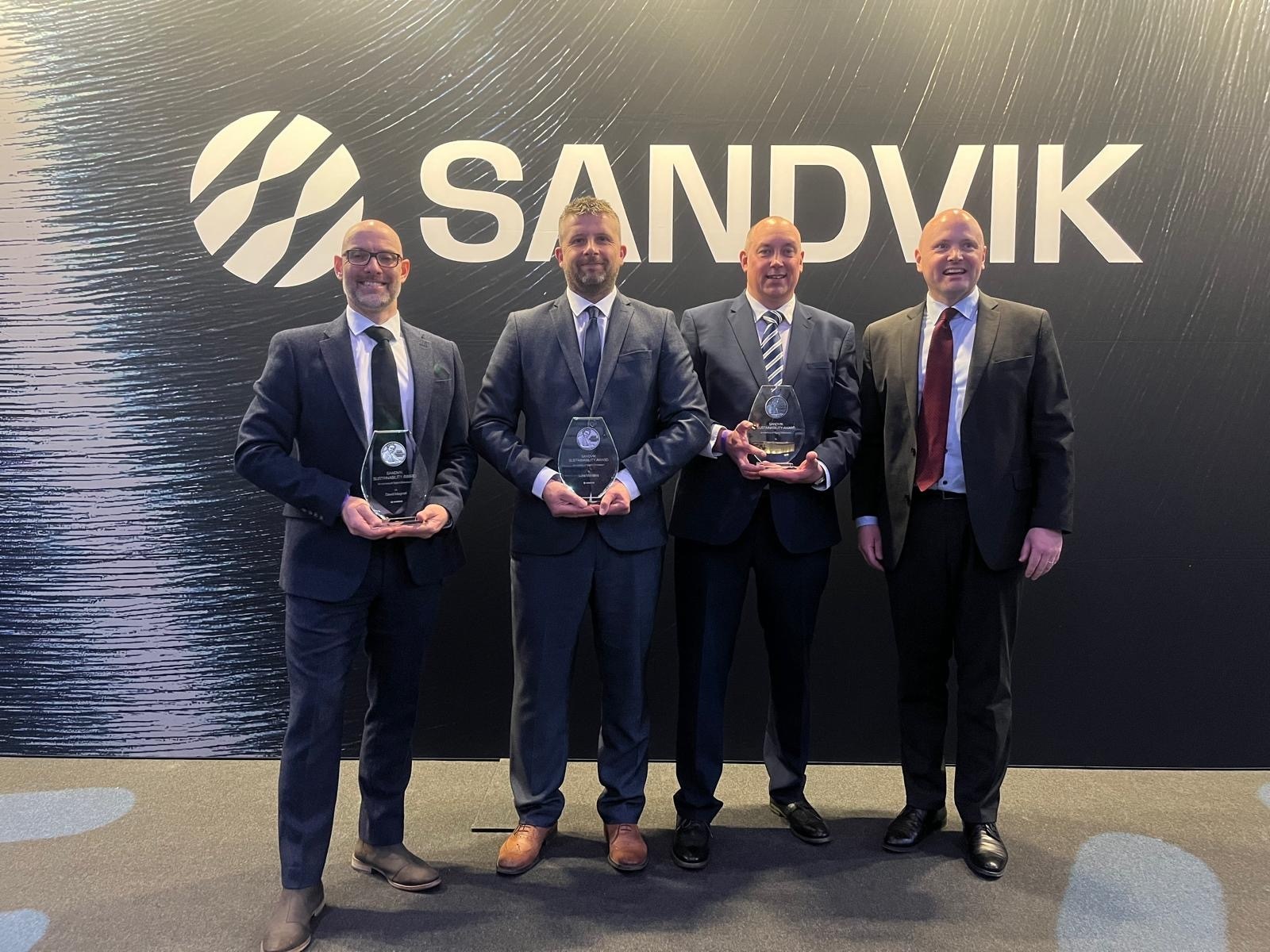
In 2025, Vericut and Seco teams received Sandvik’s sustainability award. The announcement reported an 18% reduction in machine energy consumption in tests. That is a measured test claim, not a factory-wide guarantee. Electricity deserves its own meter, just as cycle time deserves its own clock.
Vericut 9.7, released in June 2026, emphasizes simulation performance and workflows for complex programs. Assistant and Intelligence add AI guidance and product knowledge access. The enduring proposition remains more tangible: let an engineer inspect tomorrow’s machining today, while an awkward discovery still costs a revision rather than a piece of metal.