Cheryl Campos began with a search. She was working in venture capital and looking on LinkedIn for other Latinx investors who shared her background. Finding colleagues should have been the easy part. Instead, the difficulty of finding them became the problem worth solving. In her 2021 account of VCFamilia’s beginnings, isolation was the recurring complaint. People were already in the industry. They needed a way to find one another.
- Free membership for active Latine venture investors.
- Peer connections, investor education, and support for emerging fund managers.
- A nonprofit community inside LaFamilia Foundation, alongside founder and angel networks.
That distinction explains much of what followed. A recruiting campaign might bring someone into venture. A professional community has to help them stay, learn, and become useful to others. VCFamilia publicly launched in January 2021. By June, Campos was introducing more than 150 Latinx venture capitalists. The founding proposition was modest enough to understand immediately: the people you were looking for were looking for you, too.
A room with a second conversation
Venture capital is a business of evaluation, but the information arrives through relationships. A colleague mentions an opening. An investor shares a company. Someone explains how a particular investment committee thinks. VCFamilia puts those exchanges inside a community where cultural background can be part of the conversation without requiring an explanation first. Its expertise lives partly in its members’ working knowledge of funds, founders, and the decisions between them.
Campos later described more than 60,000 Slack messages, most of them direct messages. That parenthesis is revealing. Public events make a network visible; private conversations can make it useful. Her account also described introductions to limited partners, deal sourcing, and new friendships. The mix matters. Professional trust rarely arrives neatly separated from the rest of a person’s life.
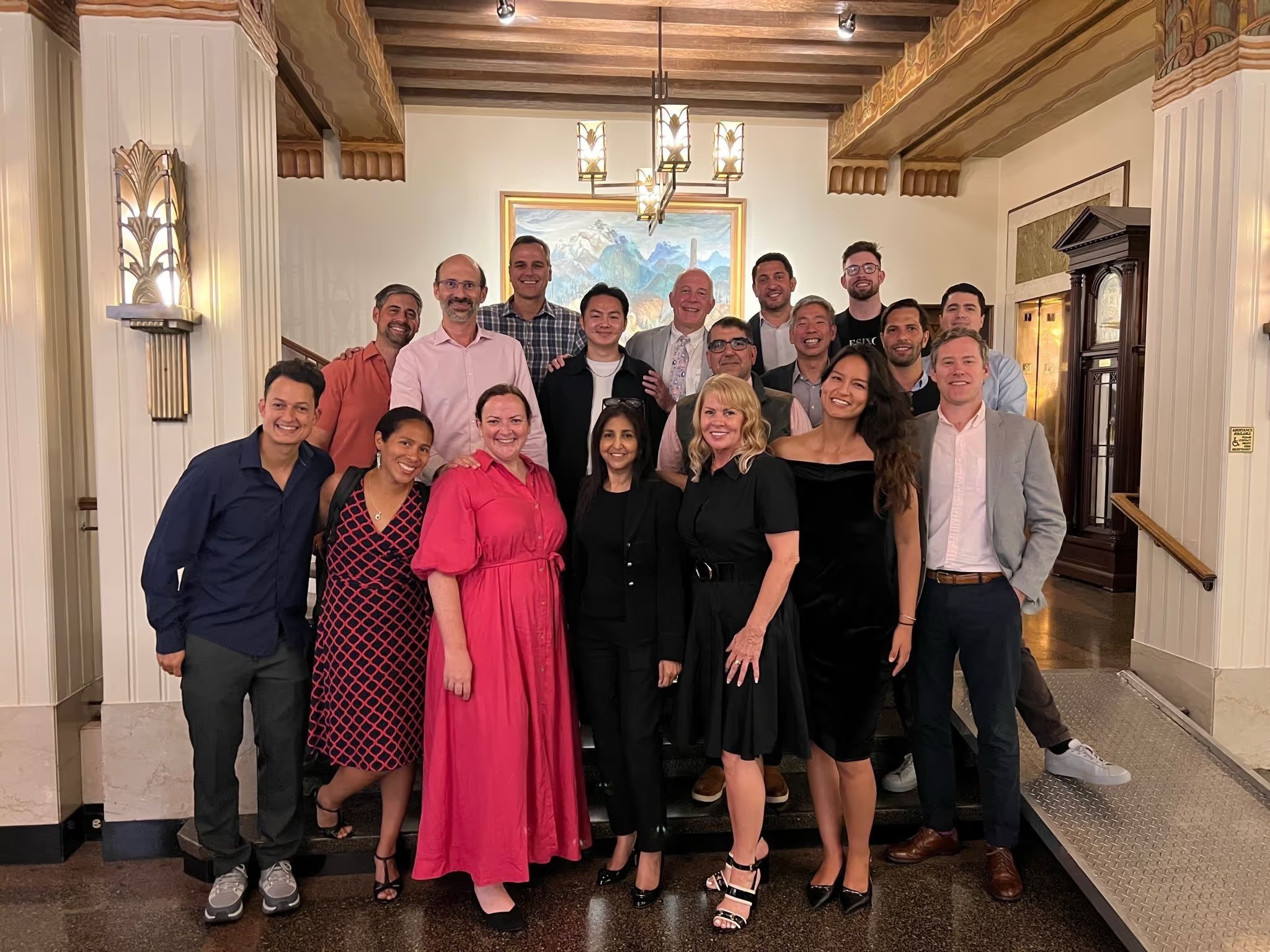
By February 2023, the organization reported 340 global investor members and announced Andrea Zapata as its first full-time head of programming. Its hiring announcement traced the community back to a pandemic Zoom. It also described the next step: FounderFamilia, launched in July 2022 to serve venture-backed Latine entrepreneurs. The investor network had acquired a counterpart on the other side of the pitch.
The bill before the first check
The clearest expression of VCFamilia’s approach may be Alzar. Starting a venture fund requires work before investment fees can support it. Operational expenses arrive while a manager is still trying to persuade backers to commit. For someone without a large personal financial cushion, that gap can constrain the attempt before the portfolio exists.
In February 2024, VCFamilia announced eight inaugural Alzar recipients, each receiving a $25,000 operational grant through a partnership with Sorenson Impact Foundation. Recipients included managers at Savia Ventures, Dux Capital, Sana Capital, Aito Capital, Ravelin Capital, and BFF. Cooley helped with the legal work. The program addressed a specific expense rather than leaving emerging managers with encouragement and another meeting.
Support for the work of launching a fund.
The support extends into training. In August 2025, the foundation described the first phase of its inaugural fellowship, built for early-stage venture investors. The current offering also includes curated dinners connecting limited partners, who supply fund capital, with general partners, who manage it. Together, these programs address different obstacles: knowledge, introductions, and the money needed to operate.
Free to join. Funded to operate.
Core membership is free, with a firm boundary: applicants must already work in venture capital and actively deploy capital. A person seeking their first VC role can follow the newsletter or volunteer, but cannot treat membership as an open enrollment course. Founders have FounderFamilia; angels have AngelFamilia. Those distinctions help keep each group’s conversations relevant.
The economics are less mysterious than venture’s usual language of valuations. The 2024 tax filing for the nonprofit, EIN 86-2199054, reports $614,601 in revenue and $549,200 in expenses. Contributions supplied $613,114 of that revenue. These figures cover the nonprofit operating identity, rather than a standalone budget for every VCFamilia activity. They show that free access still requires funded operations.
“a pain point shared by many Latinx venture capitalists: isolation.”
Cheryl Campos · June 2021
LaFamilia invites event sponsorship, program funding, and in-kind professional services. Its awards reception also sells tickets and includes fundraising. That gives banks, law firms, and other partners a role in underwriting the work. It also makes continued fundraising part of the operating model. Free membership and donated expertise can lower access costs; they still require people willing to pay the bills.
Count the relationships carefully
Scale brings a temptation to compress everything into one impressive number. The foundation’s 2025 impact announcement reported 1,600 all-time members across its three communities and more than $1.1 billion deployed by VCFamilia members that year. Member investment activity is a different measure from the foundation’s own fundraising. It also does not establish how much investing happened because of membership.
The same announcement said 76% of US VCFamilia members had backed at least one Latine founder. That describes participation more concretely than a follower count. Meanwhile, the chapter directory lists eight cities, including Mexico City. Local organizers turn a geographically scattered network into recurring encounters. Familiarity has a calendar.
For readers building communities elsewhere, the transferable idea is straightforward: identify a shared professional difficulty, make participation useful, then add resources around the obstacles members encounter. The conditions matter. Introductions require willing counterparties; grants require donors; a peer network needs members who contribute. VCFamilia occupies that practical space between a broad social network and the narrower task of running an investment fund.
The practical starting point depends on your role. An eligible investor can apply for membership and find a local chapter. A founder can review the sister community’s criteria. A potential sponsor can support a program or event. None of those steps promises an investment. Each creates a specific way to participate, which is more useful than a general invitation to join the conversation.
Its next awards gala is scheduled for December 3, 2026, in San Francisco, with Santi Subotovsky named as Legacy Award honoree. The evening will provide recognition and raise money. The longer project remains less photogenic and more familiar: making sure that an investor searching for a colleague has someone to call.