Imagine assigning an essay to 175 students. Allow ten minutes to read each one, and the marking consumes more than 29 hours. That arithmetic appears in a teacher testimonial published by IntelliMetric. It is an illustrative workload, not a time study. But it explains Vantage Learning’s opening better than any talk about artificial intelligence: the next writing assignment competes with the unread drafts from the last one.
- The engine: IntelliMetric scores writing against learned rubric judgments.
- The classroom: MY Access! adds revision feedback, editing tools, and teacher comments.
- The catch: students need time to revise, and teachers need a plan for the results.
Vantage’s proposition is to shorten that queue. A student submits writing, receives feedback, and has a chance to try again while the assignment is still alive. The useful unit is the interval between attempts. Make it shorter, and a second draft becomes easier to fit into school.
A machine learns the marking scheme
Based in Pennsylvania and part of Vantage Labs, Vantage Learning grew from language technology into educational assessment. Company listings date its founding to 1997; its own account describes education work since 1998. Founder Peter Murphy later recalled that the initial effort concerned getting computers to grade essays. Classroom instruction became a larger opportunity once the team saw what immediate feedback could do before the final grade.
IntelliMetric begins with human judgments. Experts score sample responses; the system learns relationships between features of those responses and their assigned scores. A model is checked against other scored responses before it evaluates unfamiliar writing. Vantage describes analysis spanning meaning, syntax, and discourse, with results covering focus, organization, development, language, and conventions.
The distinction matters. A score reflects a learned assessment standard. It does not establish that a machine appreciates an argument as a reader would. GMAC’s 2005 evaluation found IntelliMetric effective for its GMAT writing prompts and described using it to validate human scores. That is evidence about a particular assessment setting, rather than permission to automate every judgment about prose.
The development bill was substantial. An archived Philadelphia Inquirer report quoted Vantage executive Scott Elliott saying the business had put tens of millions of dollars earned from database work into IntelliMetric research and development. That was an executive’s historical estimate, rather than audited expenditure. It also describes a different financing story from a classroom application built around a newly available model.
The score becomes a conversation
MY Access! wraps that engine in a writing environment. Teachers choose assignments. Students can plan, draft, consult feedback, and revise. MY Tutor supplies revision guidance; MY Editor addresses mechanics and conventions. Teachers can add comments, students can respond, and portfolios preserve submissions and feedback. An essay becomes a sequence of attempts that both sides can inspect.
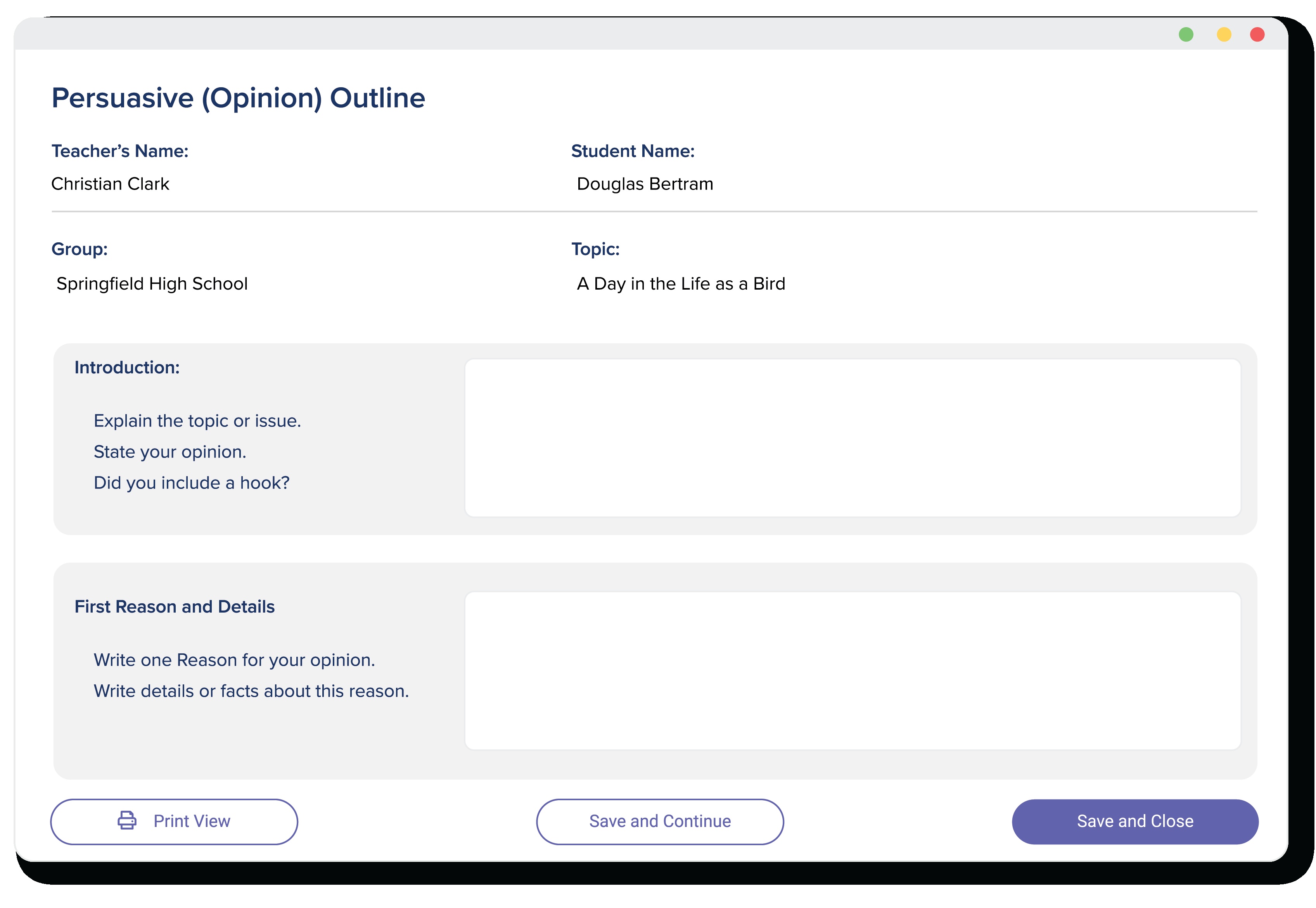
This places Vantage across several adjoining markets: writing instruction, automated assessment, institutional analytics, and educational software licensing. Teacher-led feedback remains an alternative; ETS’s e-rater represents another automated scoring approach. Vantage’s particular package connects scoring with revision tools and professional learning. A buyer is choosing a workflow as much as a scoring engine.
“Students need to write more than a teacher can read.”Carol Jago, quoted by MY Access!
Customers include schools, districts, colleges, and publishers. In May 2019, McGraw-Hill announced a collaboration to incorporate Vantage’s feedback and scoring into Connect course materials. That route matters commercially: a technology supplier can reach instructors through an established course platform, alongside selling institutions its own applications.
The first bottleneck returns
A faster machine does not guarantee a different classroom. In a 2014 interview, Murphy described schools where only a small fraction of teachers knew the product. He also recalled resistance to earlier adaptive-learning ambitions and a subsequent emphasis on writing technology. In his account, adoption and institutional decisions constrained what the tools could accomplish.
Vantage’s training offer addresses that practical problem. Its implementation workshops move from setting up assignments to interpreting portfolios and building lessons from reports. Coaching includes model lessons and planning sessions. The company sells software, but its service offering recognizes that teachers still have to decide what happens on Monday morning.
WriteVue extends that work to district leadership. Its current offering combines writing diagnostics, dashboards, action planning, and professional learning. Districts are encouraged to assess writing three to five times annually, then examine gaps and choose interventions. The meaningful output is a change in instruction that someone has agreed to carry out.
A price tag, and a research question
The business runs largely on institutional subscriptions and licenses, with integration and professional services alongside them. One public transaction makes the price concrete. Texas education spending records list Jasper ISD purchasing 1,000 MY Access! student subscriptions in September 2025 at $16.50 each. CiteSmart plagiarism detection appears separately at $2 per student.
1,000 subscriptions = $16,500
CiteSmart listed separately. A purchase example, not a price promise.
Research has its own budget. The Gates Foundation committed $447,570 in August 2020 for a 23-month project to validate automated essay scoring’s effect on argumentative-writing outcomes for Black, Latino, and/or low-income students. The question was whether the intervention improved learning. Receiving money to investigate that question does not answer it.
For school buyers, this separates two useful questions. Does the system produce scores that agree with trained readers? And does using it change what students learn? A dependable score can support the second task, but it cannot substitute for evidence about learning.
Leave room for the next attempt
Schools can copy a practical sequence from this approach: establish a writing standard, return usable feedback quickly, schedule revision, and inspect the results. A department could adopt that routine with or without Vantage. The software makes parts of the sequence faster and makes patterns easier to see across many students.
The conditions deserve equal attention. Students need reliable access and an opportunity to act on advice. Teachers need to examine whether the rubric and feedback suit the assignment. Scoring also depends on the examples used to develop and validate a model. Vantage’s historical documentation described hundreds of responses for custom-prompt training, a reminder that assessment infrastructure takes work.
Buying the tool while leaving revision optional would weaken the proposition at its center. So would treating an automated score as the entire educational judgment. Vantage’s most persuasive idea is modest and demanding: feedback should arrive early enough to be useful. Then a school has to protect the time in which a student can use it.