A school needed help with its technology plan. Berj Akian had a background in accounting and venture capital. The request was local, practical, and considerably smaller than the company it would become. In 1998, he founded ClassLink. The work of helping one school become a high-tech high school had opened up a much longer assignment: making the machinery of digital education easier to live with.
There is something pleasingly unglamorous about this beginning. A school wants its technology to work. A student wants to reach an assignment. A teacher would prefer to teach. Somewhere between those reasonable desires sit passwords, accounts, files, and systems with an unfortunate tendency to require introductions. Akian built his career in that intervening space.
Today, his company provides identity and access management for education. Its work includes single sign-on, account provisioning, rostering, and analytics. Those are substantial businesses with modest-sounding names. They concern the things that must happen before the interesting part of a school day can begin.
The accountant meets the classroom
Before ClassLink, Akian worked at Arthur Andersen as a CPA, specializing in restructuring and attest services for technology and educational publishing clients. He then worked at Technology Crossover Ventures, the investment firm with offices in Palo Alto and New York. He had graduated cum laude from Baruch College with a business degree in public accounting.
It is an unusual route into school technology, though the educational publishing clients give it an early point of contact. Accounting asks whether the numbers hold up. Investing asks what might happen next. Working with a school adds a rather immediate question: can the people in this building use what they have bought?
ClassLink's early work also put Akian in conversations about evidence. In July 2004, he appeared on a federal education statistics conference program alongside Joette Stefl-Mabry, Leslie Wood, and school technology leader Greg Partch. Their session examined technology usage in a district that had deployed ClassLink's thin-client system.
The system delivered applications from a central server to networked workstations. It could record which technologies were used, where, when, and by whom. The session proposed examining those records alongside student information to study performance and program value. The question of what school technology actually contributes was already on the agenda, six years after ClassLink began.
Akian establishes ClassLink.
A conference session examines school technology data.
The cybersecurity coalition launches its education rubric.
CoSN announces leadership of the rubric and training program.
A small medieval complaint
By 2015, Akian had found a memorable way to describe the trouble with school data exchange. He invoked the Middle Ages, proprietary fiefdoms, and “handwrought data files by candlelight.” Software integration rarely gets a costume drama. Here, at least, it had a script.
The occasion was an IMS Global initiative supporting an open education technology ecosystem. School districts and suppliers were advocating systems that could work together through shared standards. Akian's joke made the administrative burden visible: modern learning tools could still require laborious work behind the scenes before information moved between them.
This helps explain why access became such a durable subject for him. Buying a useful resource and putting it within reach are separate tasks. Class rosters need to reach the right applications. Accounts need to exist. Students need a workable route in. Each connection introduces another opportunity for a perfectly good lesson to wait.
In his 2016 interview with educator Pete Reilly, the conversation ranged across leadership, the teacher's burden, and standards. The accompanying explanation of ClassLink centered on too many passwords and scattered files. The problem was recognizable without a technical diagram. Most people have met a login screen that seemed to consider their plans premature.
The founder keeps enrolling
As his professional work moved further into education, Akian's formal studies followed. He earned a Master of Education in Instructional Design and Technology from the American College of Education. At Teachers College, Columbia University, he went on to a Master of Philosophy in Cognitive Science and Learning Analytics, and a Ph.D. in Cognitive Science in Education.
The progression is revealing. His qualifications move from the financial workings of organizations toward the workings of learning itself. Running an education company gave him an operational relationship with schools. Studying instructional design and cognitive science brought a different kind of engagement with the subject.
For a founder, remaining a student has a useful comic consequence: somewhere, someone else still gets to set the assignment. The executive title does not complete the coursework. Akian's continued study gives literal meaning to a phrase business biographies tend to use rather freely: lifelong learning.
His sense of humor also survives the credentials. Born and raised in New Jersey, married, and the father of three daughters, he has joked about pursuing another advanced degree in being consistently wrong, with practice supplied at home. It is a good way to stop a long list of qualifications from taking over the room.
Who gets through the other door?
Access took a different form in the MPACT fellowship, developed by Akian and Tonie Snell. The Management Professional Accelerator Coaching and Training program was described in 2022 as a paid, project-based, rotational fellowship for people from historically excluded and underestimated groups.
Its design combined practical work, professional development, and entry into networks participants might otherwise struggle to reach. The company describes the program as a route into education technology for Black and Latinx people. Akian wanted the workplace to reflect the population ClassLink served.
The decision to compensate fellows deserves attention. An opportunity that requires someone to stop earning can be difficult to accept, however generous its description. Akian and Snell treated payment as part of equity. The fellowship addressed the conditions under which someone could participate, alongside the skills they could acquire.
Akian also hoped the program could become a model for other technology companies. That aspiration connects a hiring initiative with his broader preoccupation: look at where participation gets difficult, then do something about the obstruction. Here, the machinery involved professional networks and paid experience rather than school accounts.
Security needs people, too
In March 2023, ClassLink, ENA by Zayo, and SecurityStudio announced the Cybersecurity Coalition for Education's rubric. Akian was a coalition co-founder. The free assessment tool gave schools education-focused criteria for reviewing their cybersecurity practices and planning improvements, drawing on NIST and other frameworks.
The coalition paired the rubric with free training and an affordable certification pathway for evaluators. That pairing matters. A framework may help a school identify a weakness, but someone still has to understand the finding, discuss it with colleagues, and decide what to do next. The initiative made developing that expertise part of the work.
“We don't have enough trained cyber professionals in K-12, so we need to grow our own.”
Berj Akian, September 2025
By September 2025, more than 500 educators had trained as peer evaluators through the program. The model gave districts a way to build expertise within the education community. It is a practical answer to a staffing problem: help people already working around schools become better equipped to help one another.
Through the cybersecurity rubric program, as reported in September 2025.
For Akian, the connection to access is straightforward. Schools need systems that admit the right people and protect the information entrusted to them. Convenience and security have to share the same school day. Neither gets to assume that the technology department has unlimited money or an inexhaustible supply of specialists.

The handoff after the award
On April 13, 2026, CoSN honored Akian with its Hurley Private Sector Champion Award in Chicago. The recognition concerns service to the education technology community beyond the boundaries of a person's job. CoSN highlighted his long involvement with the organization, continued learning, and vision for the cybersecurity rubric.
Two months later came a development with a different kind of significance. CoSN announced an agreement with ClassLink and the coalition to assume leadership of the rubric and evaluator program. The plan placed the work within the association's national network, with continuity for the people already using it.
Akian supported the move because of CoSN's advocacy reach and institutional backing. A tool built by a coalition would have a new organizational home to help carry it further. For someone who has spent decades building a company, agreeing that another institution should lead a piece of shared work is a decision worth pausing over.
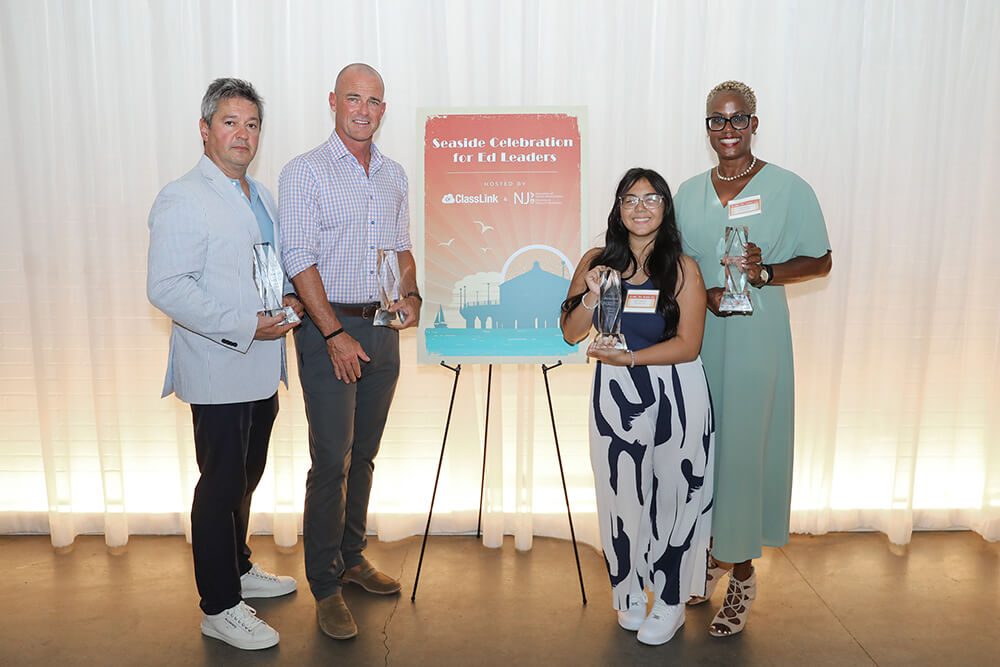
His public work still has a local address in spirit. ClassLink and NJASA celebrated New Jersey educators in Asbury Park in August 2026, continuing an annual seaside gathering. In October, commenting on another set of education awards, Akian praised leaders who listen and bring people together. The people doing the work remained the subject.
That is a fitting place to leave him: with a company to run, more questions about learning, and a recurring interest in what lets other people proceed. One school's technology plan grew into a career. The assignment has expanded considerably. Its everyday test remains small enough to recognize: a person reaches what they need, and gets on with the work.