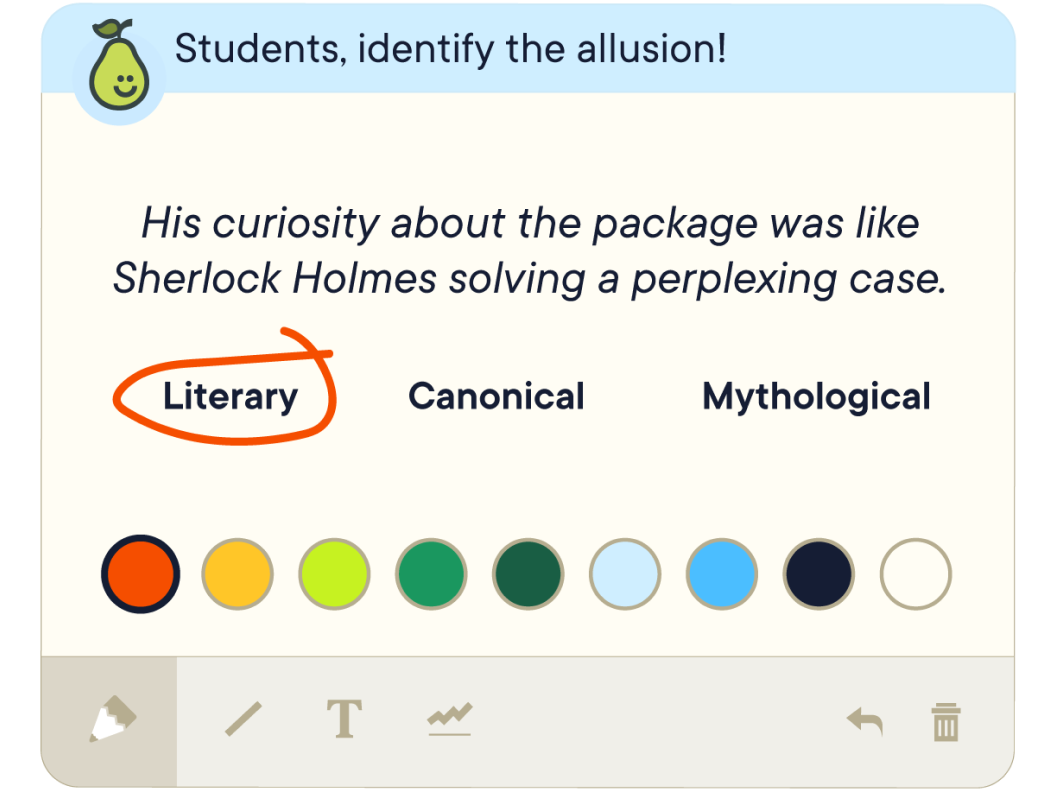
A raised hand is a peculiar measurement device. It tells a teacher that someone is willing to answer. It says rather less about the student beside them, staring at the desk. Pear Deck Learning has built its business around making that second student visible. Its original trick was modest: put a question inside a presentation and let everyone respond on a device. Suddenly, the teacher has something more useful than a roomful of apparently attentive faces.
- Start with participation. Pear Deck turns slides into questions students can answer.
- Connect the next steps. Planning, practice, and testing now sit under one instructional brand.
- Check the package. Free teacher tools coexist with paid feedback, reporting, and district features.
First, hear the rest of the room
Pear Deck began in Iowa City in 2014. Its four founders were Riley and Michal Eynon-Lynch, Anthony Showalter, and Dan Sweeney. Riley and Michal had been teachers. The product worked with tools schools already recognized, including Google’s presentation environment and, later, Microsoft’s. That choice matters. Asking a teacher to improve tomorrow’s lesson is one proposition. Asking them to rebuild their working habits is a considerably larger favor.
Students can submit text and other responses; teachers can display answers anonymously to the class. Paid features add drawing, draggable responses, and individual feedback. Imagine asking every student to explain a fraction before inviting anyone to the board. The useful discovery might be a wrong answer shared by half the room. A teacher can stop there, revisit the idea, and spare everyone a confusing homework assignment.
The less photogenic growth engine
The early company also needed to learn how to sell. In 2017, Growth Street Partners and existing investors announced a $4 million investment. An EDC case study describes what followed: in 2018, the Iowa business-support organization’s president, Curt Nelson, became interim sales manager and worked regularly with the sales team on technique and progress.
The case study reports that Pear Deck finished the year at roughly 130% of its original sales plan. That is a useful detail for anyone building software for institutions. A classroom product can win affection one teacher at a time, while a purchasing organization still needs a dependable sales process. The case describes a concrete intervention: recurring coaching, clearer structure, and attention to selling price.
of the original sales plan, approximately, according to EDC’s company case study.
A slide becomes a teaching day
Pear Deck joined GoGuardian through a merger announced in November 2020. In January 2024, GoGuardian introduced Pear Deck Learning as an umbrella for its instructional products. Edulastic became Pear Assessment; Giant Steps became Pear Practice; TutorMe became Pear Deck Tutor. The launch joined an existing portfolio under a recognizable classroom name.
The current main lineup puts Pear Start alongside Deck, Practice, and Assessment. Think of the handoffs. A teacher prepares material, teaches it, assigns practice, then examines what students understood. Pear Practice adds cooperative games, avatars, and personalized Daily Remixes. Pear Assessment handles classroom and district tests, standards reporting, and state-test preparation. Pear Start supplies AI-assisted planning and content creation.
- 01PlanPear Start
- 02TeachPear Deck
- 03PracticePear Practice
- 04CheckPear Assessment
↳ Use the responses to shape the next lesson.
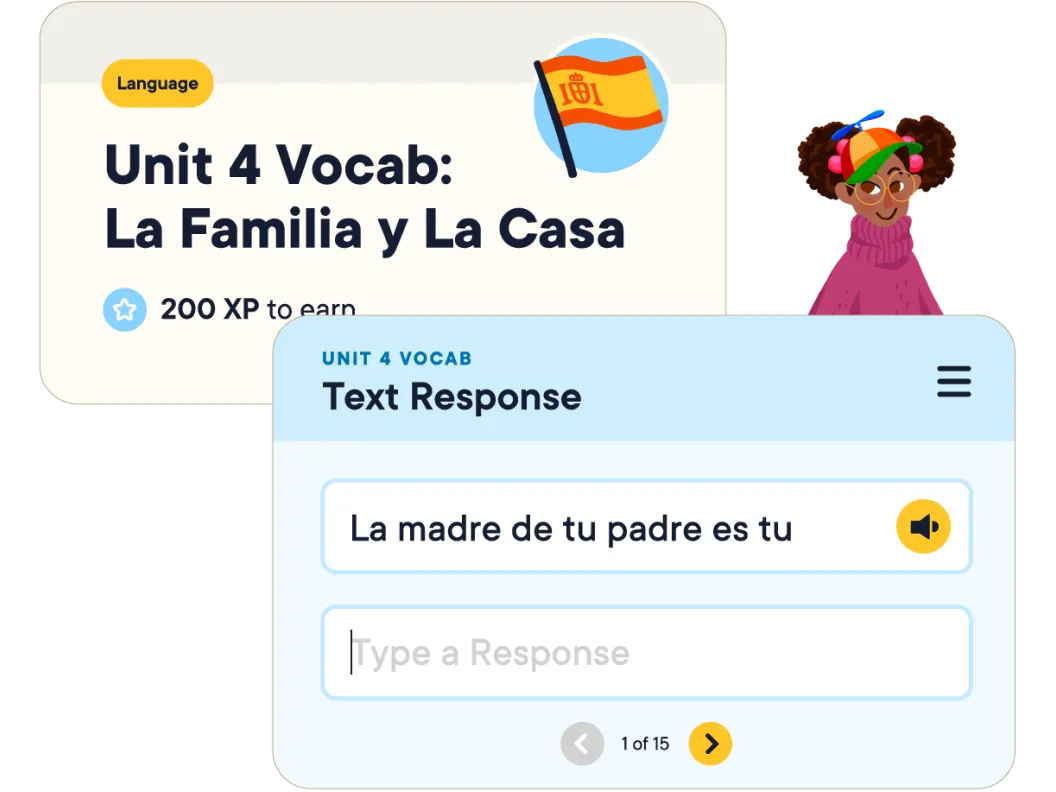
Pear Practice advertises a 15 percentage point improvement, based on the first and last attempts at certified items by more than 1,500 students between February and September 2023. That measurement concerns performance on those items. It gives a district a specific result to examine, while leaving a separate question about how the product would perform with its own students.
At the 2024 launch, the combined tools reported more than 21 million students and 1.1 million educators in the United States. Those figures describe company-reported reach. For a teacher, the smaller connection is more interesting: whether a result in one activity helps determine what comes next.
“Having one ecosystem of edtech tools makes everything more cohesive.”
Laurie Joseph · Tempe Elementary School District · 2024
The teacher gets an edit button
Pear Start entered public early access in April 2025. It offers more than 40 AI tools, with inputs including topics, standards, and existing files. Instant Lesson Packages can produce connected lessons, practice sets, and assessments. This is a practical attempt to shorten preparation across several classroom formats.
The revealing update arrived in May 2026. Citing teacher feedback, Pear Deck Learning added refinement prompts, suggested standards, subtopic choices, and a preview step for editing generated material before turning it into slides or tests. Teachers could revise the text or ask for changes. The sequence acknowledges that a fast draft still needs instructional judgment.

The price of the handoff
The business follows the classroom into the district office. Pear Deck has a free teacher tier; its advertised Teacher Premium subscription is $149 a year with an educator discount. Pear Assessment lists Teacher Premium at $125 a year. Schools and districts receive custom quotes. Pear Start is free for educators, with additional district controls included for eligible institutional customers.
Nearpod is a familiar alternative for interactive lessons and formative assessment. Pear Deck Learning’s broader proposition is the connection between preparation, participation, practice, and testing. In May 2026, its assessment workflow added follow-up content recommendations for student groups identified by performance. The competitive question is how much useful work those connections remove.
The next lesson is the test
Some recent improvements are refreshingly ordinary. September 2026 brought support for 100-question paper bubble sheets in Pear Assessment, up from 40. October brought LTI 1.3 connections for Canvas and Schoology. These details recognize that schools contain paper, old integrations, and people with established routines.
The approach depends on access to working devices, connectivity, and time to act on responses. Advanced features depend on the subscription. Schools also need acceptable data arrangements; the company says it does not sell student personal information. The practice worth copying is straightforward: ask everyone, inspect the misunderstanding, and change the next explanation. Collecting more answers earns its place when somebody teaches differently because of them.