A child can finish a book and leave an adult with a surprisingly difficult question: what, exactly, should happen tomorrow? Another book? A lesson on vowel patterns? Something harder? American Reading Company has built its business in the space between that finished page and the next instructional decision. Its shelves are full of books. Its proposition concerns what teachers do with them.
- The offer: literacy curriculum, books, assessments, software, and coaching for schools.
- The distinction: English and Spanish resources tied to specific instructional next steps.
- The catch: the edition, the training, and the implementation all matter.
Consider the company’s own assessment example. A student can decode short-vowel words but struggles with words using a vowel-consonant-e pattern. The teacher checks the gap, teaches that pattern, and supplies appropriate practice. Once the student learns it, instruction moves forward. The interesting unit of progress is a skill the child can now use.
The book has to lead somewhere
Founder Jane Hileman came to this problem as a teacher, reading specialist, and university educator. ARC’s family-facing business describes her early observation: children advanced with books that matched both their interests and their reading development. There were two requirements hiding inside that idea. A child needed access to something worth reading, and an adult needed to understand the child’s skills.
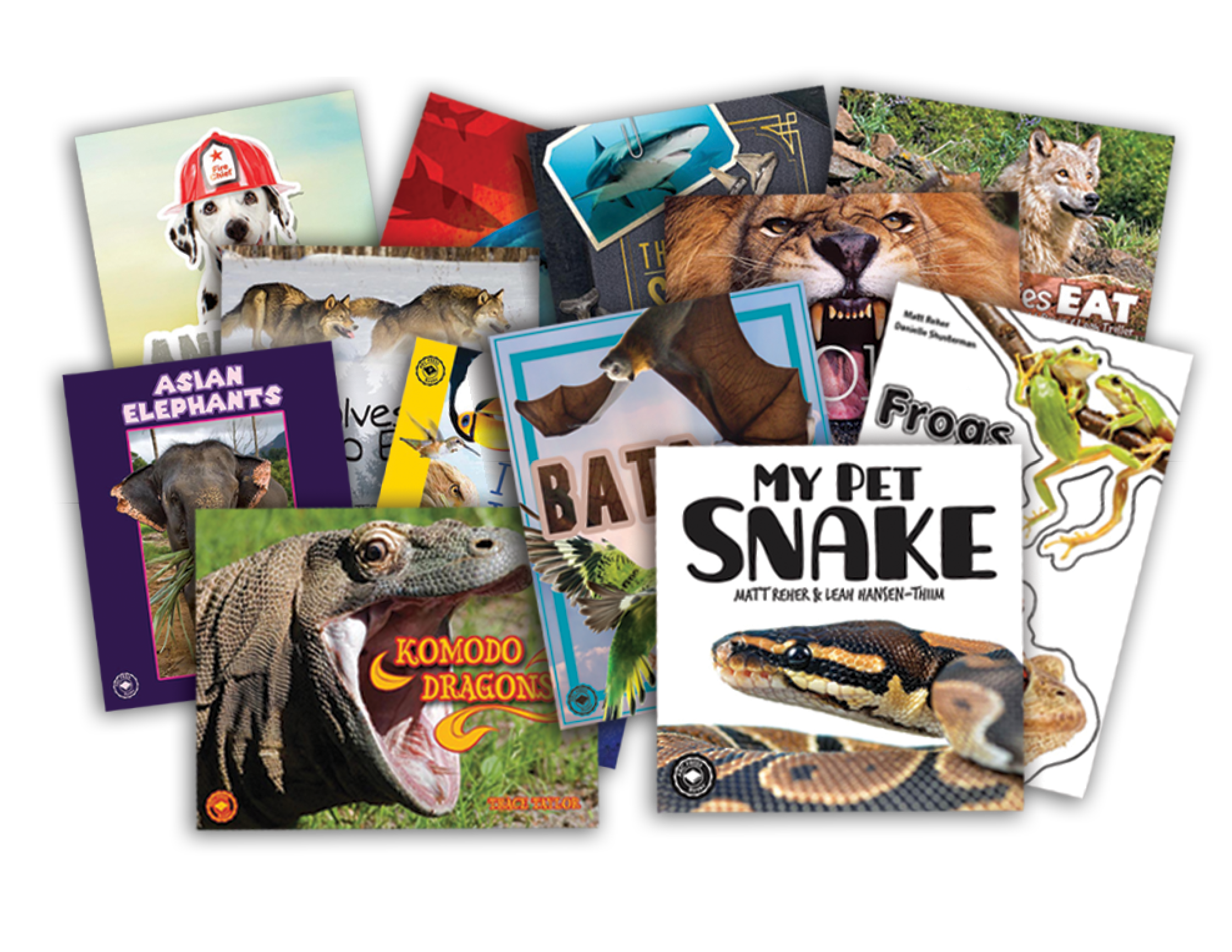
Today, ARC sells the machinery connecting those requirements. ARC Core organizes reading and writing around sustained topics in science, social studies, and literature. A year contains four units. Students investigate a subject, build vocabulary, and write about what they learn. The teacher receives libraries, lessons, and supporting materials. A study of animals supplies something to become knowledgeable about, beyond the mechanics of completing an assignment.
The Independent Reading Level Assessment, or IRLA, supplies a framework for identifying what a reader can do and what needs teaching. Its Spanish counterpart, ENIL, reflects differences in how children learn to read Spanish. That distinction matters for a district teaching in two languages: a translated English checklist would not automatically describe the same developmental path.
SchoolPace carries assessment information into dashboards for classrooms, schools, and districts. Teachers and leaders can track reading progress and identify students needing support. ARC also offers instructional resources and digital libraries. The screen has a supporting role. Its value depends on whether the information changes what happens between a teacher and a child.
- 01Assess
- 02Teach
- 03Practice
- 04Check again
One specific need. A lesson. Books to practice in. Another look.
The adults need practice, too
This is where ARC moves beyond publishing. Its professional learning includes workshops, teacher collaboration, and coaching in which educators plan and teach alongside ARC staff. Schools can buy books from many places. Building a shared habit of examining student work and adjusting instruction requires adults to change their routines.
Hileman described the school-business connection in 2017. The two activities share a question: what information would help us make a better decision next time?
“we help schools improve with a business model.”
Jane Hileman / 2017
ARC primarily sells to schools and districts, combining print purchases, professional services, and recurring digital licenses. Families also have American Reading at Home. Schools keeping another core curriculum can add 100 Book Challenge, a system of independent reading, rotating libraries, and home support. That gives ARC an entry point smaller than replacing a district’s entire language arts program.
Put the training in the budget
ARC’s 2024–2025 pricing guide shows the separate costs. SchoolPace was listed at $6,000 per school annually for purchases covering one to 19 schools. An English Research Lab print unit for grades 2–5 with 100 independent-reading titles was $2,200. Virtual professional learning was listed at $2,400 per session, with bilingual sessions costing more. These are historical component prices, not a current all-in classroom quote.
The practical lesson is to price the implementation. Books, subscriptions, replenishment, and staff learning occupy different budget lines. A library delivery is a visible event; the time to learn how to use it is easier to overlook.
A pilot earns the next classroom
Prosser School District in Washington offers a useful example of restraint. According to ARC’s May 2025 account, the district piloted dual-language ARC Core in fifth grade in 2021–2022 before expanding across K–5. Teachers tested the approach before the district asked everyone to adopt it.
ARC reported that the share of K–5 students significantly below grade level in English fell from 56% at the start of 2022–2023 to 25% by February 2025. These are company-published figures using ARC’s assessment, rather than an independent experiment proving causation. The rollout still offers something worth copying: test in a defined setting, inspect the results, and expand with evidence.
Fewer students significantly below grade level
Share of K–5 students. ARC-published IRLA results; observational, not a causal estimate.
Read the edition before the endorsement
There is a complication. In March 2025, APM Reports examined curriculum reviews and highlighted picture-cueing instructions in ARC Core’s 2017 materials. Its reporting questioned how programs containing such practices had received favorable EdReports ratings. A positive review cannot settle every question about how a child is taught to recognize words.
The current offer needs its own inspection. Colorado’s April 2026 advisory list approves ARC Core’s 2025 edition for K–2. ARC now describes explicit foundational skills instruction and offers schools the option to bring a separate foundational skills program. In May 2026, it announced Wisconsin recognition for ARC Core K–3 alongside Wilson Language Training’s Fundations. Buyers should examine the actual edition and configuration they will teach.
ARC competes for district curriculum budgets alongside programs such as Amplify CKLA, HMH Into Reading, and Benchmark Advance. Its combination of libraries, bilingual assessments, software, and coaching suits schools prepared to coordinate those pieces. Without time for assessment and instructional adjustment, the proposed feedback loop loses its purpose.
The people behind the pages
In July 2022, ARC became entirely employee owned through an ESOP. Its workplace offers another revealing detail: full-time employees receive a customized 50-book library for their children each year. Inside the company, as in its classrooms, access to books is treated as something to arrange deliberately. The shelf is a beginning. Tomorrow still needs a plan.